
Doxing or in the public interest? Free speech, ‘cancelling’ and the ethics of the Jewish creatives’ WhatsApp group leak
- Written by Hugh Breakey, Deputy Director, Institute for Ethics, Governance & Law. President, Australian Association for Professional & Applied Ethics., Griffith University
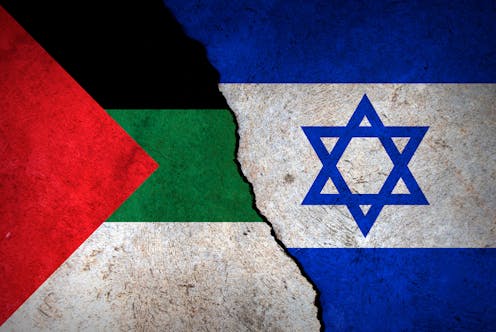
The recent release of a leaked transcript of a private WhatsApp group for Jewish writers, artists, musicians and academics has stirred a controversy that has led to threats of violence, a family in hiding, and the fast-tracking of new federal legislation to criminalise doxing.
The WhatsApp group in question, administered by writer Lee Kofman, was formed to give Jewish creative people a private and supportive space to connect, in the wake of the October 7 Hamas attacks and Israel’s war in Gaza. Not all members knew they had been added to the group at first, and many didn’t participate in the conversations that resulted in the leak.
Last week, a transcript from the group chat was leaked and uploaded onto social media by pro-Palestinians, including the writer Clementine Ford. The leak included a spreadsheet with links to social media accounts and “a separate file with a photo gallery of more than 100 Jewish people”.
This week, a joint statement from “First Nations, Palestinian, Lebanese and anti-Zionist Jewish activist collectives, community leaders, artists” and those who said they had been “targeted” by particular chat members argued the WhatsApp transcript
clearly demonstrates collective actions taken by zionists to contact employers, funding bodies, publishers and journalists to censure anyone deemed to be a threat to the zionist narrative.
The leak gives rise to a complex tangle of contemporary ethical issues, including concerns with privacy, doxing, free speech and “cancelling”.
Privacy and public interest
The WhatsApp group was a private one, where group members would have had a reasonable expectation their conversation would not be made public.
Everyone needs a place to let off steam, to make conjectures and speculations, and to speak in an unguarded way among trusted people. Violating people’s privacy (especially through leaking information onto the forever-searchable internet) is always a moral cost.
But sometimes that cost must be paid, particularly if the exposure is in the public interest. Whistleblowers, for example, often justifiably release confidential information.
It could be argued that revealing the WhatsApp group’s activities was in the public interest. Pro-Palestinian writers and editors worried they were being targeted for their public statements in a way that imperilled their livelihoods, or were concerned about a similar risk to others. There is evidence this threat was real.
One of the targeted pro-Palestinian figures was the broadcaster Antoinette Lattouf, who was fired, and has filed an unlawful termination claim against the ABC.
 Journalist Antoinette Lattouf (second from left) was fired from the ABC. Here, she’s leaving a Fair Work Commission hearing.
Toby Zerna/AAP
Journalist Antoinette Lattouf (second from left) was fired from the ABC. Here, she’s leaving a Fair Work Commission hearing.
Toby Zerna/AAP
There was also a collective effort to target vocally pro-Palestinian literary journal Overland, and its co-editors Jonathan Dunk and Evelyn Araluen. Some within the Whatsapp group called for complaints to be made to Deakin University, where Araluen and Dunk are employed as academics, and also to Creative Victoria, which funds Overland.
And the Guardian reported that others in the group encouraged members to contact the publisher of Ford, a vocal pro-Palestinian, and target others in the media, over their coverage of Israel and Palestine.
Read more: Friday essay: 'what else should I lose to survive?' The young writers living – and dying – in Gaza
The ethics of doxing
“Doxing” refers to the public release (usually onto the internet) of identifiable information about a person. It is usually done without the person’s consent, and aims to expose or punish them in some way.
A statement from those behind the release asserted no links had been made to members’ addresses, phone numbers or emails, which were all deliberately redacted. This is important.
“Targeted doxing” – where information on a person’s physical location or address is released – is particularly sinister. However, the release of people’s identities is still a form of doxing and a serious moral concern. Evidence of the group’s activities that were in the public interest could arguably have been provided without naming names. The public gained little from knowing exactly who was in the almost 600-strong group.
Worse still, only some in the group were active in the actions against pro-Palestinians that prompted the leak, but this made no difference to whose identities were shared. This creates additional ethical concerns, with the risk innocent parties are being inappropriately punished or harassed for the actions committed by other group members.
Identifying individuals came at a real cost. Predictably, some parties did attach information about names, occupations, social media profiles, and even pictures to the leaked transcript.
Tragically, threats of violence were later made, even to people’s children.
Read more: What is doxing, and how can you protect yourself?
What was the WhatsApp group doing?
The WhatsApp group conversations were wide-ranging, and some members made statements many might find offensive or upsetting.
One part of the group’s activities involved organised letter-writing, including to the employers or publishers of writers or journalists they felt crossed the line into anti-Semitism.
 One aspect of the WhatsApp group’s activities was letter-writing.
BigTunaOnline/Shutterstock
One aspect of the WhatsApp group’s activities was letter-writing.
BigTunaOnline/Shutterstock
On its face, such communications are clearly legitimate, and a part of democratic life. Letters can be used to raise awareness of ethical concerns, to share information and ideas, and to persuade.
But letters can also do other things, and an innocuous practice can sometimes gradually progress into more fraught territory. Rather than persuading, letters can pressure others, perhaps threatening their organisations with public shaming. They can also try to get people to act in ways that are morally concerning — such as having someone sacked for their political views.
One member had offered in the group chat to “do a deep dive” into the social media posts of Nadine Chemali, a freelance writer and occasional SBS contributor who describes herself as avidly pro-Jew but anti-Israel, to see if there was anything there that might breach her contract with SBS. (This deep dive wasn’t done.)
While certainly legal, such practices are ethically concerning because they deliberately and systematically create workplace challenges for individuals and organisations that put forward controversial views.
Read more: 10 books to help you understand Israel and Palestine, recommended by experts
Should artists be protected?
Before the story broke in the media, but after extracts from the group chat began circulating on social media, the Australian Society of Authors Board published a letter noting its “growing concern” that artists and authors in Australia were facing repercussions for expressing their political positions publicly or in their work.
The society stated its commitment to freedom of speech (within the limits set by law) and its opposition to attempts to silence or intimidate authors.
 The Australian Society of Authors stated its commitment to free speech.
Pla2na/Shutterstock
The Australian Society of Authors stated its commitment to free speech.
Pla2na/Shutterstock
We might try to frame the underlying moral principle at work as a principle of political tolerance. People should not suffer workplace repercussions, discrimination or be pushed out of their livelihood on the basis of their political views (and still less on the basis of their religion or race).
Simple, right? Not quite.
The society also opposed attempts to intimidate or silence people through hate speech, explicitly noting antisemitism, and anti-Palestinian and anti-Arab rhetoric.
This hints at a different, also relevant, moral principle – preventing harm. Hate speech, racism and bigotry, and harmful disinformation or stereotyping, should be stopped, and speakers should face the consequences of their wrongdoing.
There are cases where these principles of tolerance and harm-prevention can be sensibly aligned. For example, many people would agree that no one should be pushed out of their job because they support a mainstream political party — but that people should face social and professional repercussions if they hurl around racist slurs.
However, it’s tempting to interpret harm prevention beyond this bare minimum. After all, surely it’s a good thing to prevent the spread of misinformation, harmful stereotypes and hateful speech — and to stand up against wrongdoing more generally.
This is where the two principles begin to directly conflict. What we perceive as dangerous misinformation or harmful speech (like antisemitism or Islamophobia) will inevitably be coloured by our cultural, political and moral worldviews.
In other words, many will agree in principle that we should tolerate those who think differently. But it is precisely those who think differently who will disagree with us about what counts as harmful or wrongful speech.
Read more: Friday essay: Rai Gaita and the moral power of conversation
Ethical worries
Punishing, undermining and silencing others on the basis of our political beliefs gives rise to two potential ethical worries (both arise with respect to the modern phenomenon of “cancel culture”).
The first is hypocrisy. Each side declares: “We are a support group nobly taking a stand against harmful bigotry and hate. You are a lynch mob maliciously plotting to silence others, dox them, and destroy their careers.”
If we think it’s okay for people like us to get others sacked for speech we find shocking and awful, we have to accept that it’s okay for others to get us (and those who think like us) sacked for speech they find shocking and awful.
But few are willing to accept that. This seems a clear failure of moral consistency.
The other problem is tit-for-tat conflict escalation. If you punish me (with public shaming or getting me fired) for saying something you think is harmful, (that I don’t see as harmful), I will inevitably see your act as a wrongful violation of the principle of political tolerance. Now, I have reason to push back against you – to no longer tolerate your speech.
We can see this escalation playing out in this case. One of the initial concerns behind forming the group was the worry about rising intolerance towards Jewish people – including unfairly having their careers jeopardised.
But their letter-writing campaigns made pro-Palestinian creatives fear their careers were unfairly jeopardised.
This could make some of them feel justified in revealing details of members of the WhatsApp group (not just those who participated in these conversations or activities) and sharing the group’s private messages. Tragically, some isolated individuals – not necessarily connected to the pro-Palestinians – felt justified in going further, even to threats of violence.
Ultimately, tolerance is not easy — especially with respect to others with different political and moral worldviews.
But it’s hard to see a viable solution to conflicts like these, other than all sides accepting others must be broadly entitled to speak, write and create in ways that seem right to them – without threats of cancellation, firing, privacy-breaches, or doxing.
Authors: Hugh Breakey, Deputy Director, Institute for Ethics, Governance & Law. President, Australian Association for Professional & Applied Ethics., Griffith University