

Why prices are so high – 8 ways retail pricing algorithms gouge consumers
- Written by: David Tuffley, Senior Lecturer in Applied Ethics & CyberSecurity, Griffith University

The just-released report of the inquiry into price gouging and unfair pricing conducted by Allan Fels for the Australian Council of Trades Unions does more than identify the likely offenders.
It finds the biggest are supermarkets, banks, airlines and electricity companies.
It’s not enough to know their tricks. Fels wants to give the Australian Competition and Consumer Commission more power to investigate and more power to prohibit mergers.
But it helps to know how they try to trick us, and how technology has enabled them to get better at it. After reading the report, I’ve identified eight key maneuvers.
1. Asymmetric price movements
Otherwise known as Rocket and Feather, this is where businesses push up prices quickly when costs rise, but cut them slowly or late after costs fall.
It seems to happen for petrol and mortgage rates, and the Fels inquiry was presented with evidence suggesting it happens in supermarkets.
Brendan O’Keeffe from NSW Farmers told the inquiry wholesale lamb prices had been falling for six months before six Woolworths announced a cut in the prices of lamb it was selling as a “Christmas gift”.
2. Punishment for loyal customers
A loyalty tax is what happens when a business imposes higher charges on customers who have been with it for a long time, on the assumption that they won’t move.

The Australian Securities and Investments Commission has alleged a big insurer does it, setting premiums not only on the basis of risk, but also on the basis of what a computer model tells them about the likelihood of each customer tolerating a price hike. The insurer disputes the claim.
It’s often done by offering discounts or new products to new customers and leaving existing customers on old or discontinued products.
It happens a lot in the electricity industry. The plans look good at first, and then less good as providers bank on customers not making the effort to shop around.
Loyalty taxes appear to be less common among mobile phone providers. Australian laws make it easy to switch and keep your number.
3. Loyalty schemes that provide little value
Fels says loyalty schemes can be a “low-cost means of retaining and exploiting consumers by providing them with low-value rewards of dubious benefit”.
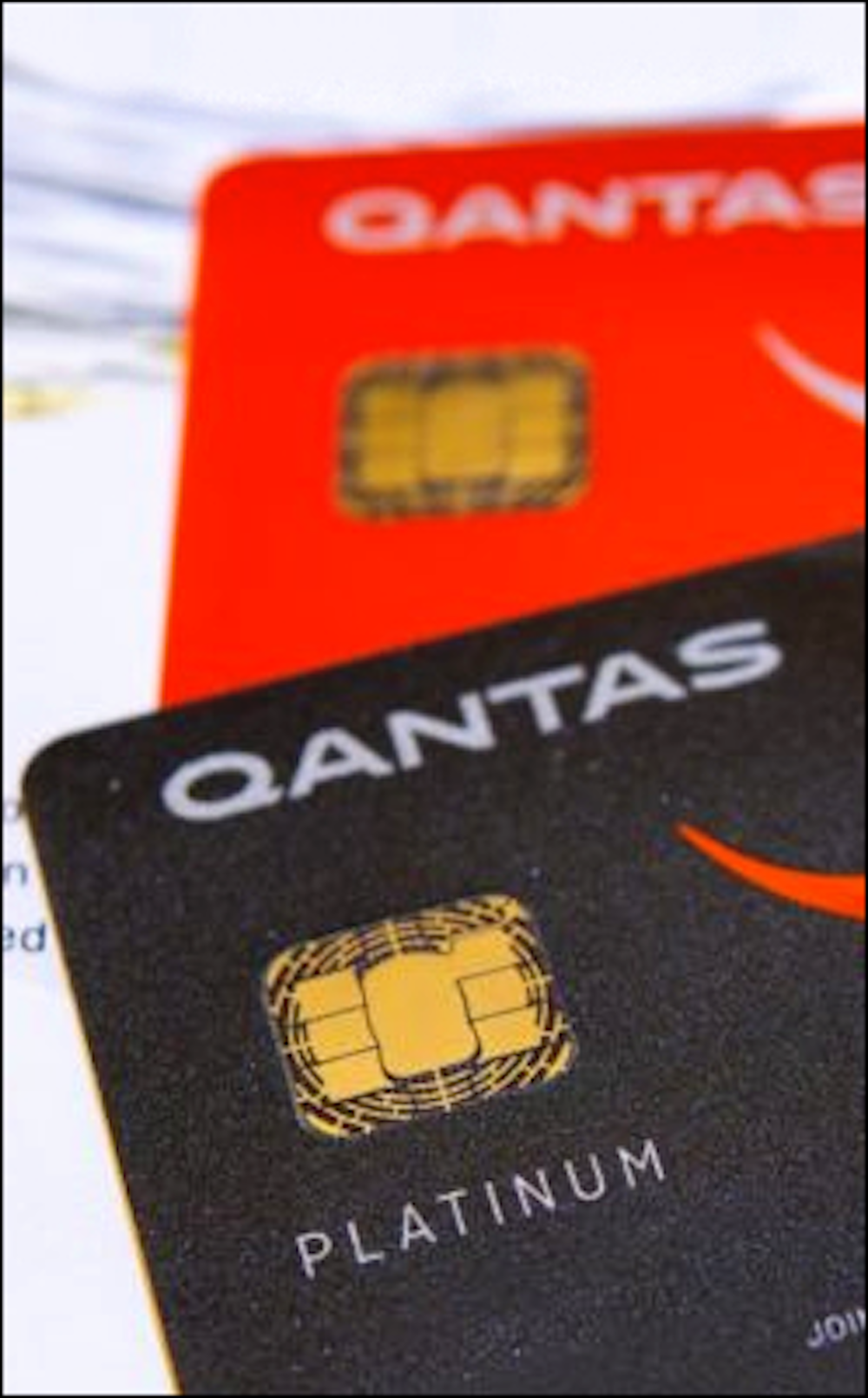 Frequent flyer schemes lock in flyers.
Shutterstock
Frequent flyer schemes lock in flyers.
Shutterstock
Their purpose is to lock in (or at least bias) customers to choices already made.
Examples include airline frequent flyer points, cafe cards that give you your tenth coffee free, and supermarket points programs. The purpose is to lock in (or at least bias) consumers to products already chosen.
The Australian Competition and Consumer Commission has found many require users to spend a lot of money or time to earn enough points for a reward.
Others allow points to expire or rules to change without notice or offer rewards that are not worth the effort to redeem.
They also enable businesses to collect data on spending habits, preferences, locations, and personal information that can be used to construct customer profiles that allow them to target advertising and offers and high prices to some customers and not others.
4. Drip pricing that hides true costs
The Competition and Consumer Commission describes drip pricing as “when a price is advertised at the beginning of an online purchase, but then extra fees and charges (such as booking and service fees) are gradually added during the purchase process”.
The extras can add up quickly and make final bills much higher than expected.
Airlines are among the best-known users of the strategy. They often offer initially attractive base fares, but then add charges for baggage, seat selection, in-flight meals and other extras.
Read more: Junk fees and drip pricing: underhanded tactics we hate yet still fall for
5. Confusion pricing
Related to drip pricing is confusion pricing where a provider offers a range of plans, discounts and fees so complex they are overwhelming.
Financial products like insurance have convoluted fee structures, as do electricity providers. Supermarkets do it by bombarding shoppers with “specials” and “sales”.
When prices change frequently and without notice, it adds to the confusion.
6. Algorithmic pricing
Algorithmic pricing is the practice of using algorithms to set prices automatically taking into account competitor responses, which is something akin to computers talking to each other.
When computers get together in this way they can act as it they are colluding even if the humans involved in running the businesses never talk to each other.
It can act even more this way when multiple competitors use the same third-party pricing algorithm, effectively allowing a single company to influence prices.
7. Price discrimination
Price discrimination involves charging different customers different prices for the same product, setting each price in accordance with how much each customer is prepared to pay.
Banks do it when they offer better rates to customers likely to leave them, electricity companies do it when they offer better prices for business customers than households, and medical specialists do it when they offer vastly different prices for the same service to consumers with different incomes.
It is made easier by digital technology and data collection. While it can make prices lower for some customers, it can make prices much more expensive to customers in a hurry or in urgent need of something.
8. Excuse-flation
Excuse-flation is where general inflation provides “cover” for businesses to raise prices without justification, blaming nothing other than general inflation.
It means that in times of general high inflation businesses can increase their prices even if their costs haven’t increased by as much.
On Thursday Reserve Bank Governor Michele Bullock seemed to confirm that she though some firms were doing this saying that when inflation had been brought back to the Bank’s target, it would be
much more difficult, I think, for firms to use high inflation as cover for this sort of putting up their prices
A political solution is needed
Ultimately, our own vigilance won’t be enough. We will need political help. The government’s recently announced competition review might be a step in this direction.
The legislative changes should police business practices and prioritise fairness. Only then can we create a marketplace where ethics and competition align, ensuring both business prosperity and consumer wellbeing.
This isn’t just about economics, it’s about building a fairer, more sustainable Australia.
Authors: David Tuffley, Senior Lecturer in Applied Ethics & CyberSecurity, Griffith University


















