

How will Meta’s refusal to pay for news affect Australian journalism – and our democracy?
- Written by: Peter Greste, Professor of Journalism and Communications, Macquarie University
When we speak of media freedom, we generally mean it in terms of freedom from unnecessary legal restrictions, so journalists and their sources are not threatened with prosecution for exposing the misdeeds of governments.
But yesterday’s announcement by Meta (Facebook’s parent company) that it will stop paying for Australian news content poses a different kind of threat to media freedom.
The most progressive media freedom laws in the world are meaningless if news companies can’t afford to hire experienced journalists to run expensive investigations. It doesn’t matter how free the laws are if there are no journalists to do the reporting.
A key part of any successful democracy is a free media, capable of interrogating the powerful and holding governments to account. Even in a world overflowing with digital content, we recognise the need for good journalism, produced to ethical and professional standards, to help inform public debate and good policy-making.
It was always going to fall apart
Three years ago, in 2021, under the News Media Bargaining Code, the government forced Meta and Google to negotiate with news organisations and pay for the right to access and post their stories.
The government introduced the code after Facebook and Google were accused of putting news content on their platforms, while denying news organisations the advertising revenues that used to pay for journalism.
Although we don’t know exactly who gets paid what, it is estimated that the two digital giants injected about $250 million a year into Australian journalism.
It wasn’t enough to end the crisis in news caused by the collapse of the old business models, but it helped prop up a lot of struggling companies. In some cases, it helped pay for otherwise unprofitable forms of journalism.
One of the big problems with the code was that it pushed media companies into inherently unstable and unpredictable deals with commercial behemoths, whose only interest in news was as a commodity to help drive profits. It was always going to fall apart, if and when news became too expensive and Facebook users became disinterested.
It is hard to criticise Meta for deciding the deals weren’t worth it. The company is doing what it is supposed to, making hardheaded commercial decisions and maximising shareholder returns. But Meta’s interests are not the same as the Australian public’s.
Or more accurately, Meta’s interests are not the same as our democracy’s. Meta doesn’t need high-quality news, particularly if its users are more interested in sharing family photos than sober reporting on inflation rates. But collectively, our society does need it.
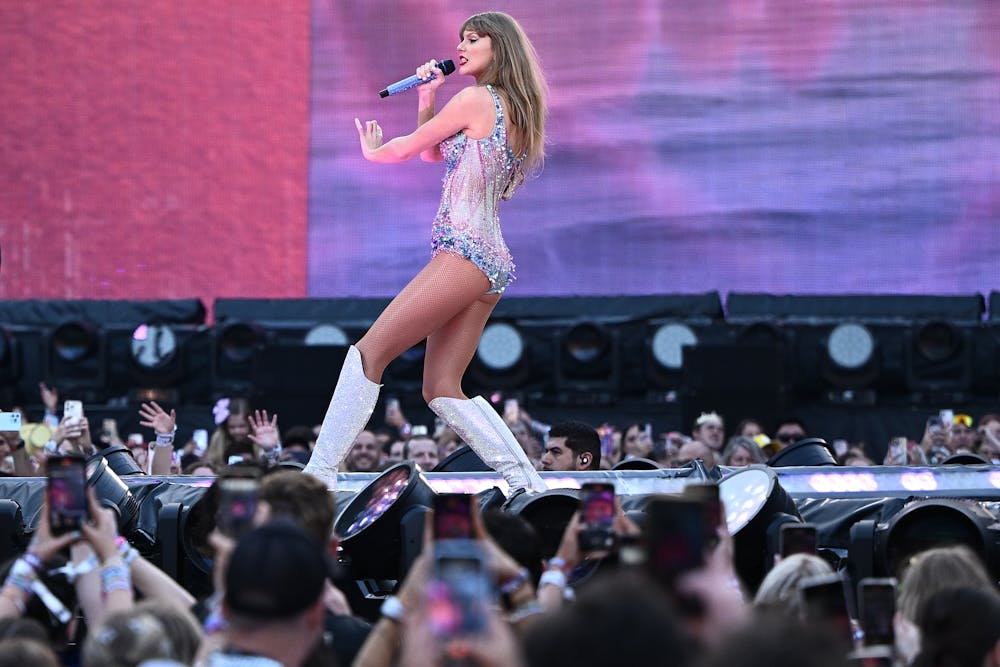
High-quality news is expensive. It doesn’t cost much to send someone to report on Taylor Swift’s Melbourne concert, but it is hugely expensive to cover the war in Gaza or investigate allegations of government corruption.
I suspect not that many Australians have read Adele Ferguson’s reporting about the corrupt practices of our biggest banks. Her investigations took years of work, and cost far more than the Sydney Morning Herald would have recovered in subscriptions and advertising revenue for her stories.
But her reporting triggered the Banking Royal Commission and a suite of reforms that benefit everyone with a bank account.
Read more: One-third of Australians think banks do nothing for the greater public good
A news levy?
If we accept that news is a public good, not something we can treat as a product to be traded like soap, then we have to develop economic models that somehow get the public to pay for it. It could be something like a levy – similar to Medicare’s – that recognises even if we don’t all consume news equally, we are collectively better off by having good journalism that’s free from commercial or political pressure.
It is a difficult conversation to have, particularly when most Australians say they don’t trust the media, and more and more of us are giving up on news altogether.
And that brings us to the other truth this crisis has exposed: our consumption of media has changed irreversibly. Fewer and fewer people are reading long news stories or wading through heavy TV bulletins. Now, short-form videos on TikTok, YouTube and Facebook are dominant. The news industry needs to meet audiences where they are, and accept that the ways of presenting news must also radically change.
Our ways of consuming the news have changed, with short-form videos now dominant.This is not to suggest all journalism should henceforth be presented as TikTok videos. But forcing digital giants to prop up analogue-era news companies cements a system that is no longer fit for purpose.
By trying to make the big digital giants pay for content they ultimately profit from, the News Media Bargaining Code started with the right intention. But now that Meta has decided it is no longer worth it, we have a chance to radically rethink and redesign how we finance and deliver news – in a way that works for us all.
Our democracy depends on it.
Authors: Peter Greste, Professor of Journalism and Communications, Macquarie University


















