

Yabby traps and discarded fishing tackle can kill platypuses
- Written by: Katherine Warwick, PhD Candidate, Western Sydney University
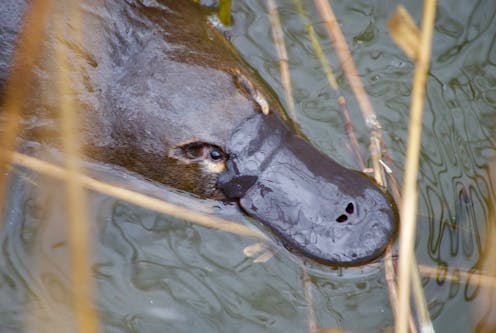
Recreational fishing is a popular pastime in Australia’s inland rivers and streams. Unfortunately in the process, many people are unwittingly killing platypuses.
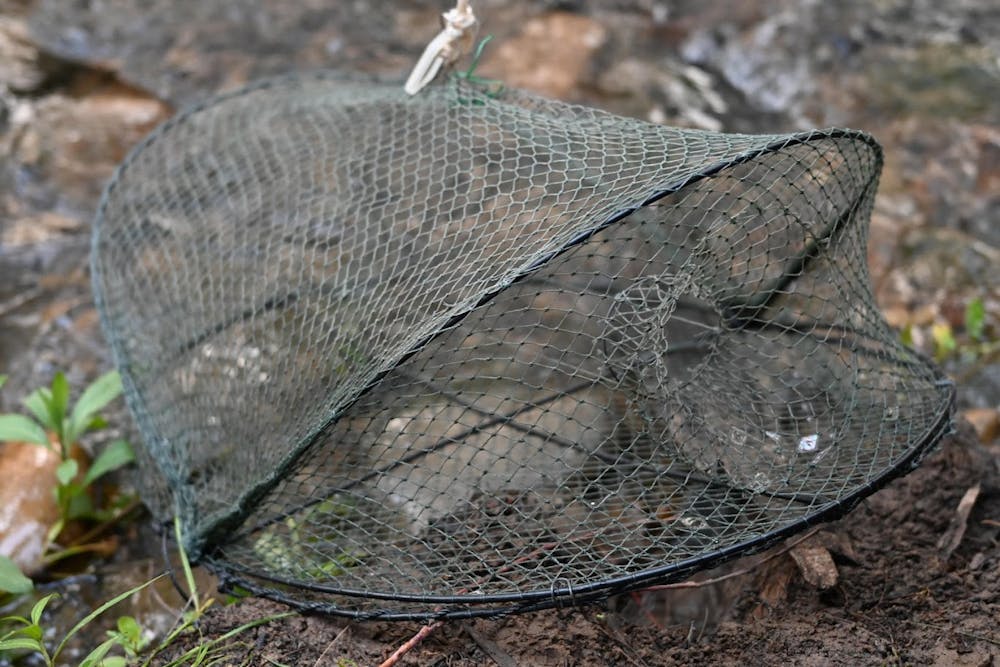
The animals can become trapped in nets commonly used to catch yabbies such as “Opera House traps” (so-called because their shape resembles the sails of the Sydney Opera House). The enclosed structure stops platypuses swimming back to the surface to breathe, causing them to drown in minutes.
Enclosed traps are banned in most states, but they are still being used. They are sold online and can be shippped across Australia. During our field research, we frequently encounter these traps and clumps of discarded fishing line. We have also conducted research on the bodies of platypuses killed by these hazards.
It’s time for a national ban on these inhumane traps. And recreational fishing waste should be kept out of our waterways. We must save our platypuses, before it’s too late.
Platypuses being released back into the Hawkesbury-Nepean River catchment, New South Wales.Read more: Even platypuses aren't safe from bushfires – a new DNA study tracks their disappearance
A natural wonder
The platypus is one of Australia’s most loved and iconic species. These semi-aquatic, air breathing monotremes (egg-laying mammals) can be naturally found in waterways of the east coast, Tasmania and Kangaroo Island.
But there are growing concerns for the species’ survival. Platypuses are becoming scarce and in some areas, completely disappearing from waterways.
The animals spend most of their time foraging in freshwater creeks and rivers. They have very poor eyesight underwater and use special sensors in their duck-shaped bill to locate prey. A trap full of live yabbies can attract platypuses, but this tempting feast may be their last meal.
Read more: A platypus can glow green and hunt prey with electricity – but it can't climb dams to find a mate
Closing in on enclosed traps
Closed-top traps are baited then submerged in a river or stream for hours or a day, before being hauled out.
The traps funnel creatures into an enclosed space where they can’t escape. They are designed to catch freshwater crayfish (known as yabbies or marron). But they also inadvertently trap aquatic animals such as platypuses, freshwater turtles and the native water rat, rakali.
But there are wildlife-friendly alternatives. For example, some nets are open at the top while others have a hinged lid that can be pushed open by a larger animal, such as a platypus, as it tries to escape.
Opera House style, closed-top yabby traps are now banned in Tasmania, Victoria, the Australian Capital Territory, New South Wales and South Australia.
Queensland allows use west of the Dividing Range, where platypuses are not thought to exist, or on private property. Restrictions around the size of trap entrance holes were introduced in 2015.
A litany of platypus deaths
The Australian Platypus Conservancy found 41% of reported platypus deaths from 1980 to 2009 were caused by drowning in enclosed nets.
Meanwhile platypuses have continued to drown in closed-top traps. In 2022, four reportedly died in one trap at Dorrigo on the mid-north coast of New South Wales. In 2021, a platypus died in Queensland’s Broken River and in 2018, one trap drowned seven in Victoria’s Werribee River.
Aside from deaths by closed-top traps, many platypuses become entangled in abandoned fishing line as they search for food along the bottom of waterways.
The animal’s tapered shape, duck-shaped bill and short webbed feet make it hard to free themselves. They are prone to getting wrapped in rings or loops of plastic, rubber or metal rubbish.
In 2021 a Victorian study of 54 cases of platypus entanglement found litter commonly encircled the neck (68%). Almost one in five were wrapped “from in front of a shoulder to behind the opposite foreleg” (22%). Others had plastic around their torso or jaw.
That study also found platypuses in greater Melbourne were up to eight times more likely to become tangled in litter than those in regional Victoria. That’s because urban areas tend to be more polluted.
Fishing line can cut through skin and muscle, causing a slow painful death. Entangled platypuses can also drown after they become caught on underwater debris.
We study how heavy metals and other emerging contaminants accumulate in platypuses. Together with the community, local and state governments and wildlife organisations such as Taronga Zoo, we collect dead platypuses to examine their organs and body tissues.
On a trip this month to regional NSW for water quality testing and sampling, we found multiple instances of tangled fishing line and an abandoned submerged Opera House trap.
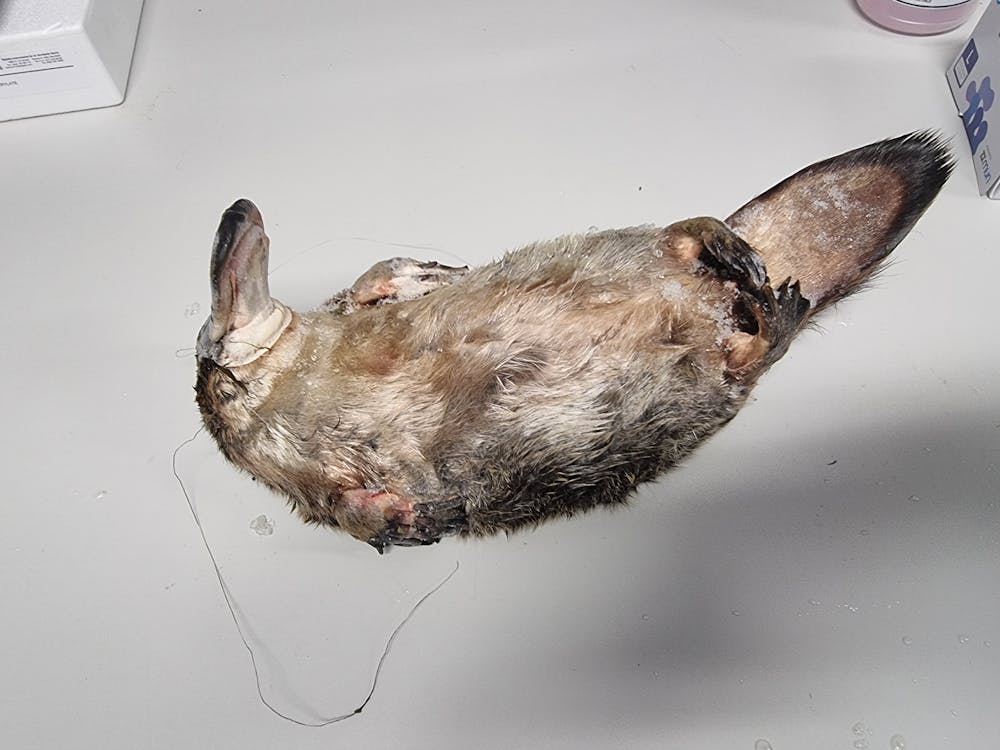 A dead platypus entangled in fishing line, found in the Southern Highlands of NSW.
Katherine Warwick
A dead platypus entangled in fishing line, found in the Southern Highlands of NSW.
Katherine Warwick
Swapping traps and binning trash
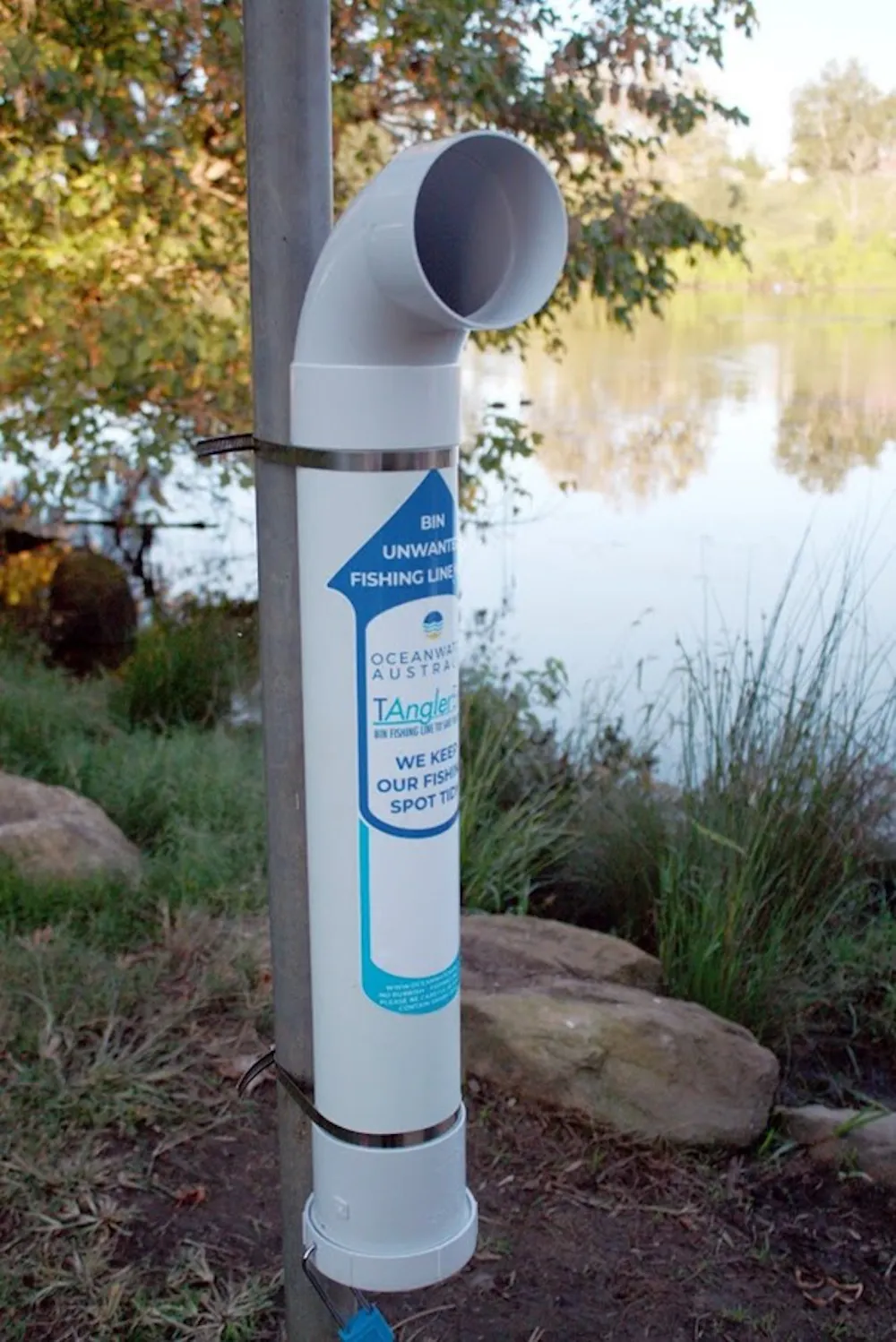 TAngler bins are available for the safe disposal of used fishing line on the banks of the the Hawkesbury-Nepean River, NSW.
Michelle Ryan
TAngler bins are available for the safe disposal of used fishing line on the banks of the the Hawkesbury-Nepean River, NSW.
Michelle Ryan
Between December 2018 and February 2019, when the Victorian Fisheries Authority invited people to swap their old closed top nets for a free “wildlife friendly” net, 20,000 traps were exchanged.
OzFish is currently running a Yabby Trap Round Up in NSW and SA. The Opera House traps are recycled and turned into useful fishing products.
Recreational fishers should also round up their used fishing line and hooks. The “TAngler bin” initiative encourages safe disposal. Since 2006, more than 350 TAngler bins have been installed at fishing hotspots in Victoria, NSW and Queensland, collecting more than ten tonnes of discarded fishing line.
A study in known platypus habitat on the Hawkesbury-Nepean River in Greater Sydney found more than 2.5km of fishing line was disposed of correctly in the bins in just three years.
Save our platypuses
Closed-top nets should be banned nationwide. This would ensure recreational fishers can no longer buy these traps and then use them in banned areas, as is happening now.
Net exchange programs should continue, in conjunction with a national awareness campaign, so the closed-top traps already sold are all handed in.
And both fishers and the wider community can take action by collecting discarded fishing line and nets.
Platypuses need all the help they can get. With our support, these beloved iconic animals can live on in Australian waterways.
Read more: Our native animals are easy prey after a fire. Could artificial refuges save them?
Authors: Katherine Warwick, PhD Candidate, Western Sydney University


















