

Working from home can make us healthier and happier. Employers benefit too. Here’s the evidence if you need any convincing
- Written by: Ty Ferguson, Research Associate, University of South Australia
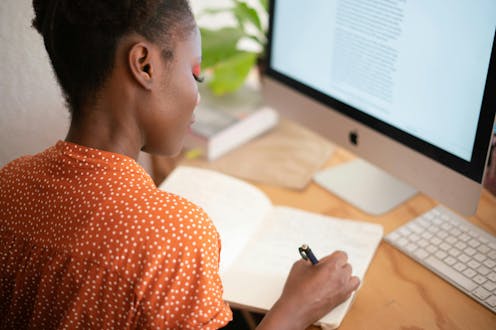
Some of us used to imagine a world where the morning commute was a short stroll from your bedroom, the dress code included comfy slippers, and the closest coffee shop was your kitchen. Then working from home became a reality for many during the COVID pandemic, reshaping our work-life balance.
During the early days of the pandemic in 2020, our team was partway through a year-long study examining lifestyle and wellbeing in Australian adults. Our findings, captured during the early COVID period, revealed that people working from home slept nearly half an hour more and drank slightly more alcohol. Dietary habits and mental health indicators were unchanged.
Fast forward to today. Many employees still work from home and many more want to. The Fair Work Commission is reviewing whether it needs to create basic rights for flexibility, allowing people to work from home.
While some of the health evidence about working from home is mixed, overall it shows giving workers the flexibility to choose to work from home can be good for their physical and mental health.
It saves time commuting
Before the pandemic, the typical Australian spent 4.5 hours commuting each week, a grind linked with poorer mental health and lower scores of how we rate our own health.
Read more: Australian city workers' average commute has blown out to 66 minutes a day. How does yours compare?
In Australia, the transition to home offices has given us about an hour and 18 minutes a week of extra time.
Yet, intriguingly, 43% of this newfound time is channelled into more work, with a fraction (9%) to caregiving activities and leisure pursuits (33%). So are we optimising this shift?
We move and snack more when working from home
With extra time dedicated to leisure when working from home, there is more opportunity to be physically active and less sedentary.
In a study from the United States of 108,000 people, work-from-home days were more likely to include significant bouts of walking or cycling.
By having more time available, slower yet active transport options become viable for short trips, such as cycling to the supermarket or walking to pick up children from care.
However, this silver lining is clouded by findings from Japan, where remote workers reported less movement and more sitting during office hours, hinting at a complex trade-off between work and leisure-time physical activity.
Dietary habits, too, are evolving with working from home. The convenience of proximity to our kitchen pantries has led to an increase in snacking.
However, as we snack more and see a rise in our overall energy intake at home, there’s also a noticeable shift towards a broader selection of healthier food options. Consumption of vegetables, fruits and dairy has gone up, complemented by a surge in preparing meals at home.
In the office, limited by the constraints of a packed communal fridge or the wait to use the microwave, opting for a less nutritious but quicker takeaway lunch often seems the better choice.
What about mental health and wellbeing?
When considering mental health and wellbeing, the results are nuanced.
Generally, when working from home is compulsory, as was common during the early pandemic lockdowns, mental health and wellbeing tend to decline.
Conversely, when people choose to work from home, their mental health and wellbeing often improve. This is especially the case when they’re well supported by colleagues and their organisation, and can manage their isolation level, meaning they have flexibility in their work-from-home arrangements.
There are concerns working from home can negatively impact team cohesion and collaboration, feelings of attachment and social ties within the workplace, and opportunities for promotion.
While connecting with colleagues is difficult to replicate remotely, it’s important to note job performance and productivity appear to be stable or, in most cases, improved when working from home.
Additionally, those working full time at home or in a hybrid model report job satisfaction and wellbeing to be stable or improved. They also report a reduction in work-family conflict – this is particularly so for women.
Some people need more flexibility than others
For some people, the flexibility to work from home alleviates some of the structural barriers to working.
Women, especially mothers and caregivers, report improved wellbeing with the option to work from home. The added flexibility helps to balance paid employment with unpaid caregiving and household duties, which disproportionately fall on women’s shoulders.
Similarly, workers with disabilities tend to favour working from home, as a solution to overcoming transportation and accessibility challenges posed by traditional workplaces. Providing alternative working arrangements allows a greater number of people living with disabilities to engage in paid employment, which is linked to improvements in mental health.
Working from home is not a one-size-fits-all approach and appears best positioned as one choice among many to support a better, more inclusive, and flexible work environment. Just as our homes transformed into makeshift offices overnight, our approach to work must evolve, embracing the diversity of needs and lifestyles.
Let’s hope a legacy of COVID will be a healthier, more balanced workforce.
Authors: Ty Ferguson, Research Associate, University of South Australia


















