

From malaria, to smallpox, to polio – here’s how we know life in ancient Egypt was ravaged by disease
- Written by: Thomas Jeffries, Senior Lecturer in Microbiology, Western Sydney University
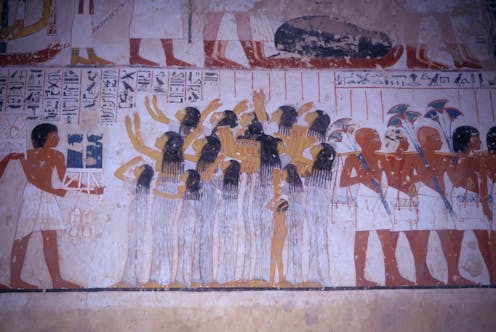
The mention of ancient Egypt usually conjures images of colossal pyramids and precious, golden tombs.
But as with most civilisations, the invisible world of infectious disease underpinned life and death along the Nile. In fact, fear of disease was so pervasive it influenced social and religious customs. It even featured in the statues, monuments and graves of the Kingdom of the Pharaohs.
By studying ancient specimens and artefacts, scientists are uncovering how disease rocked this ancient culture.
Tutankhamun’s malaria, and other examples
The most direct evidence of epidemics in ancient Egypt comes from skeletal and DNA evidence obtained from the mummies themselves.
For instance, DNA recovered from the mummy of the boy pharaoh Tutankhamun (1332–1323 BC) led to the discovery he suffered from malaria, along with several other New Kingdom mummies (circa 1800 BC).
In other examples:
- skeletal and DNA evidence found in the city of Abydos suggests one in four people may have had tuberculosis
- the mummy of Ramesses V (circa 1149–1145 BC) has scars indicating smallpox
- the wives of Mentuhotep II (circa 2000 BC) were buried hastily in a “mass grave”, suggesting a pandemic had occurred
- and the mummies of two pharaohs, Siptah (1197–1191 BC) and Khnum-Nekht (circa 1800 BC), were found with the deformed equinus foot which is characteristic of the viral disease polio.
Signs of a disease-ravaged people
Amenhotep III was the ninth pharaoh of the 18th dynasty, and ruled from about 1388–1351 BC.
There are several reasons experts think his reign was marked by a devastating disease outbreak. For instance, two separate carvings from this time depict a priest and a royal couple with the polio dropped-foot.
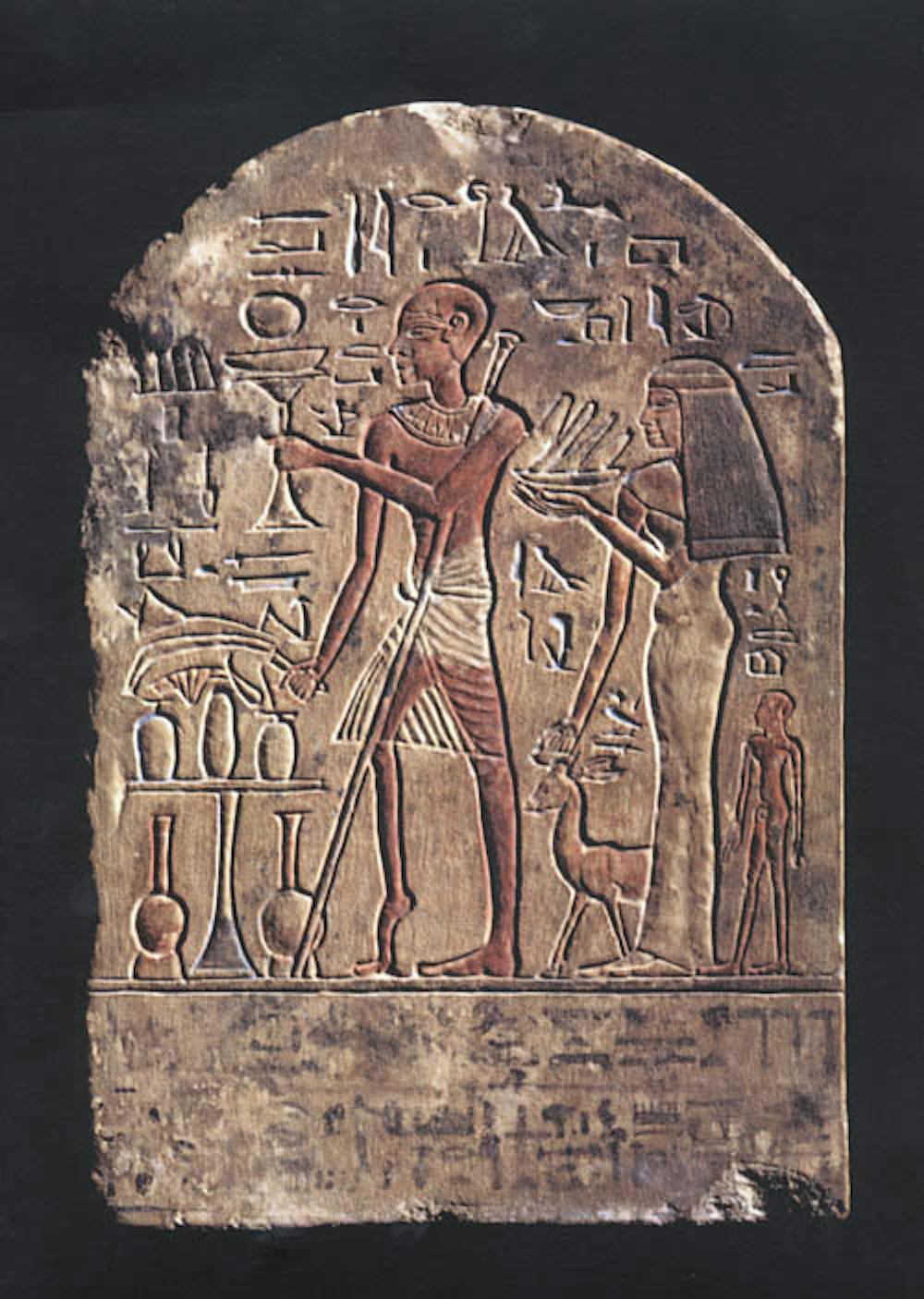
Statues of the lion-headed goddess of disease and health, Sekhmet, also increased significantly, suggesting a reliance on divine protection.
Another sign of a potential major disease outbreak comes in the form of what may be an early case of quarantine, wherein Amenhotep III moved his palace to the more isolated site of Malqata. This is further supported by the burning of a workers’ cemetery near Thebes.
Grave goods also became less extravagant and tombs less complex during this period, which suggests more burials were needed in a shorter time frame. These burials can’t be explained by war since this was an unusually peaceful period.
Did disease trigger early monotheism?
Amenohotep’s son – “the heretic King” Akhenaten (who was also Tutankhamun’s father) – abandoned the old gods of Egypt. In one of the earliest cases of monotheism, Akhenaten made worship of the Sun the official state religion.
Some researchers think Akhenaten’s dramatic loss of faith may have been due to the devastating disease he witnessed during his childhood and into his reign, with several of his children and wives having died from disease. But we’ve yet to find clear evidence for the role of disease in shaping his theology.
There’s also no direct DNA evidence of an outbreak under his father, Amenhotep III. There are only descriptions of one in letters Amenhotep III and Akhenaten exchanged with the Babylonians.
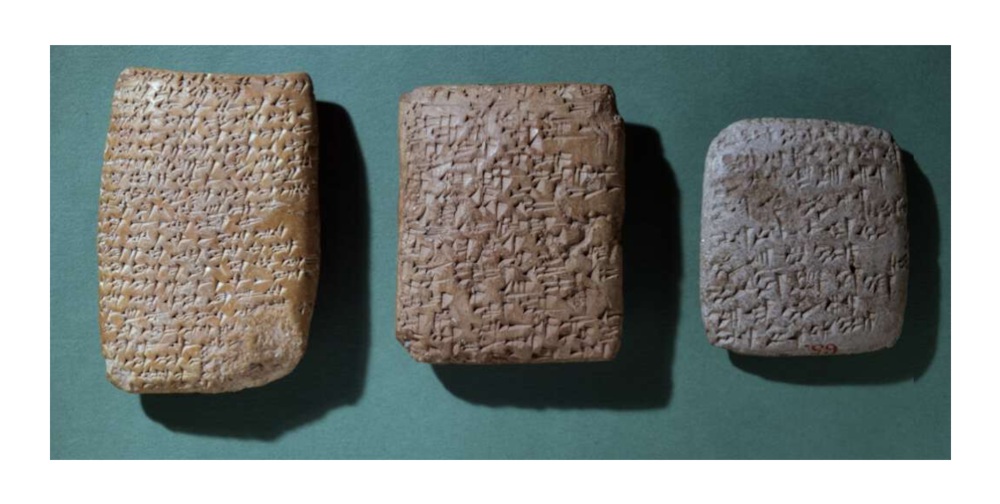 These clay tablets (circa 14th century BC), inscribed in Babylonian cuneiform, were sent to Amenhotep III or Akhenaten from the ruler Abdi-tirshi of Hazor (modern-day Israel).
British Museum, CC BY-NC-SA
To confirm an outbreak under Amenhotep III, we’d need to first recover pathogen DNA in human remains from this time, has been found in other Egyptian burial sites and for other pandemics.
Also, while many ancient epidemics are referred to as “plagues”, we can’t confirm whether any outbreaks in ancient Egypt were indeed caused by Yersinia pestis, the bacteria responsible for bubonic plague pandemics such as the Black Death in Europe (1347-1351).
That said, researchers have confirmed the Nile rat, which was widespread during the time of the Pharaohs, would have been able to carry the Yersinia infection.
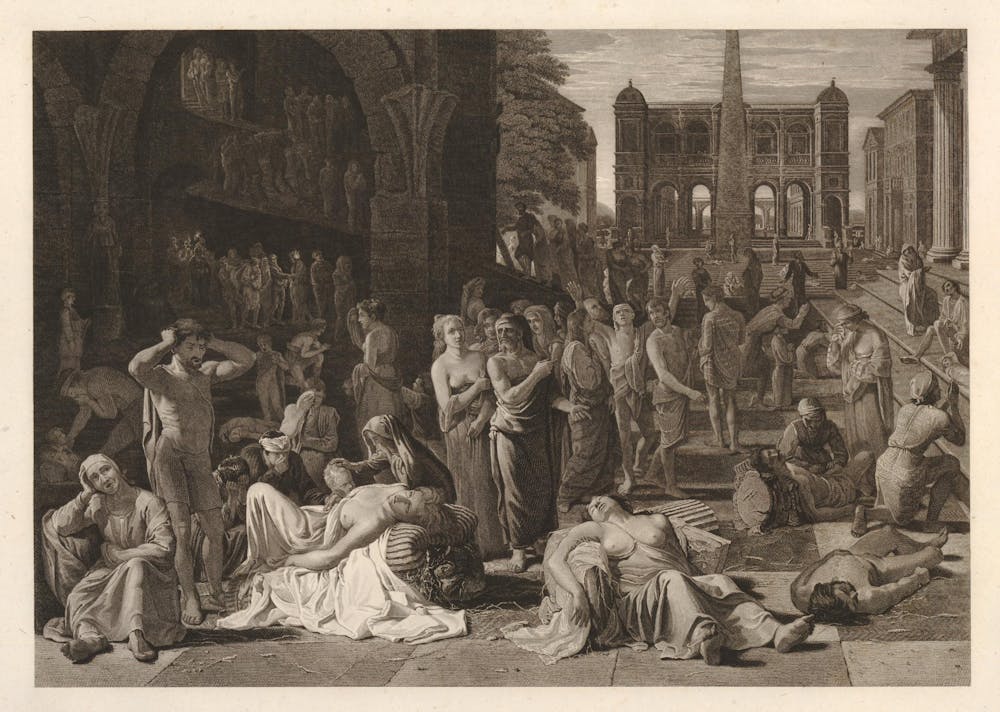 This 1811 etching depicts the ancient Plague of Athens (circa 430 BC), which may have been caused by Yersinia or a disease with similar symptoms such as smallpox, typhus or measles.
The British Museum, CC BY-NC-SA
How were outbreaks managed?
Much like modern pandemics, factors such as population growth, sanitation, population density and mobilisation for war would have influenced the spread of disease in ancient Egypt.
In the case of war, it’s thought the Hittite army was weakened by disease spread when it was famously defeated by Egyptian Pharaoh Ramses the Great in the battle of Kadesh (1274 BC).
In some ways, Egyptian medicine was advanced for its time. While these outbreaks occurred long before the development of antibiotics or vaccines, there is some evidence of public health measures such as the burning of towns and quarantining people. This suggests a basic understanding of how disease spreads.
Diseases caused by microorganisms would have been viewed as supernatural, or as a corruption of the air. This is similar to other explanations held in different parts of the world, before germ theory was popularised in the 19th century.
New world, old problems
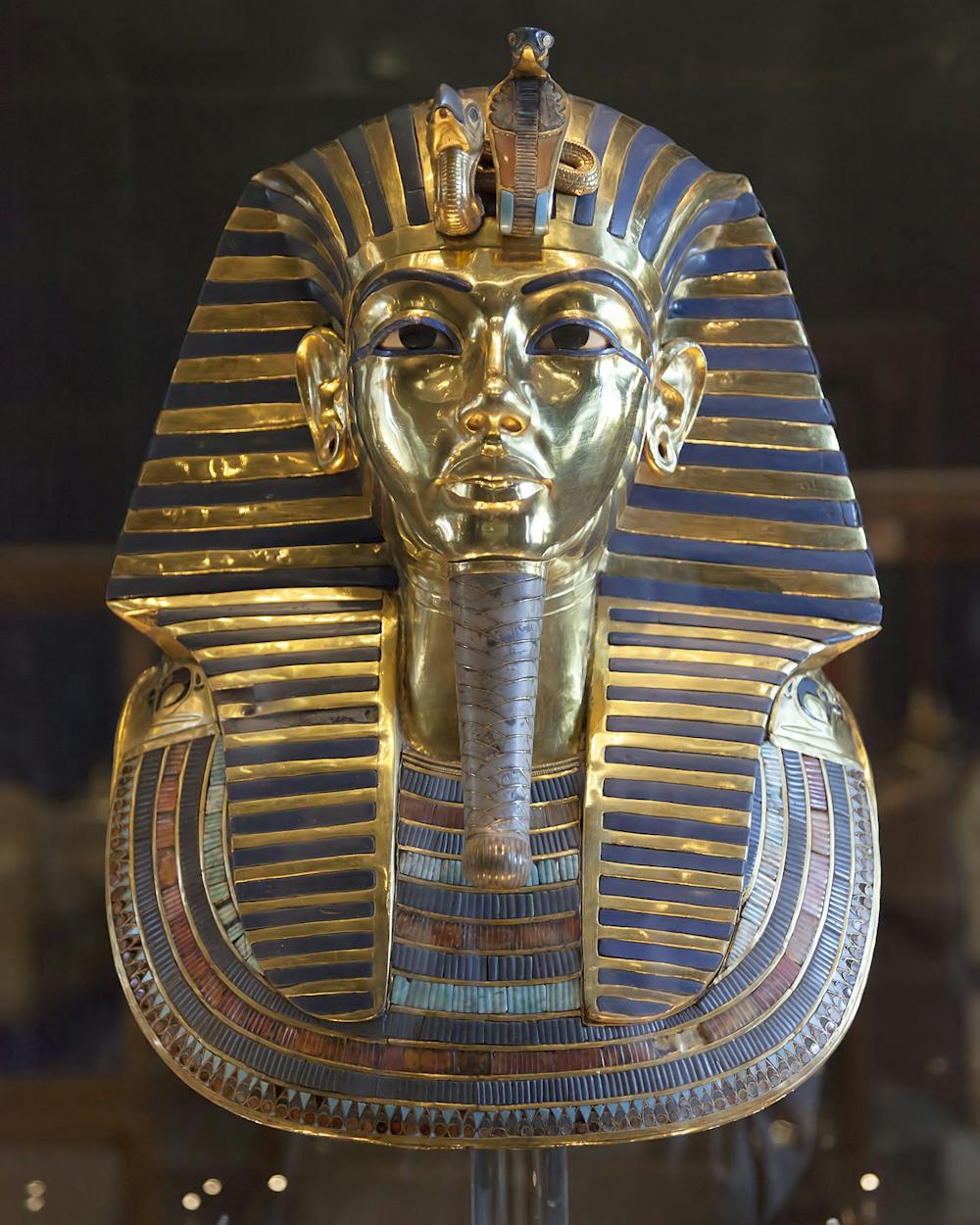 The funerary mask of Tutankhamun, who died as a teenager.
Wikimedia, CC BY-SA
Many of the most widespread diseases that afflicted the ancient world are still with us.
Along with Tutankhamun, it’s thought up to 70% of the Egyptian population was infected with malaria caused by the Plasmodium falciparum parasite – spread by swarms of mosquitoes occupying the stagnant pools of the Nile delta.
Today, malaria affects about 250 million people, mostly in developing nations. Tuberculosis kills more than a million people each year. And smallpox and polio have only recently been eradicated or controlled through vaccination programs.
More work is yet to be done to detect individual pathogens in Egyptian mummies. This knowledge could shed light on how, throughout history, people much like us have grappled with these unseen organisms.
Authors: Thomas Jeffries, Senior Lecturer in Microbiology, Western Sydney University





















