
What washing machine settings can I use to make my clothes last longer?
- Written by: Alessandra Sutti, Associate Professor, Institute for Frontier Materials, Deakin University
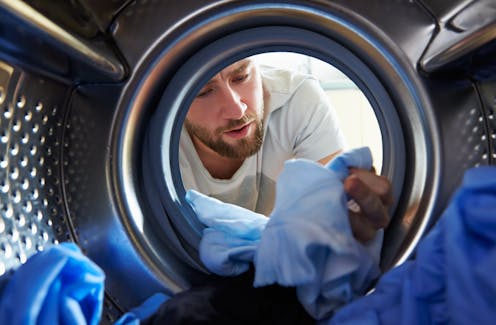
Orbiting 400 kilometres above Earth’s surface, the astronauts on the International Space Station live a pretty normal social life, if not for one thing: they happily wear their unwashed clothes for days and weeks at a time. They can’t do their laundry just yet because water is scarce up there.
But down here on Earth, washing clothes is a large part of our lives. It’s estimated that a volume of water equivalent to 21,000 Olympic swimming pools is used every day for domestic laundry worldwide.
Fibres from our clothes make their way into the environment via the air (during use or in the dryer), water (washing) and soil (lint rubbish in landfill). Most of this fibre loss is invisible – we often only notice our favourite clothing is “disappearing” when it’s too late.
How can you ensure your favourite outfit will outlast your wish to wear it? Simple question, complex answer.
Washing machines are not gentle
When you clean the filters in your washing machine and dryer, how often do you stop to think that the lint you’re holding was, in fact, your clothes?
Laundering is harsh on our clothes, and research confirms this. Several factors play a role: the type of washing machine, the washing cycle, detergents, temperature, time, and the type of fabric and yarn construction.
There are two types of domestic washing machines: top-loader and front-loader. Mechanical agitation (the way the machine moves the clothes around) is one of the things that helps ease dirt off the fabric.
Top-loaders have a vertical, bucket-like basket with a paddle, which sloshes clothes around in a large volume of water. Front-loaders have a horizontal bucket which rotates, exposing the clothes to a smaller volume of water – it takes advantage of gravity, not paddles.
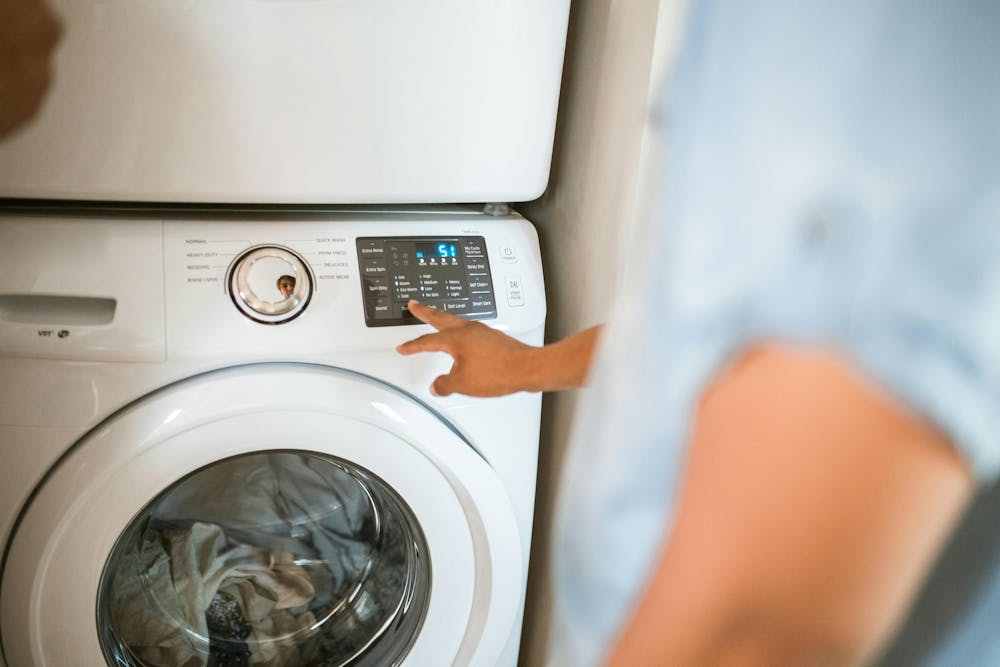
Top-loading machines tend to be more aggressive towards fabrics than front-loaders due to the different mechanical action and larger volumes of water.
Washing machine panels also present many choices. Shorter, low-temperature programs are usually sufficient for everyday stains. Choose longer or high-temperature programs only for clothing you have concerns about (healthcare uniforms, washable nappies, etc.).
Generally, washing machine programs are carefully selected combinations of water volume, agitation intensity and temperature recommended by the manufacturer. They take into consideration the type of fabric and its level of cleanliness.
Select the wrong program and you can say goodbye to your favourite top. For example, high temperatures or harsh agitation may cause some fibres to weaken and break, causing holes in the garment.
Some fabrics lose fibres more easily than others
At a microscopic level, the fabric in our clothes is made of yarns – individual fibres twisted together. The nature and length of the fibres, the way they are twisted and the way the yarns form the fabric can determine how many fibres will be lost during a wash.
In general, if you want to lose fewer fibres, you should wash less frequently, but some fabrics are affected more than others.
Open fabric structures (knits) with loose yarns can lose more fibres than tighter ones. Some sports clothing, like running shirts, are made of continuous filament yarn. These fibres are less likely to come loose in the wash.
Cotton fibres are only a few centimetres long. Twisted tightly together into a yarn, they can still escape.
Wool fibres are also short, but have an additional feature: scales, which make wool clothes much more delicate. Wool fibres can come loose like cotton ones, but also tangle with each other during the wash due to their scales. This last aspect is what causes wool garments to shrink when exposed to heat and agitation.
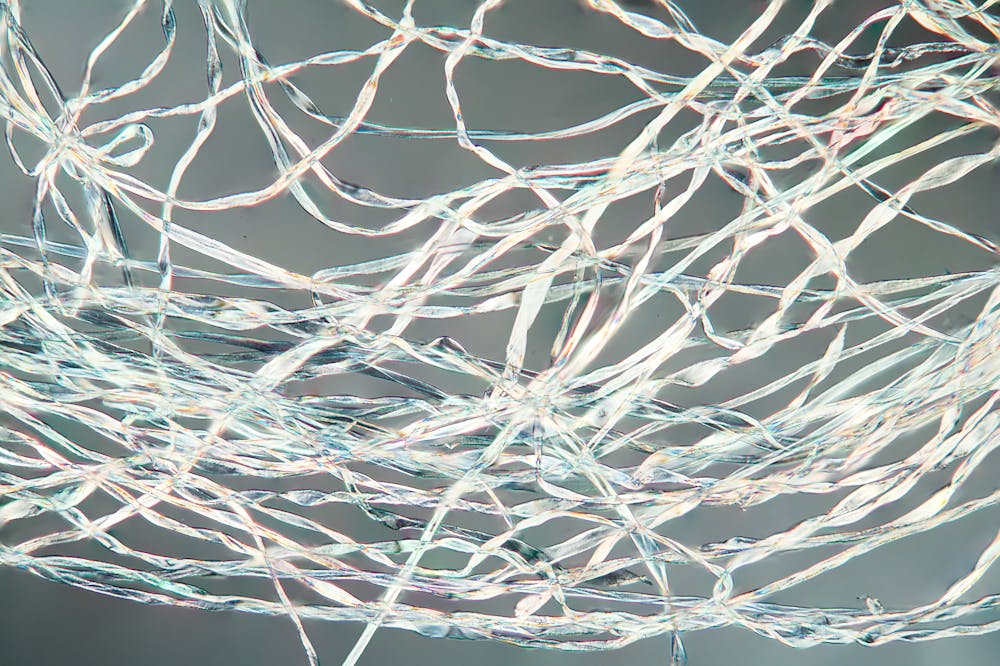 Cotton fibres under a microscope, magnified 100 times.
Dr. Norbert Lange/Shutterstock
Cotton fibres under a microscope, magnified 100 times.
Dr. Norbert Lange/Shutterstock
Go easy on the chemicals
The type of detergent and other products you use also makes a difference.
Detergents contain a soap component, enzymes to make stains easier to remove at low temperature, and fragrances. Some contain harsher compounds, such as bleaching or whitening agents.
Modern detergents are very effective at removing stains such as food, and you don’t need to use much.
An incorrect choice of wash cycles, laundry detergent and bleaching additives could cause disaster. Certain products, like bleach, can damage some fibres like wool and silk.
Meanwhile, research on fabric softeners and other treatments continues – there’s no one-size-fits-all answer about their potential impact on our clothes.
Just skip laundry day
So, how to ensure your clothes last longer? The main tip is to wash them less often.
When it’s time for a wash, carefully read and follow the care labels. In the future, our washing machines will recognise fabrics and select the wash cycle. For now, that’s our responsibility.
Read more: How to make your clothes last longer – it's good for your bank account and the environment too
And the next time you throw your shirt into the dirty laundry basket, stop. Think of the astronauts orbiting above Earth and ask yourself: if they can go without clean laundry for a few days, maybe I can too? (Although we don’t recommend just burning your dirty undies, either.)
Authors: Alessandra Sutti, Associate Professor, Institute for Frontier Materials, Deakin University


















