

Google AI


Modern Australian

Liam Pieper’s Appreciation is a mordant tale of a tragically flawed artist

  • Written by: Georgia Phillips, Lecturer, Creative Writing, University of Adelaide
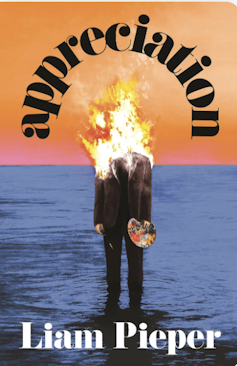
The cover of Appreciation

A nuanced exploration of the value and personal cost of art-making runs through Melbourne writer Liam Pieper’s jaunty new satirical novel Appreciation.

Set in the near present, the novel is about Oli – a gay painter from the country who has learned to capitalise on this fact in public appearances – while also reflecting on “toxic masculinity” in a vague, rote-learned way. Oli paints over-sized, Basquiat-inspired paintings, with “angry masculine impastos” and “rough impressionist wheatfields”. They have names in an Aussie battler idiom: “Daffo”, or “Thresher”.

Review: Appreciation – Liam Pieper (Penguin)

In the outer orbit of Oli’s universe lurks a flock of art “appreciators”. They are portrayed by Pieper as more interested in the long-term appreciating value of the works they’re bidding on than their artistic merits.

The struggle for artistic survival is the main conundrum at the heart of this mordant romp. Artists compete for a modest elite of buyers who in turn, despite their tastes (or lack of them), hold the keys to the wealth and enduring relevance of a select few (Oli being one of them).

Appreciation is Pieper’s fourth novel, (he has also ghostwritten bestsellers). His first, The Toymaker, a work of historical fiction, won the Christina Stead fiction award. His third, Sweetness and Light, deals with similar themes to Appreciation, including drug abuse, relationship breakdown, and an examinination of how larger systemic forces underpin personal relationships and the myths we make about ourselves.

Meeting the artist

Appreciation opens with a postmodern meta-reflection on the nature of story, before introducing our hero.

Oli has “just enough distinct elements to him”. He is in his early 40s. He drives a Toyota Hilux. He is a little too cavalier about his health, his life, and those around him. He has an incredible tolerance to recreational drugs and alcohol. Despite his recklessness, Oli is good-looking enough that nobody “has ever told him that the story of how he got his tattoo is not interesting”.

As Pieper writes, Oli

has a way of shuffling into the room like a very old dog, turning his attention on you, and in doing so lighting up your day.

Yet Oli is painfully conceited. At the start of the novel, he gazes at himself in the mirror, in a scene evoking the Baroque painter Caravaggio’s Narcissus. Like the painting, in which Narcissus is entranced by his own reflection, the novel continues in this self-regarding loop, with Oli embarking on a journey of scrutinising his own image.

Read more: Who was Narcissus?

Oli quickly trades his reflection in the mirror for perusing his social media platforms. As he scrolls, he harvests jolts of validation from followers who’ve deluded him into thinking “somewhere out there, he is loved”.

Several pages later, we discover how deep-seated Oli’s insecurities are when – despite his success, wealth and endless baggies (of cocaine) – he confesses his favourite sensation is being watched. Oli has no shortage of unlikable or even ugly qualities. Still, he does not eclipse the unlikability of Ottessa Moshfegh’s unnamed protagonist in My Year of Rest and Relaxation (2018), a young woman who tries to chemically sleep for a year.

Read more: My Year of Rest and Relaxation: 'sad-girl' fetishism or 'cuttingly funny' feminist satire?

There is something to be said for Pieper’s exploration, in this novel, of the value of ugliness in contemporary art and its ability to challenge our existing conceptions of what we consider “good”. However, throughout the work, mentions of Oli’s art and art-making emerge as afterthoughts. This echoes the sense that his rise to fame has been less about his paintings, and more about personal brand-building.

Oli has forfeited so much – and received so much – for his artistic success he can no longer comprehend the true shape of what’s on the easel, or in the mirror before him.

Irony

Oli’s world is populated by two kinds of characters. There are those who are profiting off his success and working for him, such as his agent, Anton. And there are those who are trying to profit off his work through “appreciation”, such as buyers or The Paperman: a critic and arts editor of an influential broadsheet newspaper.

Anton, an old drug-dealer-cum-friend, plays a somewhat paternal role in Oli’s life, overseeing nearly all aspects of his livelihood. It is Anton who arranges Oli’s television appearance on a program “beloved by a left-leaning audience for its soothing politics”, which ultimately leads to his downfall.
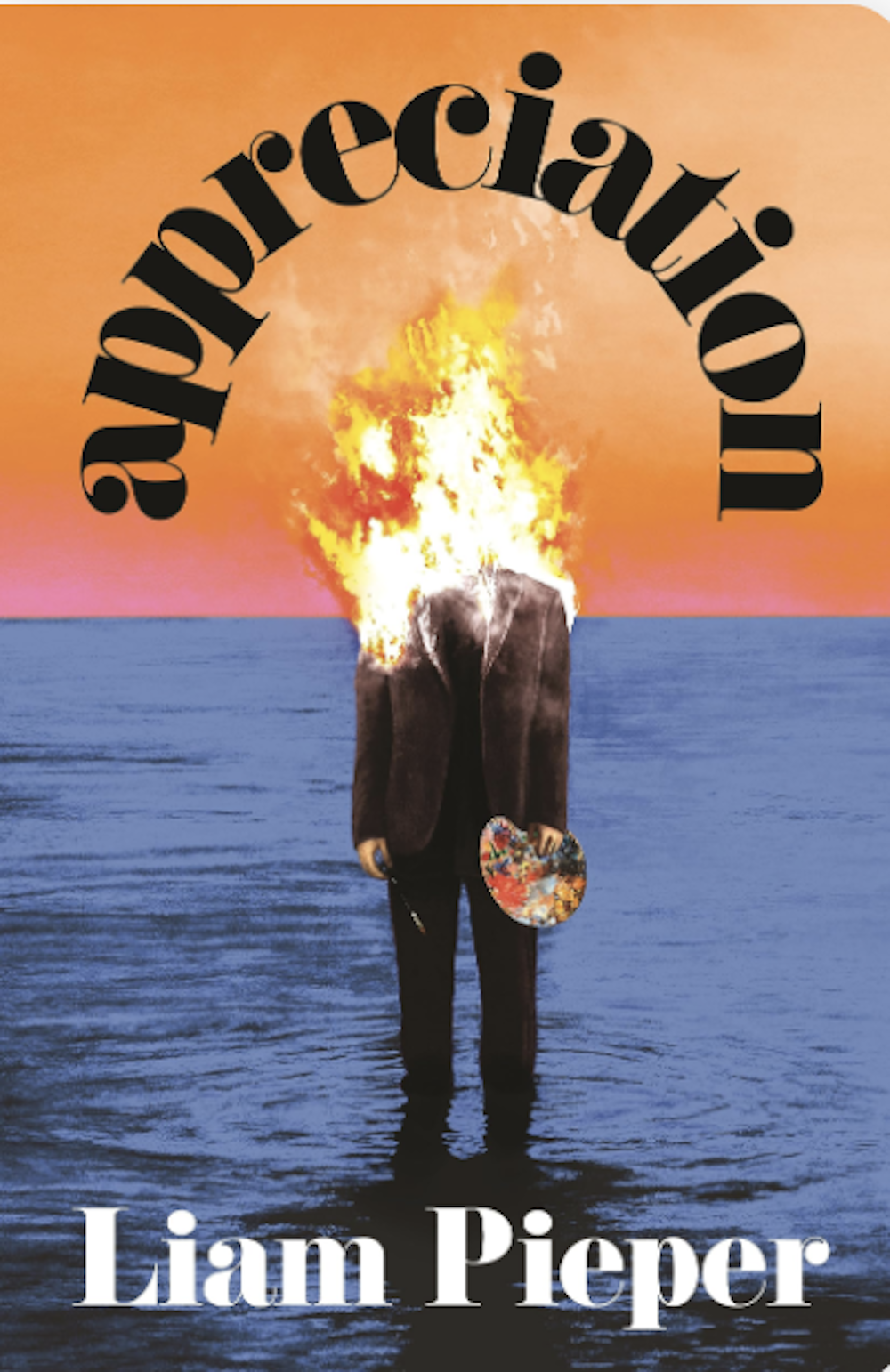
The cover of Appreciation
Goodreads As Anton coolly reminds Oli before he gets up on stage under the influence, “too many wealthy and powerful people have invested in Oli over the years, and too deeply, to let him fuck it up now”. However, by this point in the narrative the odds are higher than even Oli himself. Critic Northrop Frye, in his influential work Anatomy of Criticism (1957), defines satire as “militant irony”. Appreciation is peppered with this irony. Giving a speech at the opening night of a rising artist’s first solo exhibition, Oli unabashedly forgets the artist’s name mid-speech. Later, he circumnavigates the after-party searching for the richest guest to schmooze with, whom he ultimately despises for their wealth. The resounding absurdity in Appreciation is Oli’s painful lack of self-knowledge and awareness (along with the insalubrious behaviours that sustain his art-making). In turn, Oli’s inability to see people for who they are beyond how they can help him reduces the characters in his world to mere outlines. This way of looking at and perceiving others is filtered through the narration. The art collectors are rendered as all parody, and lack any of the idiosyncrasies that give characters true depth and animation. In Oli’s head, he has assigned the collectors names like “Baron”, who is scornfully described as a “third generation squatter who had inherited enormous wealth and, with it, limitless reserves of white guilt”. No character – whether it be artist, critic, buyer, those in favour of identity politics or against – is spared from the sharp strikes of Pieper’s sardonic humour. Read more: We're laughing in an echo chamber: it's time to rethink satire Oli’s tragic flaw On a live television panel “broadly themed around an ongoing national identity crisis”, Oli is confronted with what Aristotle describes as hamartia — a tragic character flaw that leads to their own undoing. When pressed by an audience member as to whether his work is perpetuating the toxic masculinity he claims it tries to subvert, Oli is exposed as a woke-fraud. Then, after a clumsy tirade by Oli, the same audience member poses the possibility that he might, in fact, not be a very good artist. After the burn of public humiliation, a disgruntled Anton explains to Oli that the only path towards salvaging his tainted image is to perform the demoralising task of writing a memoir – and, of course, going on a tour to regional schools. Despite the gags and Oli’s overwhelming unlikability, his journey to try to rectify his self-destruction results in a great digging into his psyche and past. As Oli reconstructs windows of early adolescence with the help of a ghost-writer, a deep tenderness is stumbled upon. As these past episodes are recounted, a meditation on the early formation of Oli’s artistic identity develops. A new type of character, Rio, also enters the story. Rio is different from those who dominate Oli’s emotionally numb, transactional present. He is wholly unique and effectively drawn – a hum of the real reverberating through the novel and bringing with it emotional subtlety. However, as Frye reminds us, in satire the “sardonic vision is the seamy side of the tragic vision” where the “sublime and the ridiculous” are “convex and concave of the same dark lens”. As with Appreciation, in the echo of laughter are shards of truth and tragedy: what has been lost, exploited or given up in the pursuit of an uncompromising vision. Appreciation is a literary page turner with no shortage of dramatic flair. The wry and incisive narration is reminiscent of the theatrical work of Oscar Wilde. Authors: Georgia Phillips, Lecturer, Creative Writing, University of Adelaide

Read more https://theconversation.com/vanity-money-and-angry-masculine-impastos-liam-piepers-appreciation-is-a-mordant-tale-of-a-tragically-flawed-artist-225458

What Are the Benefits of Renovating an Older Home in Sydney?

Sydney has plenty of character homes, from Federation cottages to mid-century brick homes. Renovating rather than rebuilding can preserve what makes t...

Pool and Deck Design: How to Plan the Perfect Outdoor Living Space for Your Sydney Home

For many Australians, the backyard is where life happens. Summer barbecues, weekend swims and long evenings outdoors are all part of the lifestyle, ...

Is Solar Pool Heating Worth It? What Sydney Homeowners Should Know

There's nothing quite like a backyard pool on a hot Sydney day. But once autumn rolls in, many pools sit unused for months because the water is simp...

Planning a Luxury House Move: A Week-by-Week Timeline for Prestige Sydney Homes

Selling or buying a prestige home is a major milestone. Whether it's a waterfront residence in Birchgrove, a grand Federation home in Haberfield or ...

Downsizing or Upgrading Your Caravan? Here's How to Sell It Without the Hassle

Selling a caravan can feel like a major task, especially when you are unsure about its value, paperwork, or how to find a buyer. Whether you are dow...

The Best Overseas Adventure Holidays for Australians Who Love the Outdoors

Australia offers no shortage of incredible outdoor experiences, but sometimes the best way to satisfy your sense of adventure is to head overseas. A...

Cape Town Wine Shuttle: Winelands Tasting & Tours

Embark on an unforgettable journey through the picturesque Cape Winelands, where world-class wines and breathtaking scenery await. Our Cape Town Win...

Metal Fabrication: Choosing Metal Fabrication Melbourne Services for Custom Projects

What Modern Metal Fabrication Involves From individual components to complete structures, metal fabrication brings together processes such as desig...

Why Giant Rats Tail Grass Keeps Coming Back After Spraying

Giant Rats Tail Grass (GRT) is one of the most frustrating pasture weeds for farmers and lifestyle property owners. You spray an infested area, see th...

When Custom Cardboard Boxes Make Sense for Your Business

Custom cardboard boxes can be useful when a standard carton does not fit a product, packing method or presentation requirement particularly well. A ...

Full-Height vs. Pop-Top Caravan: Which Is Better for Family Travel across WA?

A pop-top caravan is an excellent choice for travellers who want the comfort of a caravan without committing to a larger, bulkier setup. With a lowe...

Bottle Label Printing: Key Factors for a Professional Finish

Why the Printing Method Matters When businesses need packaging or printed containers developed for a particular application, the right supplier can m...

Virtual Livestock Fencing and GPS Tracking: Improving Visibility Across Cattle Properties

What Virtual Livestock Fencing Means for Modern Cattle Management Managing cattle across extensive properties requires more than knowing where anim...

Sydney Pawnbrokers Explained: How Hocking Your Car Actually Works

Sometimes you need cash, and you need it soon. If you own a car, you may already have a way to get it. That's what people mean when they say they've...

Moving Interstate from the Gold Coast to Brisbane (or Back)? What Removalists Wish You Knew First

Have you talked to anyone who’s done the move? They say the same thing: the drive up the M1 is the easy part. It's everything around it that catches...

Why the Spring School Holidays Are a Great Time to Visit Coffs Harbour

The spring school holidays are a good time to spend a few days on the Coffs Coast. The weather is starting to warm up, there is plenty to do outdoor...

What to Do When an Older Car Is No Longer Worth Keeping in Melbourne

Ever looked at another repair quote and wondered whether your old car is still worth the trouble? It is a common turning point for Melbourne motoris...

Your Baby's First Year: A Local Guide to Feeding, Sleep, and When to Get Extra Support

Ask ten parents in a Brisbane mothers' group how their baby is feeding or sleeping, and expect ten different answers.  Someone's baby sleeps throug...
















