

meet the real Villiers women behind Mary & George
- Written by: Sarah Bendall, Senior Lecturer, Institute for Humanities and Social Sciences, Australian Catholic University
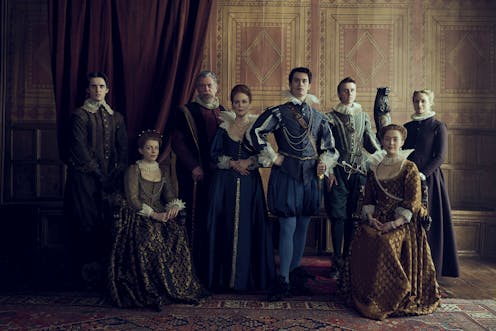
Mary & George, the new British television drama series, depicts the real-life story of Mary Villiers and her son George, and their social climbing at the early 17th century English royal court.
George Villiers rose from humble beginnings to cup-bearer in 1614, Gentleman of the Bedchamber in 1615, and ultimately to the royal favourite of King James VI & I, amassing many titles and court appointments. In 1623 he was made Duke of Buckingham, the only duke who was not a member of the royal family.
In Mary & George, Mary moulds George to be James’ lover, where he would become the second-most powerful man in England. But from dizzying heights can come a great fall.
Much of the show is embellished for dramatic effect – it’s unclear if James actually did have sexual relationships with his male favourites, and Sir Francis Bacon did not die of syphilis.
However, other aspects of the show are fact. The Earl and Countess of Somerset were tried and found guilty of murder through poisoning (though they weren’t executed) and Frances Coke really was abducted and forced to marry John Villiers (witnesses noted her crying in the ceremony just like depicted).
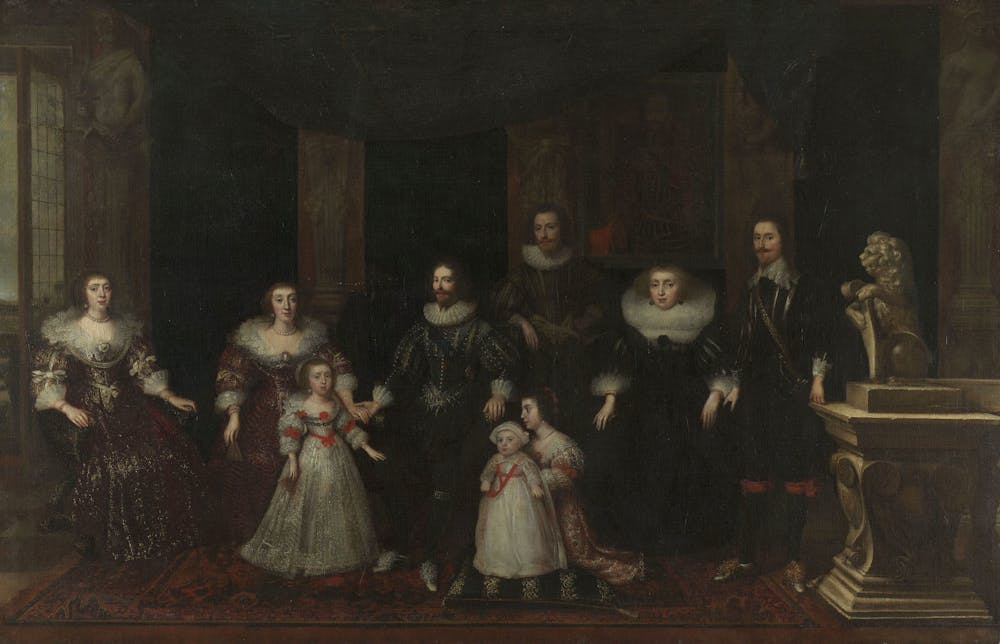
Although George’s relationship with James is a central focus of the series, the Villiers women – George’s mother, sister and wife – all strategically bolstered the power and influence of their male relatives and ensured their family remained in royal favour.
Here’s what you should know about the real women behind the characters.
Read more: How to make friends and influence people (as a 17th-century woman)
The mother: Mary Villiers
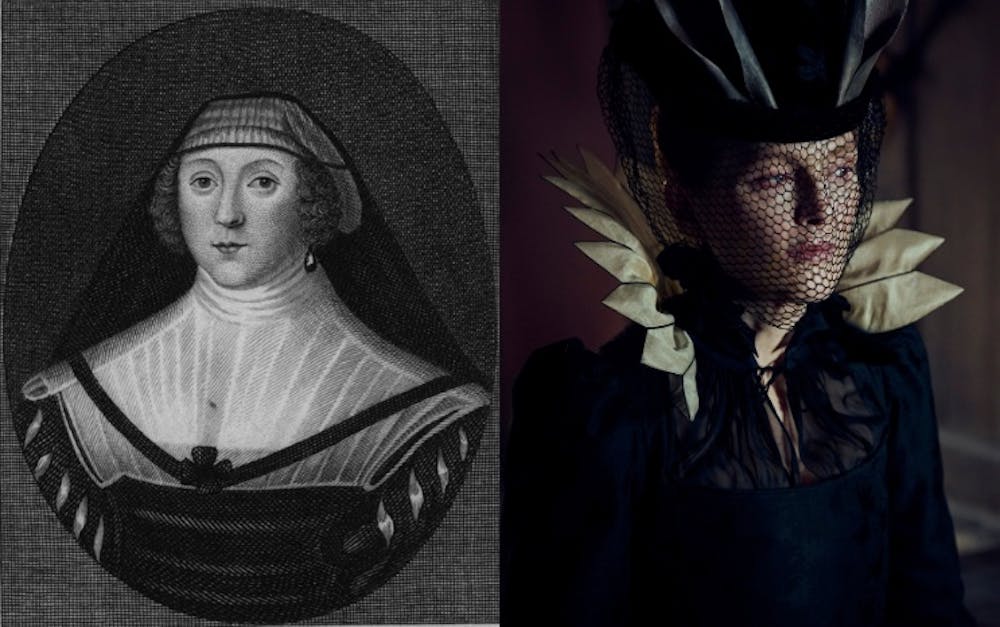 An engraving of Mary Villiers from 1814, and Julianne Moore as Mary Villiers.
Wikimedia Commons/Binge
An engraving of Mary Villiers from 1814, and Julianne Moore as Mary Villiers.
Wikimedia Commons/Binge
While the fictional Mary Villiers’ origins are depicted as low-born, the real Mary was from a gentry family with a good name but little money.
Mary’s four children with her first husband, George Villiers, were Susan, John, George and Christopher (“Kit”), who all feature in the show.
She married again to Sir William Rayner, and finally Sir Thomas Compton. She was created Countess of Buckingham in her own right (not tied to a husband) in 1618.
Like many women at this time who could not own property or assets due to the laws of coverture, Mary strategically married and used the other avenues available to her – such as social networking – to rise through the ranks of Jacobean society until her death in 1632.
History has not been kind to Mary. Her ambition for her family marked her as greedy, calculating and ruthless, which the show extends to lesbianism and murder despite the absence of any historical evidence.
The sister: Susan Villiers
 Susan Feilding, nee Villers, is played by Alice Grant.
Wikimedia Commons/Binge
Susan Feilding, nee Villers, is played by Alice Grant.
Wikimedia Commons/Binge
Mary’s only daughter Susan is portrayed in the show as a quiet, timid and boring teenager. In reality Susan, who went by Sue, learned a great deal from her mother and used strategic connections to improve the social standing of her family.
In 1607, before the rise of the Villiers family at court, she married a country gentleman named William Fielding. Sue and William used George’s favour with the king to obtain many offices and titles; they were made the Countess and Earl of Denbigh in 1622.
After Charles I ascended the throne and married French princess Henrietta Maria, Sue was appointed as the most senior Lady of the Bedchamber.
Read more: Beheaded and exiled: the two previous King Charleses bookended the abolition of the monarchy
These positions gave her vast influence at court. Surviving papers describe how she was frequently paid for “secret service” for the queen.
Over time, Sue developed a close relationship with Charles and Henrietta Maria, godparents to some of her grandchildren. Her letters show she was concerned with the social position of her own son, his education and his advancement at court.
When the queen fled for France during the English civil wars, Sue went with her and remained until her death in 1652.
The wife: Katherine Manners
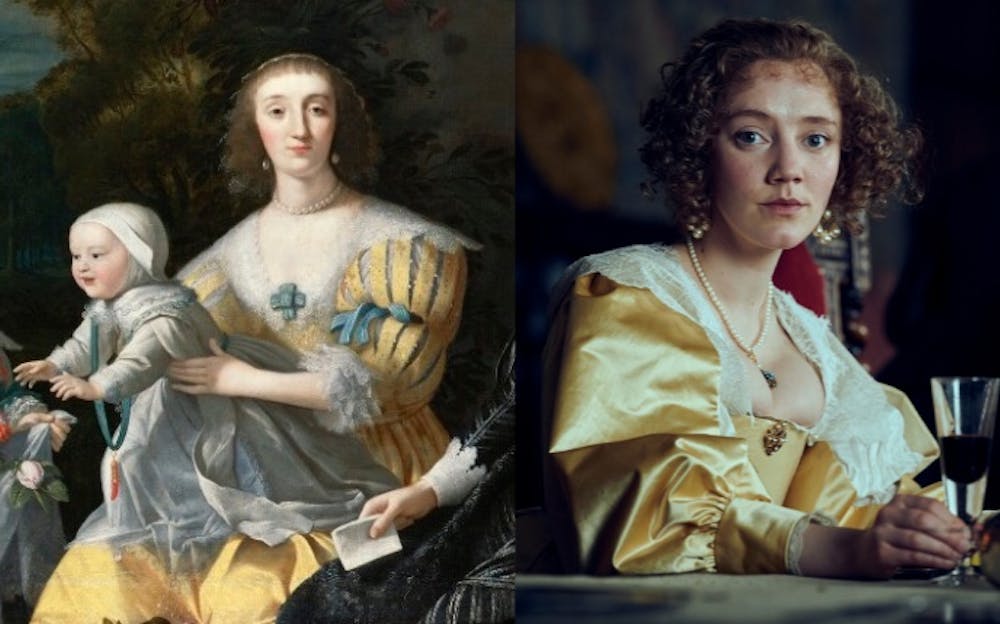 Katherine Manners, painted in 1628, is played by Mirren Mack.
National Portrait Gallery/Binge, CC BY-NC
Katherine Manners, painted in 1628, is played by Mirren Mack.
National Portrait Gallery/Binge, CC BY-NC
In the show, George is forced into a partnership with “Katie” Manners when his mother and sister conspire to lock them in a room overnight, risking their reputations.
Young, “fertile” and wealthy, Katie describes herself as the perfect aristocratic wife.
They married in 1620 in a private ceremony witnessed only by James and her father, the Earl of Rutland. Katie became Katherine Villiers, Marchioness and then Duchess of Buckingham. She and George had four children, Mary, Charles, George and Francis.
James was Mary’s doting godfather. In his letters, he called her his grandchild, while Kate and George became his “children” and he their “dear dad”.
As the show depicts, George and the Villiers women became like a new family to James. This intimacy explains the libels which claimed Mary and George killed the king, a rumour the show brings to life.
Katherine, like Mary and Sue, became a Lady of the Bedchamber to Henrietta Maria. Katherine was pregnant when George was assassinated in 1628 and witnessed his death at the Greyhound Inn (where you can still stay) in Portsmouth.
She went into mourning, commissioning portraits and the Buckingham monument at Westminster Abbey in a chapel usually reserved for royalty. She continued to live at York House in London, marked today by its Watergate near Embankment Station.
Although she and her children remained favourites of Charles, her reconversion to Catholicism in 1628 and marriage to the Irish Catholic Randall MacDonnell in 1635 caused a strain. Katherine spent much of the civil wars in relative poverty in Ghent and Ireland, with her husband often imprisoned for his role in the Irish Confederacy.
She died in 1649, shortly after Cromwell’s conquest of Ireland, her life and the rule of Charles I both coming to an end.
But the influence of the Villers women in the royal court continued throughout the 17th century. George and Katherine’s daughter Mary married a Stewart, making their royal connections official.
Later generations of Viliers women, including Sue’s daughter Barbara also served in the households of Henrietta Maria and later, Catherine of Braganza, continuing the tradition of royal service and influence that began under Mary and George.
Authors: Sarah Bendall, Senior Lecturer, Institute for Humanities and Social Sciences, Australian Catholic University



















_-_RCIN_402607_-_Royal_Collection.jpg)

_(14757234486).jpg)