

How climate change could affect the microbes that ferment grapes and give wine its specific flavours
- Written by: Stephen On, Professor of Microbiology, Lincoln University, New Zealand
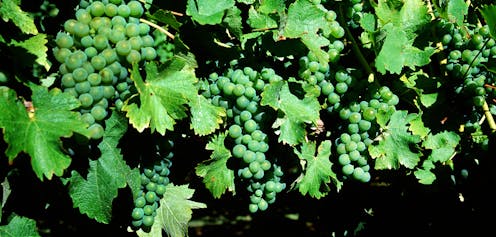
The far-reaching consequences of climate change inevitably include the production of foods and beverages, including wine.
In New Zealand, winemaking is an important business, with exports worth more than NZ$2 billion per year.
Earlier studies have already suggested that grapevine characteristics such as flowering and grape sugar ripeness may be linked to climatic changes. But so far, the microbes that ferment grapes have received little attention.
Our new research explores how yeasts, bacteria and fungi may be affected by changes in temperature and rainfall.
Microbes, wine and the coveted gold star
Without microbes, all we have is grape juice.
It is well established that individual strains of yeast (most commonly Saccharomyces cerevisiae) used to ferment grape juice into wine play a major role in the generation of a range of chemical compounds that influence the flavour, aroma and mouthfeel of wine. A “good” strain (or strains) can mean the difference between a gold award or a bottle of plonk.
Conventional commercial winemakers tend to use established strains from yeast suppliers to provide increased assurance for their production schedule and consistency of the final product. Nonetheless, inevitably every batch of juice will already possess its own diverse community of microorganisms, some of which will begin exerting their own influences upon the wine as it develops.
Some winemakers choose to eschew the addition of commercial yeast, relying on the native microflora in and on the grapes to do the job. This process can be referred to as either spontaneous or “wild” fermentation.
In such cases, the role and diversity of these microbes is critical in the development of the wine, and to its quality. Various studies have demonstrated that the microbial populations in a given winemaking region can be distinctive, contributing to the terroir of the wine.
But what if they change over time and in different climates?
Read more: Grape growers are adapting to climate shifts early – and their knowledge can help other farmers
Climatic factors and changing microbes
In collaboration with Greystone Wines, an organic winemaker in North Canterbury, we had the opportunity to explore how microbial ecosystems (yeasts, bacteria and fungi) in organic winemaking changed between vintages.
We set out to test this by analysing must (grape juice sampled during fermentation). We also tested exposure of their Pinot Noir wines to wild microbes in their winery and vineyard during two different years of production, 2018 and 2021.
We then subjected these samples to a molecular genetic process called “metabarcoding”. In this process, universal gene markers found in every single known example of bacteria, fungi and yeast are used to describe the diversity and distribution of microbes in the samples taken at different times of the wine production.
Read more: Come pests, frost or fire: How the Swiss are arming their wines against climate change
The results were striking. Samples taken from the 2018 vintage contained certain organisms that seemed to be completely absent in the 2021 vintage – and vice versa.
We found significant differences between vintages, most striking for bacteria (with 12 of 16 organisms present in one vintage but not the other). For fungi and yeast species, we found six of a total of 12 organisms fluctuating between harvests.
What could cause these differences? We suggest changes in temperature and rainfall play an important role.
Using publicly available climate data on humidity, temperature and rainfall to model climatic differences we determined that especially temperature, but also humidity, may be important factors in influencing the composition of different populations of microbes. The average rainfall during each of the production periods was also very different.
Temperature and moisture are well established elements that influence microbial growth, but to observe such stark differences between populations was a surprise to us.
Implications of climatic and microbial diversity for wines
Fermentative yeasts are the major agents converting grape fruit sugar into alcohol, the primary winemaking reaction. As mentioned above, they also help produce a range of other chemicals involved with the overall flavour and perception of the wine.
Different yeast strains will produce different compounds. Even at early stages of fermentation, certain yeasts may affect the overall quality of the wine. Most bacteria are not well adapted to the rather harsh environments of wine (ethanol is toxic, hence its use as a sanitiser); however several may proliferate, and some are known to spoil.
Like yeasts, any bacterium able to grow in grape juice (even for a short time) will secrete chemicals into the wine. Whether or not such chemicals are perceptible, favourable or undesirable to humans depends entirely on the individual chemical.
Read more: Climate change may make Bordeaux red wines stronger and tastier
Some of the organisms observed are expected, with well-known adaptations to the wine environment. However, the dominance of a bacterium (Tatumella) previously found in winemaking regions abroad is especially striking in the 2021 vintage. Its role is unknown.
What does this mean for the New Zealand, and indeed international, wine industry? We don’t know yet whether the changes in microbial diversity affect the flavour profiles of these two vintages. However, it is prudent to say that changes in microbial populations in winemaking are associated with differences in climatic factors.
It is therefore important we understand the full extent of climate change impacts on winemaking to be better prepared to protect the industry.
Authors: Stephen On, Professor of Microbiology, Lincoln University, New Zealand


















