

a bridge engineer explains what happened, and what needs to change
- Written by: Colin Caprani, Associate Professor, Civil Engineering, Monash University
When the container ship MV Dali, 300 metres long and massing around 100,000 tonnes, lost power and slammed into one of the support piers of the Francis Scott Key Bridge in Baltimore, the bridge collapsed in moments. Six people are presumed dead, several others injured, and the city and region are expecting a months-long logistical nightmare in the absence of a crucial transport link.
It was a shocking event, not only for the public but for bridge engineers like me. We work very hard to ensure bridges are safe, and overall the probability of being injured or worse in a bridge collapse remains even lower than the chance of being struck by lightning.
However, the images from Baltimore are a reminder that safety can’t be taken for granted. We need to remain vigilant.
So why did this bridge collapse? And, just as importantly, how might we make other bridges more safe against such collapse?
A 20th century bridge meets a 21st century ship
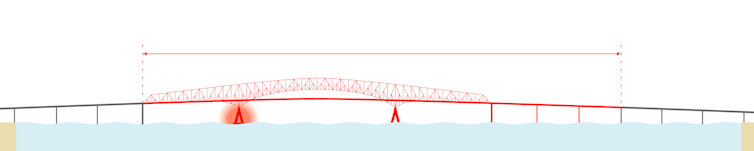
The Francis Scott Key Bridge was built through the mid 1970s and opened in 1977. The main structure over the navigation channel is a “continuous truss bridge” in three sections or spans.
The bridge rests on four supports, two of which sit each side of the navigable waterway. It is these two piers that are critical to protect against ship impacts.
And indeed, there were two layers of protection: a so-called “dolphin” structure made from concrete, and a fender. The dolphins are in the water about 100 metres upstream and downstream of the piers. They are intended to be sacrificed in the event of a wayward ship, absorbing its energy and being deformed in the process but keeping the ship from hitting the bridge itself.
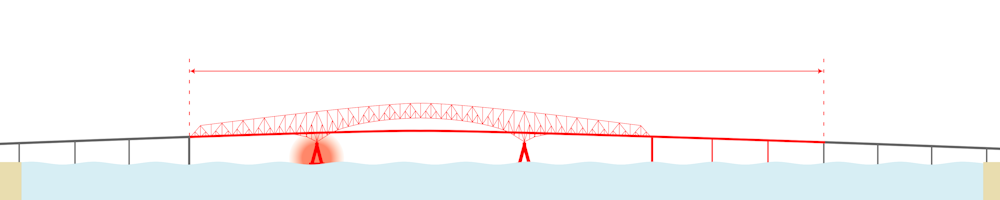
The fender is the last layer of protection. It is a structure made of timber and reinforced concrete placed around the main piers. Again, it is intended to absorb the energy of any impact.
Fenders are not intended to absorb impacts from very large vessels. And so when the MV Dali, weighing more than 100,000 tonnes, made it past the protective dolphins, it was simply far too massive for the fender to withstand.
Video recordings show a cloud of dust appearing just before the bridge collapsed, which may well have been the fender disintegrating as it was crushed by the ship.
Once the massive ship had made it past both the dolphin and the fender, the pier – one of the bridge’s four main supports – was simply incapable of resisting the impact. Given the size of the vessel and its likely speed of around 8 knots (15 kilometres per hour), the impact force would have been around 20,000 tonnes.
Bridges are getting safer
This was not the first time a ship hit the Francis Scott Bridge. There was another collision in 1980, damaging a fender badly enough that it had to be replaced.
Around the world, 35 major bridge collapses resulting in fatalities were caused by collisions between 1960 and 2015, according to a 2018 report from the World Association for Waterborne Transport Infrastructure. Collisions between ships and bridges in the 1970s and early 1980s led to a significant improvement in the design rules for protecting bridges from impact.
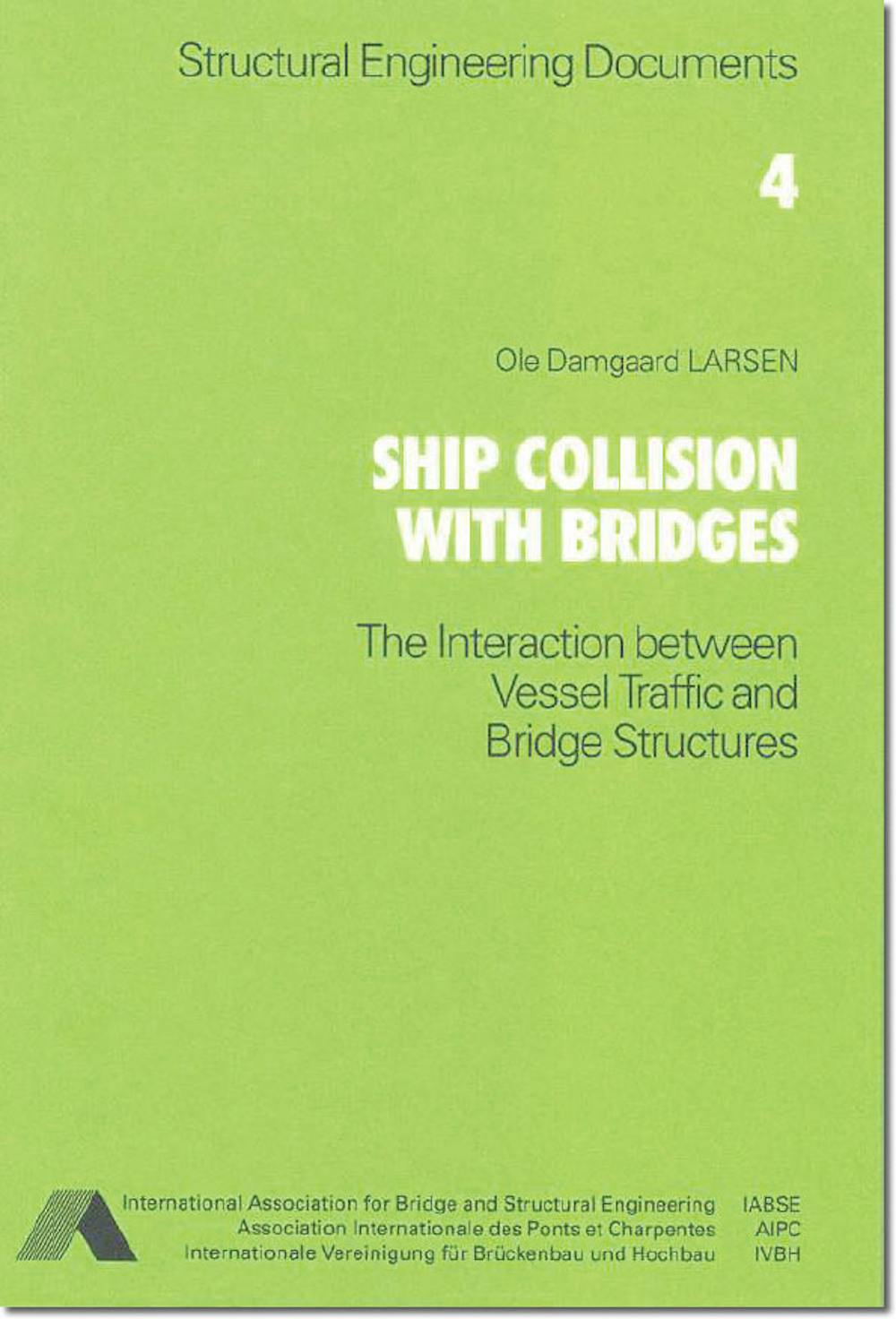 Guidelines like this have played a crucial role in improved bridge safety.
IABSE
Guidelines like this have played a crucial role in improved bridge safety.
IABSE
Further impacts in the 1970s and early 1980s instigated significant improvements in the design rules for impact.
The International Association for Bridge and Structural Engineering’s Ship Collision with Bridges guide, published in 1993, and the American Association of State Highway and Transporation Officials’ Guide Specification and Commentary for Vessel Collision Design of Highway Bridges (1991) changed how bridges were designed.
In Australia, the Australian Standard for Bridge Design (published in 2017) requires designers to think about the biggest vessel likely to come along in the next 100 years, and what would happen if it were heading for any bridge pier at full speed. Designers need to consider the result of both head-on collisions and side-on, glancing blows. As a result, many newer bridges protect their piers with entire human-made islands.
Of course, these improvements came too late to influence the design of the Francis Scott Key Bridge itself.
Lessons from disaster
So what are the lessons apparent at this early stage?
First, it’s clear the protection measures in place for this bridge were not enough to handle this ship impact. Today’s cargo ships are much bigger than those of the 1970s, and it seems likely the Francis Scott Key Bridge was not designed with a collision like this in mind.
So one lesson is that we need to consider how the vessels near our bridges are changing. This means we cannot just accept the structure as it was built, but ensure the protection measures around our bridges are evolving alongside the ships around them.
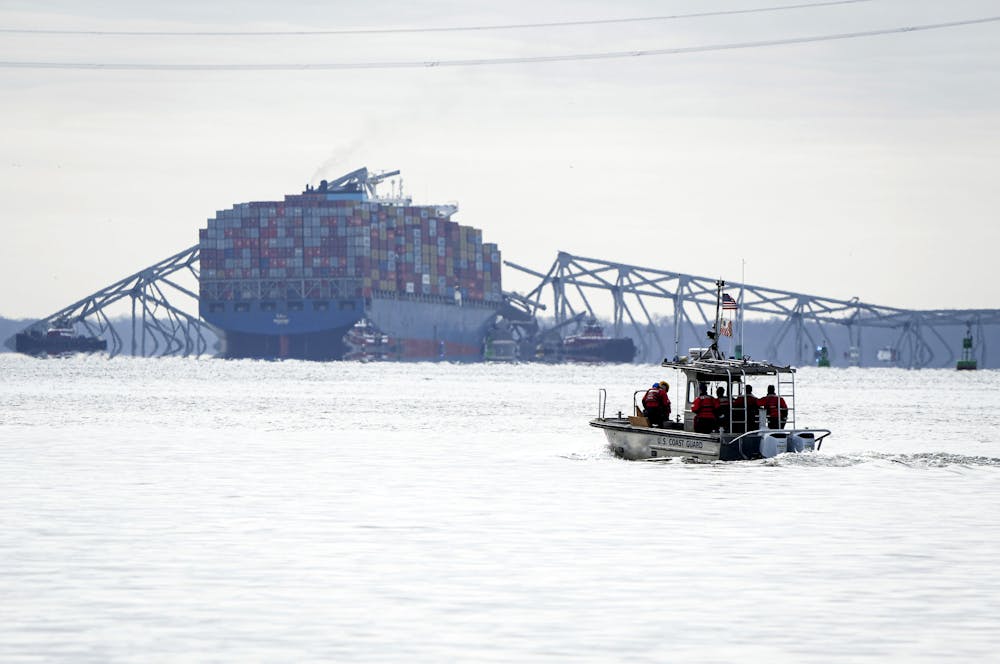 Reconstruction of the bridge will be a long and costly process.
Ulysses Muñoz / The Baltimore Banner via AP
Reconstruction of the bridge will be a long and costly process.
Ulysses Muñoz / The Baltimore Banner via AP
Second, and more generally, we must remain vigilant in managing our bridges. I’ve written previously about the current level of safety of Australian bridges, but also about how we can do better.
This tragic event only emphasises the need to spend more on maintaining our ageing infrastructure. This is the only way to ensure it remains safe and functional for the demands we put on it today.
Authors: Colin Caprani, Associate Professor, Civil Engineering, Monash University



















