

Myrtle rust is lethal to Australian plants. Could citizen scientists help track its spread?
- Written by: Erin Roger, Sector Lead, CSIRO
Every weekend, thousands of citizen scientists head into the great outdoors. If they see an unusual animal, plant or fungi, they take a photo and upload it.
This simple act by bushwalkers with smartphones is, in aggregate, increasingly valuable to researchers. Half of all records uploaded to Australia’s largest open-data aggregator, the Atlas of Living Australia, now come from citizen scientists – and this number is likely to keep growing.
Citizen science isn’t just useful in gauging how native species are going. Curious eyes spot invasive species too. The first sighting of the invasive buff-tailed bumble bee (Bombus terrestris) in Victoria was reported by a citizen scientist last year. The first discovery of a virus which turns woodlice (slaters) iridescent purple came from a citizen scientist. To date, reports from citizen scientists strongly favour native species. But as we grapple with damaging new invasive species, we need much more data.
We have been working to track the spread of the lethal plant fungus, which causes the disease myrtle rust, which can weaken and kill hundreds of our most loved tree species, including eucalypts, paperbarks, bottlebrushes, tea trees and lilly pillies. How far has it spread? We just don’t know. We urgently need more reports from bush tracks and backyards.
Why is myrtle rust so bad?
“Myrtle rust” sounds almost cute. It’s not. Austropuccinia psidii is a highly invasive fungal pathogen native to South America, which arrived in New South Wales in 2010. Windborne spores let the fungus spread rapidly up and down the east coast. By 2015, it had arrived in Tasmania and the Northern Territory, and by 2022 it was in Western Australia. Spores have been detected in South Australia, but no infections have yet been reported.
Read more: From counting birds to speaking out: how citizen science leads us to ask crucial questions
When the spores land on a plant, the fungus begins to feed on the plant’s nutrients and causes myrtle rust disease. In severe cases, the fungus overruns the plant and it suffers dieback. The disease has already driven native guava (Rhodomyrtus psidioides) and scrub turpentine (Rhodamnia rubescens) to localised extinction in areas of Queensland and New South Wales where they were previously common. At least 15 species of rainforest tree are threatened with extinction. The fungus can infect at least 380 Australian species in the Myrtaceae family.
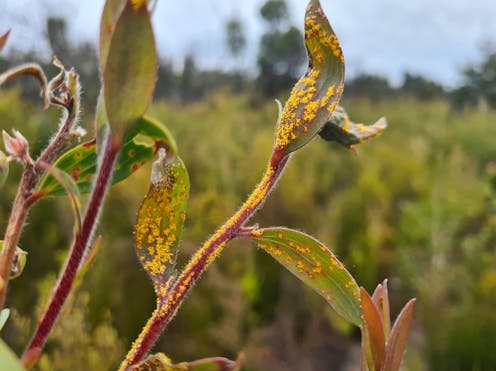
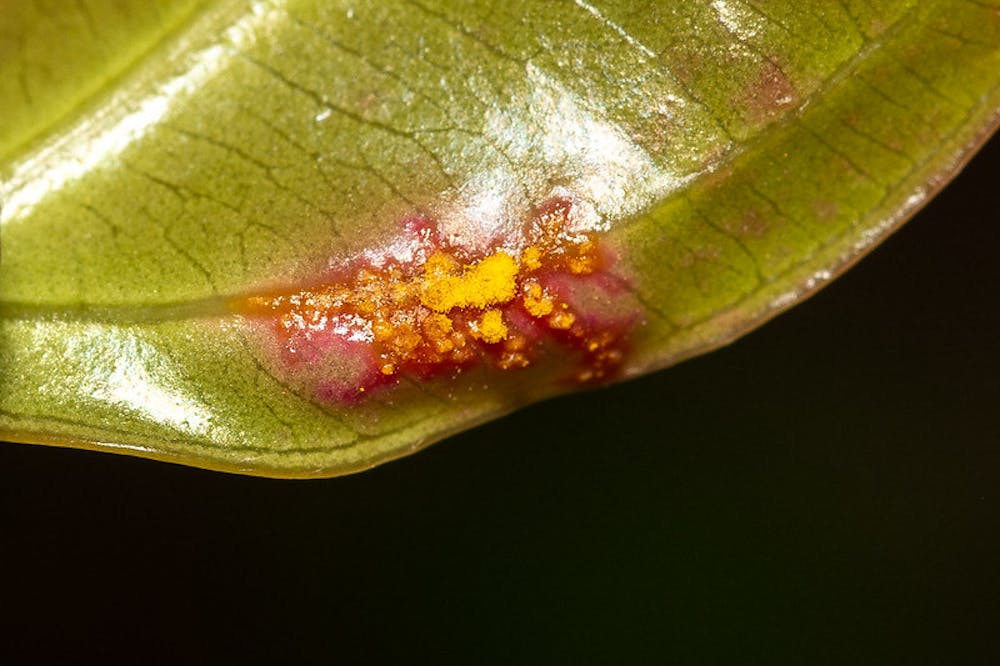
You can spot myrtle rust by its clusters of bright yellow powdery spores on the new leaves, fruits, flowers or stems of plants in the myrtle family. Each cluster has thousands of spores which can be easily carried by the wind or hitching a ride on your clothes to a new host plant to infect. It’s important to avoid touching the rust to reduce its spread.
What role can citizen science play?
We now have more than 130 million observations recorded in the Atlas of Living Australia, ranging from common species such as Australian magpies (Gymnorhina tibicen) to little-known species such as the sand ghost shrimp (Arenallianassa arenosa). Of all these records, only about 2% are of invasive species.
Why? Most citizen scientists get into it because they love native plants, animals and fungi. They may not realise the value of reporting invasive species.
It’s very common to think biosecurity is about the border. But conserving Australia’s wealth of biodiversity doesn’t stop at the airport. Even once an invasive species has arrived, there is much that can be done to reduce the damage. For example, citizen scientists in Queensland have logged reports of highly invasive weed species such as new types of prickly pear cactus (Opuntia spp.). Early warnings like this allow authorities to eradicate plants likely to have been illegally dumped.
We know when communities see an invasive species has become a major problem , they will see the value of recording and reporting it via platforms which feed data into the Atlas of Living Australia.
We know myrtle rust has been observed in most states and territories. But we have little up to date information away from the eastern seaboard.
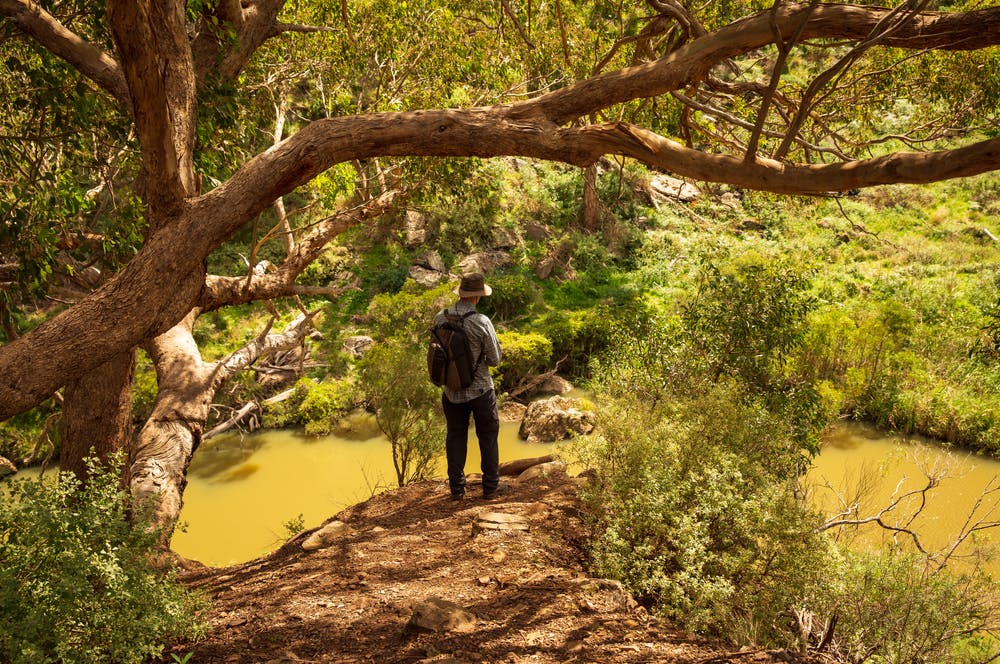 Citizen scientists go to many places scientists often don’t get to.
Melissaberry/Shutterstock
Citizen scientists go to many places scientists often don’t get to.
Melissaberry/Shutterstock
When an invasive species arrives in a new area, it’s essential we find out as soon as possible. Biosecurity rests on early detection. There’s often a very small window to eradicate the species before it spreads. We couldn’t eradicate varroa mite, which devastates beehives, and are struggling to control fire ants.
Even it’s too late for eradication, as with myrtle rust, occurrence data can help us blunt the damage the new species will do. Of particular interest is understanding how far it has spread and what plant species are most susceptible to myrtle rust. This information can help researchers tailor new chemical tools against the rust.
We know other strains of the rust outside Australia could actually pose an even worse threat. If these strains arrive or if the rust in Australia evolved in similar ways, it could accelerate the damage. Eyes on the ground help us track changes to pathogen behaviour.
We need, in short, data coming in constantly. This challenge is beyond the resources of professional researchers. Combining research fieldwork with citizen science reports is shaping up as an excellent way to get a better picture.
One reason citizen scientists are so valuable is that many have access to areas not usually observed by scientists, such as home gardens, rural acreage and hiking tracks.
Citizen science is remarkably easy. Free, open-source citizen science apps such as iNaturalist and NatureMapr add the photos you take to the repository of species data we are amassing.
Every photo and observation counts. We really do need your eyes.
Authors: Erin Roger, Sector Lead, CSIRO


















