

back to Moore River and finding family
- Written by: Aileen Marwung Walsh, ARC Laureate Research Scholarship, Rediscovering Deep Human History, Australian National University
Untangling the web that is the history of the stolen generations is a very satisfying process. In October, I went to the Centenary Memorial gathering at Mogumber, on the site of the Moore River Native Settlement, about 130 km north of Perth.
The memorial was a commemoration of a tragedy that is part of the history of apartheid in Australia. The Moore River Native Settlement is a large part of many Aboriginal people’s family histories, all over Western Australia. People were sent there from the Kimberley and the Pilbara, from the Western Desert and the south west. Doris Pilkington’s book Follow The Rabbit Proof Fence is the most well known story of Moore River but there are thousands of others, including that of my grandparents.
The settlement was established in 1918 as a solution to the Aboriginal problem, as perceived by colonists. There were too many Aboriginal people “wandering about” WA, usually on reserves near ration depots where they received flour and blankets. The colonists did not want to see them.
Plus A.O. Neville, the Chief Protector of Aborigines, had a plan to breed out the black of the Aborigines so they would not be Aboriginal anymore. The full bloods would die out and the half castes would blend in. Neville laid out clearly how he would do this in his book Australia’s Coloured Minority.
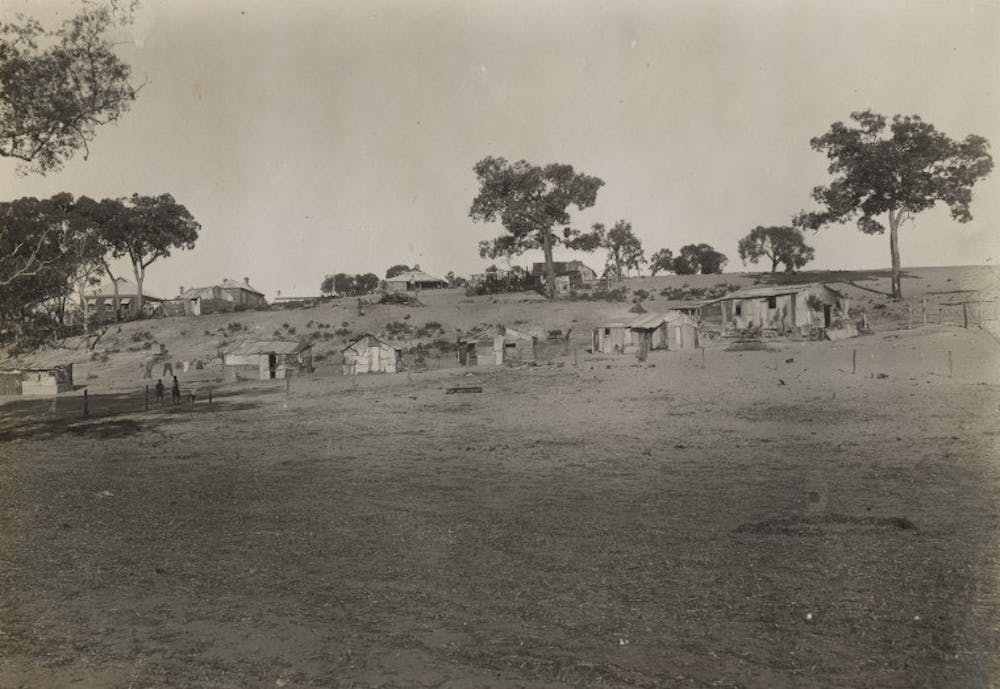 Shacks at Moore River Native Settlement, Western Australia, circa 1920, where the author’s grandmother was held.
State Library of Western Australia.
Shacks at Moore River Native Settlement, Western Australia, circa 1920, where the author’s grandmother was held.
State Library of Western Australia.
Neville issued ministerial warrants to remove Aboriginal people from their homes, Noongars from the Perth area first, but then from all over WA. He closed down ration depots to make it easier to remove people, and women with children were especially vulnerable, so they were sent to Moore River or Carrolup further south.
The average monthly population at Moore River was 193. Between 1915 and 1920, over 500 people were sent to the settlement, many to die away from their country as inmates of one of Australia’s largest concentration camps.
One of the saddest stories was from Laverton, north east of Kalgoorlie, where 17 men women and children had gathered at the police station about 1921, to get their annual blanket and clothing issue. They were put into cells instead, men separated from the women, who were also separated from the children.
The next day they were placed in a cattle truck with a sign on the side, “15 niggers for Mogumber”. The local whites thought blacks being terrified was hilarious and shared the story of the wailing niggers.
Moore River was closed down in 1951 but only to be managed by the Methodist Church who called it Mogumber Mission. It operated until 1980.
Separation
I discovered my grandparents’ story when I received my family’s Native Welfare files in the 1980s. Mum, Violet Newman, was stolen in 1946 and sent to Norseman Mission, between Kalgoorlie and Esperance, and my grandparents were sent to Moore River.
Most Aboriginal people without birth certificates are given the birthday of horses, or the 1st of July, but mum got the day she was put in the mission, 19th of October.
From Moore River my grandfather, Len Newman, ran away and went to look for his daughter. He travelled by foot, he told my mum, because he was afraid of being picked up and sent back to Moore River as so often had happened to others. My grandfather worked around Norseman after he had located mum.
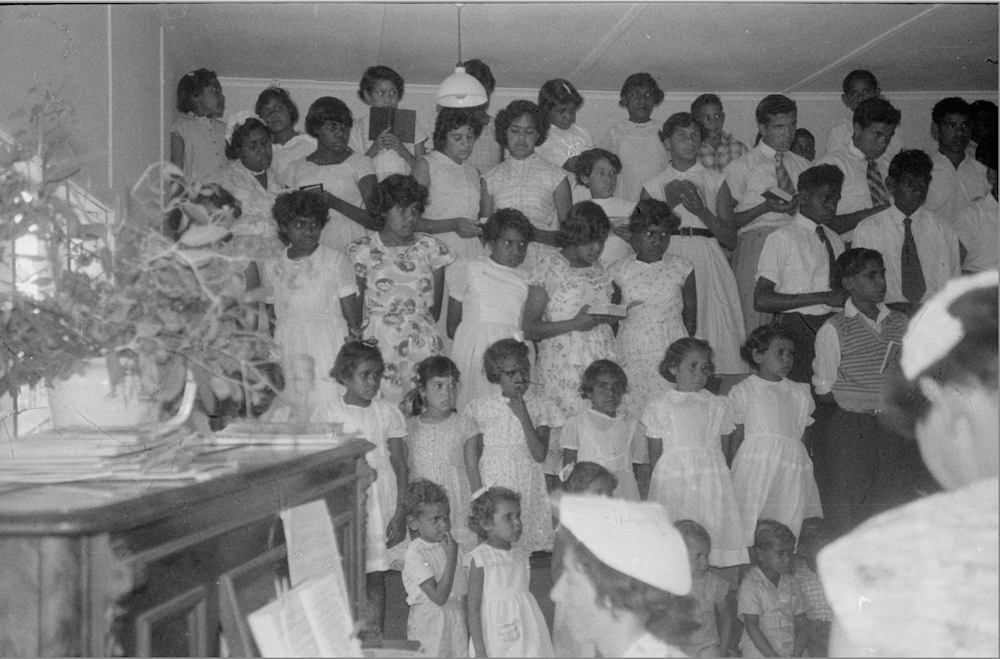 The photo is the children’s choir of the Norseman Mission. The author’s mum is the girl directly under the light shade. The photo is taken in the Norseman Mission chapel.
130491PD: Norseman Mission, 1957 John Portman State Library of Western Australia.
The photo is the children’s choir of the Norseman Mission. The author’s mum is the girl directly under the light shade. The photo is taken in the Norseman Mission chapel.
130491PD: Norseman Mission, 1957 John Portman State Library of Western Australia.
My grandmother’s story was quite different. She never saw her eldest daughter again. And the other daughter she gave birth to, well, we don’t know what happened to her. She was put into Kalgoorlie hospital when my grandmother was sent to Moore River and that is the last we know.
We heard stories about my grandmother when we lived in Newman, in the Pilbara, in the ‘70s because all the Jigalong mob, from two hours east of Newman, had known her.
Apparently, my grandmother had become a local midwife after she left Moore River and lived and travelled between Cundelee, where most of her family had been moved to after Maralinga, and Wiluna and Jigalong, and even down to Mt Barker in the southwest where we also had family.
I have never met nor even seen a photo of my grandmother, Ruby Marwung. However my Auntie Daisy Tinker was raised by her, and she told us a lot about my grandmother when we met my auntie in Newman. When my mum went looking for her mum, she learned that Ruby was dead and buried at Wiluna. She had died in 1972 we think. Mum was shown her grave but it was unmarked and mum didn’t know to look for records. It was just what she’d been told by family.
It’s like the grave of my great grandmother, Clara, the mother of my grandfather Len Newman, another unmarked grave, on the edge of the Norseman reserve. The record of her death is under her second husband’s name, Flynn. Aboriginal women’s names were always unoffocial: no records of birth, or marriage, or births of children. Most often just a death certificate whose history has to be untangled.
My grandparents had been married tribally and my grandfather Len’s decision to stay at Norseman meant that grandmother Ruby was free to marry someone else, and so she married Dungle-Dungle aka Jimmy Stephens. They applied to get married the western way and what is sad is that on the application form they call my mum Gladys. That must have been her name before the native welfare officer named her Violet.
Return
I drove up to Mogumber the day before the gathering, to camp overnight. At the intersection where the Mogumber pub sits, the street sign for the Mogumber mission pointed straight ahead.
Knowing what the local non-Aboriginal people’s attitude would be to the Mogumber reunion I knew that someone would have pointed it in the wrong direction so I turned left instead.
And I was right. The sign was pointing in the wrong direction. When I went past it again the next day someone had changed it to point it the right way.
I couldn’t see any other Noongars so I just kept on driving until I spotted some pulled up at a community hall. I parked next to them and introduced myself. They invited me to camp the night with them and it was a wonderful night of making connections listening to them singing, they were great singers, and watching an amazing moon rise over the trees.
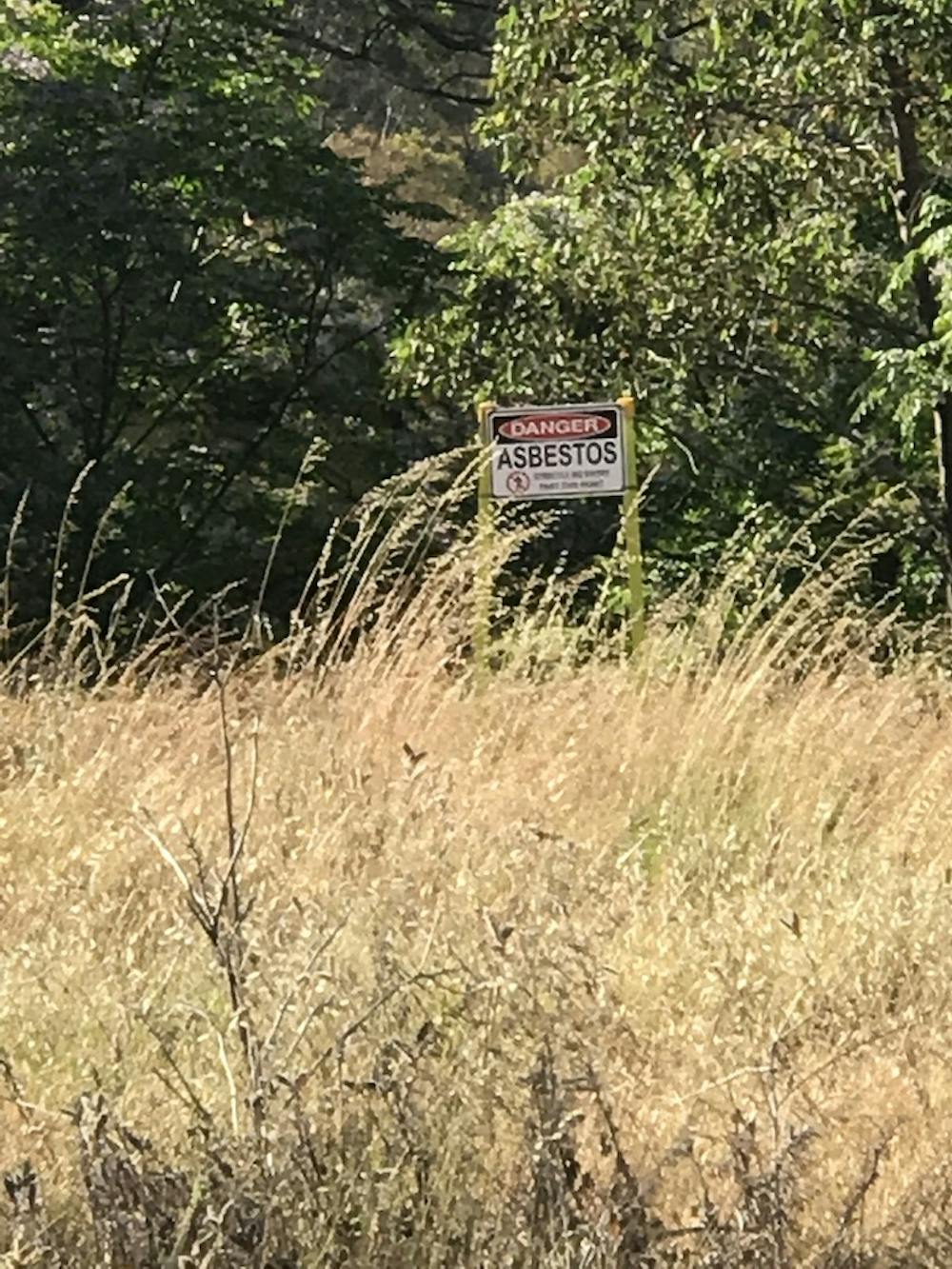 A sign warning of asbestos at the site of the Moore River Native Settlement. The gaol is the gully beyond and there is no asbestos in it.
Aileen Marwung Walsh
A sign warning of asbestos at the site of the Moore River Native Settlement. The gaol is the gully beyond and there is no asbestos in it.
Aileen Marwung Walsh
These were all mostly Yuet Noongars, the people who own the country where Moore River and the New Norcia Mission now sit, so with few connections with me, you’d think, as my family are from the deep south. But no, a couple of my great uncles had moved to the Meekatharra area, in mid west WA, at the beginning of the 20th century and so I met a few uncles and cousins.
And then as well, one of my brothers had died that morning in Perth. His dad was a Narrier, that’s a Noongar family name, and so we all talked about my uncle Joe and my little brother Ronald and I told them all about a conversation I’d had with my uncle Joe decades before; with him wondering where the name Narrier had come from.
I told these local Yuet Noongars how I had tracked the origin of the Narrier name for uncle Joe, that the Narriers weren’t named after a place, like my uncle Joe had thought, but that the place Mt Narryer had been named after their ancestor Ned Narea who had been a Noongar guide for colonists in the 1850s.
I was also able to tell them how Ned Narea, which was later Anglicised to Narrier, died in 1881 and they were upset by that story because Narea and his babbin (special friend) Kalinga had been sent from Roebourne to Perth in chains so tightly and cruelly fastened that at the end of the 28-day voyage they were both dead.
Life in a prison
The next day we all drove to the mission and I made special notice of the country because the photos I had seen of Moore River in the early 20th century showed a place denuded of vegetation, just wooden huts. The landscape is different now. Mogumber Mission was run until 1981 and the missionaries made big changes. There are also pine plantations all around.
I met a man called Lewis Wallam; I’ve known his sister Elaine for a long time, decades, because she lives near my mum in Como, Perth. Lewis took me to the prison, part of the settlement, and that story is very interesting.
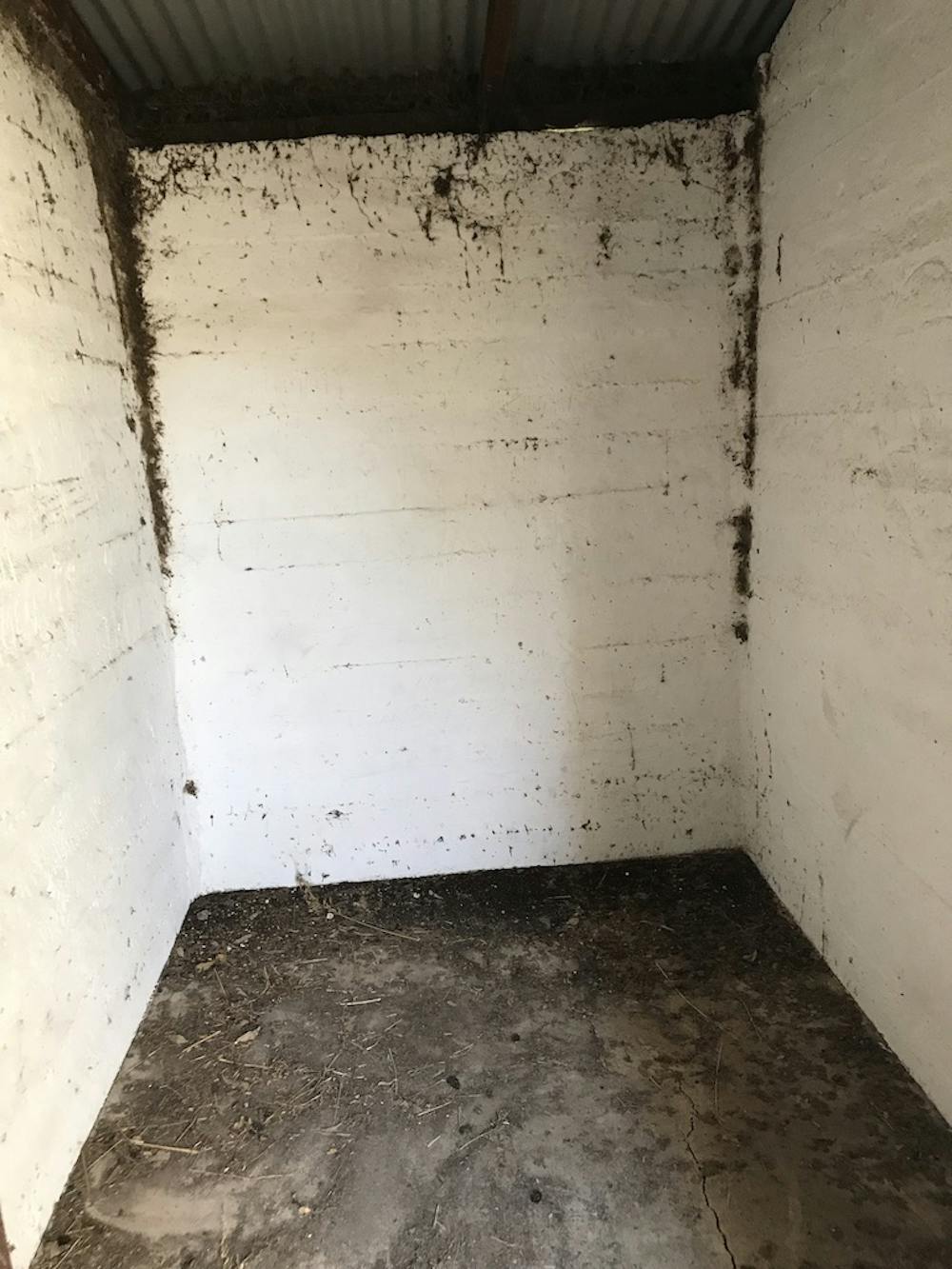 The cell where the author’s grandmother was held after she ran away from Moore River.
Aileen Marwung Walsh
The cell where the author’s grandmother was held after she ran away from Moore River.
Aileen Marwung Walsh
There are four cells with no windows, just an iron grill above the thick wooden door. There is a small outside area that has strong steel grill for a roof and that was where prisoners were allowed to spend time during the day.
My grandmother Ruby spent time in this prison for running away from Moore River in 1949, she was sentenced to four days. Being in the gaol I was for the first time in the same place that I knew my grandmother had been. In a gaol.
The next time my grandmother ran away she was heavily pregnant and so when the police brought her back she did not go into the goal. She gave birth to a boy a while later and they called him Murray Newman after his grandfather. But he died, one of the many babies buried in the Moore River cemetery.
It was a strange sensation being in the place that is so often described as a hell hole, the whole of the Moore River Native Settlement that is, not just the goal; and as I reflect back on the memory of it, it grows stranger and stranger.
Authors: Aileen Marwung Walsh, ARC Laureate Research Scholarship, Rediscovering Deep Human History, Australian National University
Read more http://theconversation.com/friday-essay-back-to-moore-river-and-finding-family-107522


















