

In a time of information overload, enigmatic philosopher Byung-Chul Han seeks the re-enchantment of the world
- Written by: Heather Blakey, PhD candidate in literary studies, The University of Western Australia

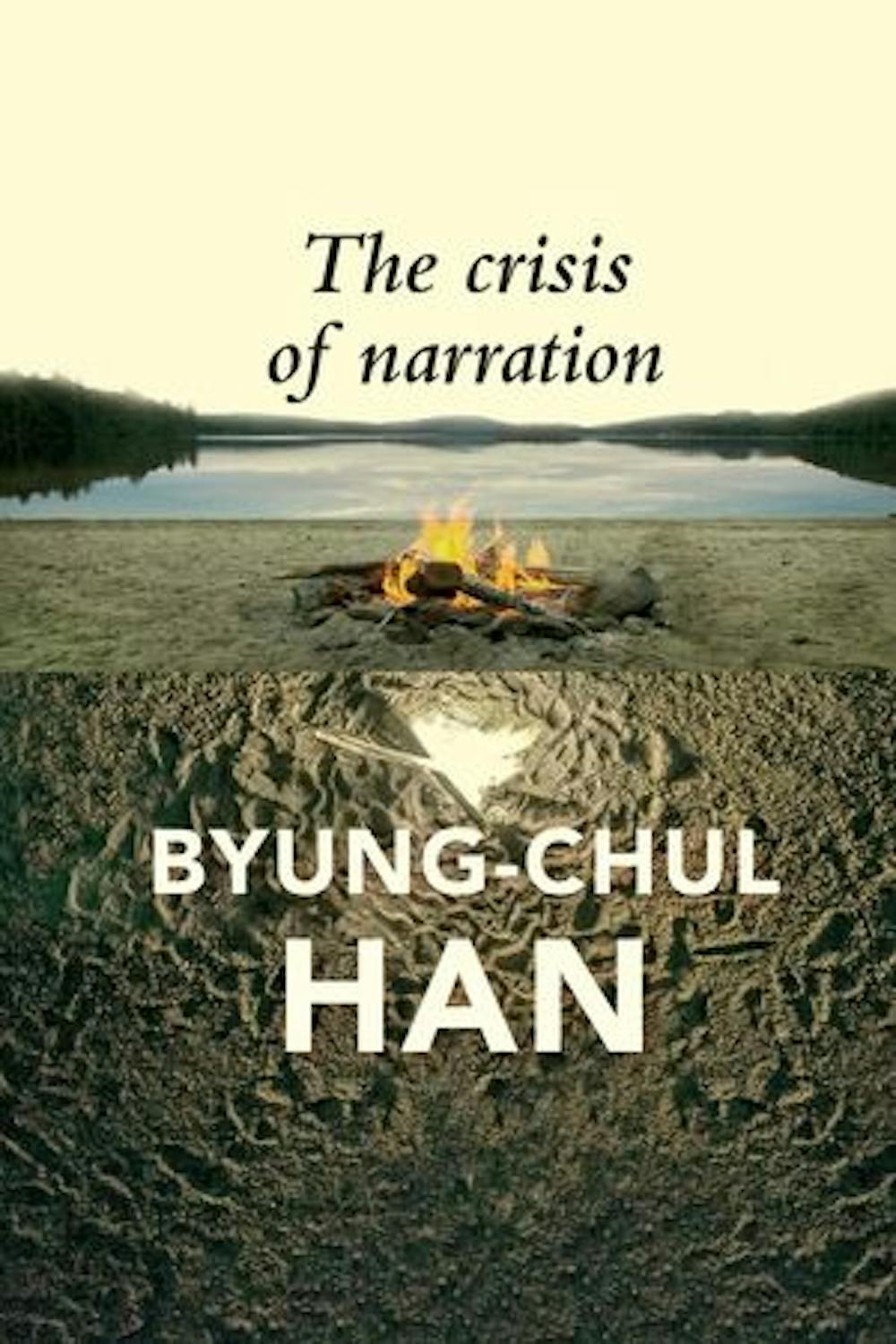
Byung-Chul Han is the enigmatic philosopher and author of The Burnout Society and Psychopolitics: Neoliberalism and New Technologies of Power. In his latest book The Crisis of Narration, he argues that despite the “present hype around narratives, we live in a post-narrative time”.
The Crisis of Narration – Byung-Chul Han, translated by Daniel Steuer (Polity)
Narrative, Han suggests, is under threat. It is being consumed and reshaped by capitalism and neoliberalism. Environments where narratives once offered meaning and stability have been filled with information – a serialised, de-narrativised form of communication.

Information, according to Han, provides stimuli rather than orientation and meaning. Information’s tendency to count, measure and define has permeated the self and society. Its mission to eradicate uncertainty reaches into health, education, Netflix recommendations, human rights and beyond. Han writes that this information does not offer understanding, but a “thick forest” where “we risk losing ourselves”.
What Han suggests we lose in the noisy forest of information is the space to “open up perspectives on a new order of things”. We become blind to “other forms of life” and “other perceptions and realities”.
He attributes the narrative crisis to the almost sublime dominance of information in our world. What I find hopeful, however, is his evident view in this book that we must narrate. That narration in its genuine form is one of the most powerful things we can do, and may well be the pathway to the re-enchantment of Han’s “post-narrative” world.
Narrative communities
The Crisis of Narration is a valuable confrontation with the question of what “narrative” actually is, and what it does in contemporary contexts.
Narrative is such a foundational way of understanding and organising the world that the meaning of the word feels intuitive. But narrative is also a term that can be mobilised in the service of corporate agendas. At times, it is dressed as something apolitical, something solely to entertain, something distinct from social and cultural relations.
We are bombarded with narratives that propose to make sense of the world for us. They are used to package and sell everything from venture capital and beauty brands to literary festivals, washing machines and socks. At the same time, the word narrative applies to our richest creative endeavours. It extends to ancient oral storytelling traditions sustained across time and space.
These various “narratives” are not alike. Han contends that genuine narratives inscribe the world with meaning in a “close network of relations”, where “nothing remains isolated” and “everything remains meaningful”.
His provocation is that narratives used to “validate the interests of corporate entities and demand our submission” – usually by exploiting individualistic ideologies and appealing to the idea of self-expression – are not really narratives at all. They are, rather, something he calls “storyselling”.
Han makes a multifaceted case for the distinct ways “narrative” stands apart from “storyselling”. But the example I find most resonant is his emphasis on narrative’s capacity to produce community. Narrative communities, he suggests, only form when narration “feeds off experience” and the role of the “careful listener” is as significant as the narrator.
Narrative communities have an intimacy and sympathy that relies on a willingness to experience difference. They make an allowance for uncertainty, from which new ideas are generated in a dialogue with the experiences of the past.
Storyselling, unlike narration, attempts to eradicate uncertainty. It is thus “incapable of designing substantially different forms of life”. It cannot perform narration’s important task of imagining the future.
Read more: Tourists in our own reality: Susan Sontag's Photography at 50
Disenchantment
In his chapter The Disenchantment of the World, Han builds on Susan Sontag’s essay At the Same Time. He writes that “narrative is a play of light and shadow, of the visible and the invisible, of nearness and distance”. This capacity for uncertainty is what enchants the world with meaning.
Han interprets the narrative zeitgeist through the writings of Theodor Adorno, Jacques Lacan and other icons of European philosophy, paying particular attention to the work of Walter Benjamin. He is drawing on Benjamin when he suggests the space for uncertainty and dialogue in narrative communities is being driven away by the stimuli of information, which he calls “the rustling in the leaves”.
 Quoting Benjamin, Han writes that an enchanted world is one we’ve invested with “the ability to look back at us”. Another way of phrasing this is that narrative allows space for the other to express something we don’t quite understand, without the obligation to explain itself for our consumption.
The observable symptom Han attributes to the “information society” is transparency, which destroys the tension of genuine narratives. Narrative operates in the space of potential between certainty and uncertainty. By contrast, the information society disenchants the world by dissolving it into data. When the world is experienced through information, it loses the “distance and expanse” required for generative uncertainty and narrative community.
Han writes that “reality’s gaze is the gaze by which the other addresses us”. He incriminates smartphones as culprits for the disenchantment of the world, because they screen us from reality’s gaze. Their touch screens deprive the world of its otherness, rendering it something that is unable to face us. Instead, the object world becomes consumable; it becomes information.
Read more:
Walter Benjamin's Illuminations: the remarkably prescient work of an intellectual truth-seeker
The forest and the trees
There are some aspects of Han’s argument that invite further consideration. One is his persistent appeal to the “we” and “us” of society.
For Han, the figure of “phono sapiens” – humans merged with phones – is emblematic of “the information society”. But to me this oversimplifies the relationship between narration, storyselling, environment and technology. Han seems to be addressing everyone holding a smartphone, but not the global network of mining operations, factories, exchange, exploitation and extraction that makes such an object possible.
Quoting Benjamin, Han writes that an enchanted world is one we’ve invested with “the ability to look back at us”. Another way of phrasing this is that narrative allows space for the other to express something we don’t quite understand, without the obligation to explain itself for our consumption.
The observable symptom Han attributes to the “information society” is transparency, which destroys the tension of genuine narratives. Narrative operates in the space of potential between certainty and uncertainty. By contrast, the information society disenchants the world by dissolving it into data. When the world is experienced through information, it loses the “distance and expanse” required for generative uncertainty and narrative community.
Han writes that “reality’s gaze is the gaze by which the other addresses us”. He incriminates smartphones as culprits for the disenchantment of the world, because they screen us from reality’s gaze. Their touch screens deprive the world of its otherness, rendering it something that is unable to face us. Instead, the object world becomes consumable; it becomes information.
Read more:
Walter Benjamin's Illuminations: the remarkably prescient work of an intellectual truth-seeker
The forest and the trees
There are some aspects of Han’s argument that invite further consideration. One is his persistent appeal to the “we” and “us” of society.
For Han, the figure of “phono sapiens” – humans merged with phones – is emblematic of “the information society”. But to me this oversimplifies the relationship between narration, storyselling, environment and technology. Han seems to be addressing everyone holding a smartphone, but not the global network of mining operations, factories, exchange, exploitation and extraction that makes such an object possible.
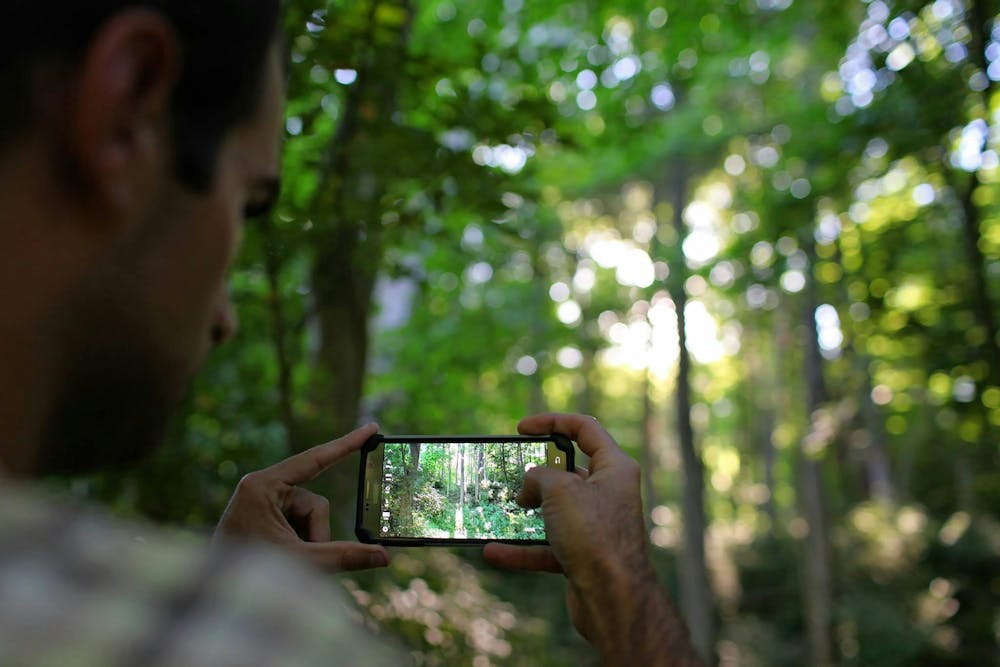 Han criticises ‘phono sapiens’, or humans merged with phones.
Leah Newhouse/Pexels
In the alienated society Han describes, there can be no “we” without addressing the stratification of power. It is necessary to consider who are the beneficiaries of the forest of information, and who are the ones trapped in it. Han’s engagement with European philosophy of the 20th century is thoughtful and generative, but I noted an absence of queer, Indigenous and diasporic writers who have more recently considered some of the issues he raises.
To me, any project that seeks to address the legacies of narrative communities and the question of their preservation requires an acknowledgement of Indigenous knowledge practices. Many Indigenous narrative communities navigate the “information society” with a view to preserving and sustaining the kind of dialogue between past, present and future Han insists “we” are losing.
Re-enchantment
The problems of narrative dispossession and dispersion are real. They manifest in conversations with almost every person I know. Yet I am not convinced we are “post-narrative”, as Han claims at the start of the book.
Part of the joy of reading Han’s work, however, is that he usually ends his arguments with concepts that allow for counter-narratives, even if he does not explicitly outline what those counter-narratives should look like.
The Crisis of Narration accepts and welcomes reality looking back at it. It wants the “lingering gaze” of its readers. After reading Han’s book, I mused on the question of how reality’s gaze might be re-enchanted – not through the absence of the screen, but despite it.
Earlier this year in Mexico City, artist Chavis Marmol dropped a nine-tonne replica of the colossal head carvings of the Olmec, the first known Mesoamerican civilisation, onto a blue Tesla 3. The Olmec head landed a year after Tesla announced plans to build a huge factory in northern Mexico.
Han criticises ‘phono sapiens’, or humans merged with phones.
Leah Newhouse/Pexels
In the alienated society Han describes, there can be no “we” without addressing the stratification of power. It is necessary to consider who are the beneficiaries of the forest of information, and who are the ones trapped in it. Han’s engagement with European philosophy of the 20th century is thoughtful and generative, but I noted an absence of queer, Indigenous and diasporic writers who have more recently considered some of the issues he raises.
To me, any project that seeks to address the legacies of narrative communities and the question of their preservation requires an acknowledgement of Indigenous knowledge practices. Many Indigenous narrative communities navigate the “information society” with a view to preserving and sustaining the kind of dialogue between past, present and future Han insists “we” are losing.
Re-enchantment
The problems of narrative dispossession and dispersion are real. They manifest in conversations with almost every person I know. Yet I am not convinced we are “post-narrative”, as Han claims at the start of the book.
Part of the joy of reading Han’s work, however, is that he usually ends his arguments with concepts that allow for counter-narratives, even if he does not explicitly outline what those counter-narratives should look like.
The Crisis of Narration accepts and welcomes reality looking back at it. It wants the “lingering gaze” of its readers. After reading Han’s book, I mused on the question of how reality’s gaze might be re-enchanted – not through the absence of the screen, but despite it.
Earlier this year in Mexico City, artist Chavis Marmol dropped a nine-tonne replica of the colossal head carvings of the Olmec, the first known Mesoamerican civilisation, onto a blue Tesla 3. The Olmec head landed a year after Tesla announced plans to build a huge factory in northern Mexico.
 Art installation by Chavis Marmol: a Tesla 3 car crushed by a nine-tonne Olmec-inspired head, Colima71 Art Community Hotel, Mexico City, March 20, 2024.
Fernando de Dios/Getty Images
Marmol’s Olmec head is striking in the directness of its gaze. Tesla and the company’s owner Elon Musk represent the extractive corporate oligarchism that benefits from the narrative crisis and the forest of information that Han addresses.
Yet this power is demonstrated to be amusingly vulnerable to the narrative weight of the Olmec head. To imagine the Olmec head crushing the Tesla, Marmol had to look back and listen to the Olmec heads of the past. He had to consider the narrative they embody in the light of his own experience.
Together, Marmol and the Olmec head create a narrative community. They ask us to listen with them. In Marmol’s narrative, Tesla’s storyselling is flimsy and unsustainable under the weight of the Indigenous narrative of the land and its people.
Marmol communicates this narrative with a single image. He says to Musk: “Look what I can do to your lousy car with this wonderful head”.
In The Crisis of Narration, Han says to his readers that the greatest threat to capitalist storyselling is the formation of genuine narrative communities. I would add that the formation of these resistant narrative communities is necessarily pluralistic. They form online and across material spaces organically.
Contemporary narrative communities can still speak and listen, even with smartphone in hand.
Authors: Heather Blakey, PhD candidate in literary studies, The University of Western Australia
Art installation by Chavis Marmol: a Tesla 3 car crushed by a nine-tonne Olmec-inspired head, Colima71 Art Community Hotel, Mexico City, March 20, 2024.
Fernando de Dios/Getty Images
Marmol’s Olmec head is striking in the directness of its gaze. Tesla and the company’s owner Elon Musk represent the extractive corporate oligarchism that benefits from the narrative crisis and the forest of information that Han addresses.
Yet this power is demonstrated to be amusingly vulnerable to the narrative weight of the Olmec head. To imagine the Olmec head crushing the Tesla, Marmol had to look back and listen to the Olmec heads of the past. He had to consider the narrative they embody in the light of his own experience.
Together, Marmol and the Olmec head create a narrative community. They ask us to listen with them. In Marmol’s narrative, Tesla’s storyselling is flimsy and unsustainable under the weight of the Indigenous narrative of the land and its people.
Marmol communicates this narrative with a single image. He says to Musk: “Look what I can do to your lousy car with this wonderful head”.
In The Crisis of Narration, Han says to his readers that the greatest threat to capitalist storyselling is the formation of genuine narrative communities. I would add that the formation of these resistant narrative communities is necessarily pluralistic. They form online and across material spaces organically.
Contemporary narrative communities can still speak and listen, even with smartphone in hand.
Authors: Heather Blakey, PhD candidate in literary studies, The University of Western Australia 


















2.jpg)