

identity politics and the case for shared values
- Written by: Peter Tregear, Honorary Principal Fellow, University of Melbourne
Recently, a group of respected academics, including Melbourne-born philosopher Peter Singer, announced that they were launching a new academic journal called the Journal of Controversial Ideas. In it, authors will have the option of remaining anonymous.
The editors say they wish to
enable academics – particularly younger, untenured, or otherwise vulnerable academics – to have the option of publishing under a pseudonym when they might otherwise be deterred from publishing by fear of death threats… threats to their families, or threats to their careers.
This is a justification that should trouble us all, not just those of us who happen to work in and for universities. Scientific advance, as well as the health of our society and the political and cultural freedoms that underpin it, depends on our capacity to accept that ideas, when properly and rigorously argued, are capable of being judged with a reasonable degree of objectivity, regardless of who is positing them.
We should expect academics in particular to be willing to assess an idea on the basis of what is being argued, not who is arguing it. Failing to do this is traditionally understood as committing an ad hominem fallacy.
True, we know that all human knowledge is subject to a myriad of visible and hidden prejudices that shape how we think. But reasoned argument gives us various tools that we can use to expose these prejudices, and thus also the possibility of rising above them.
Thus academics are trained to judge an idea primarily on the basis of the cogency, originality and rigour of the arguments that support it. We can assess the underlying validity of those arguments by scrutinising their inherent reasoning and by comparing them against bodies of pre-existing knowledge.
The peer review process is one particular tool we use to uphold these standards. It involves the “blind” assessment of submissions to academic publications. The recent “grievance studies” hoax, however, has drawn public attention to some of the weaknesses of the peer review system. It also helps us understand the wider context that has motivated the creation of a Journal of Controversial Ideas.
In this hoax, three academics concocted articles that parodied a certain style of academic argument. Several of the fake articles were accepted for publication despite their dubious content. Their titles included Human Reaction to Rape Culture and Queer Performativity at Urban Dog Parks in Portland, Oregon and An Ethnography of Breastaurant Masculinity: Themes of Objectification, Sexual Conquest, Male Control, and Masculine Toughness in a Sexually Objectifying Restaurant.
 One hoax article purported to be a study of Human Reaction to Rape Culture and Queer Performativity at Urban Dog Parks in Portland, Oregon.
Shutterstock
One hoax article purported to be a study of Human Reaction to Rape Culture and Queer Performativity at Urban Dog Parks in Portland, Oregon.
Shutterstock
The hoaxers argue that the fact such articles were accepted for publication points to the corrupting influence of “identity politics” on academia. The righteousness of one’s personal experiences of, or feelings about, an issue (and, more broadly, the identity groups with which one identifies) are, they suggest, increasingly valued as a source of authority over abstract reasoning or generalised observation.
When our identity becomes the principal filter through which we understand the world, however, we can no longer presume that notions like truth and objective facts actually exist. We must instead accept that we live in a world of multiple competing truths, with no agreed consensus about how we might choose between them.
Rejection of expert advice
Both the election of Trump and the result of the Brexit referendum in the UK have been in part attributed to the success of political campaigns so conceived. Both involved an explicit rejection of reasoned advice from academic experts such as political scientists, climate scientists, and economists. Instead, appeals for support targeted particular sections of the electorate based on voters’ race and ethnicity - identity politics at its purest.
This is not a phenomenon restricted to the political right. As the New York Times observed last year, the right has itself been responding to a form of political thinking already common to so-called “progressive” political movements.
For instance, if you happen to be white, male, cis-gendered, working class, and so on, you are likely to look for a tribal allegiance of your own. Or, as Mark Lilla put it in his 2017 book The Once and Future Liberal: After Identity Politics, “as soon as you cast an issue exclusively in terms of identity you invite your adversary to do the same”.
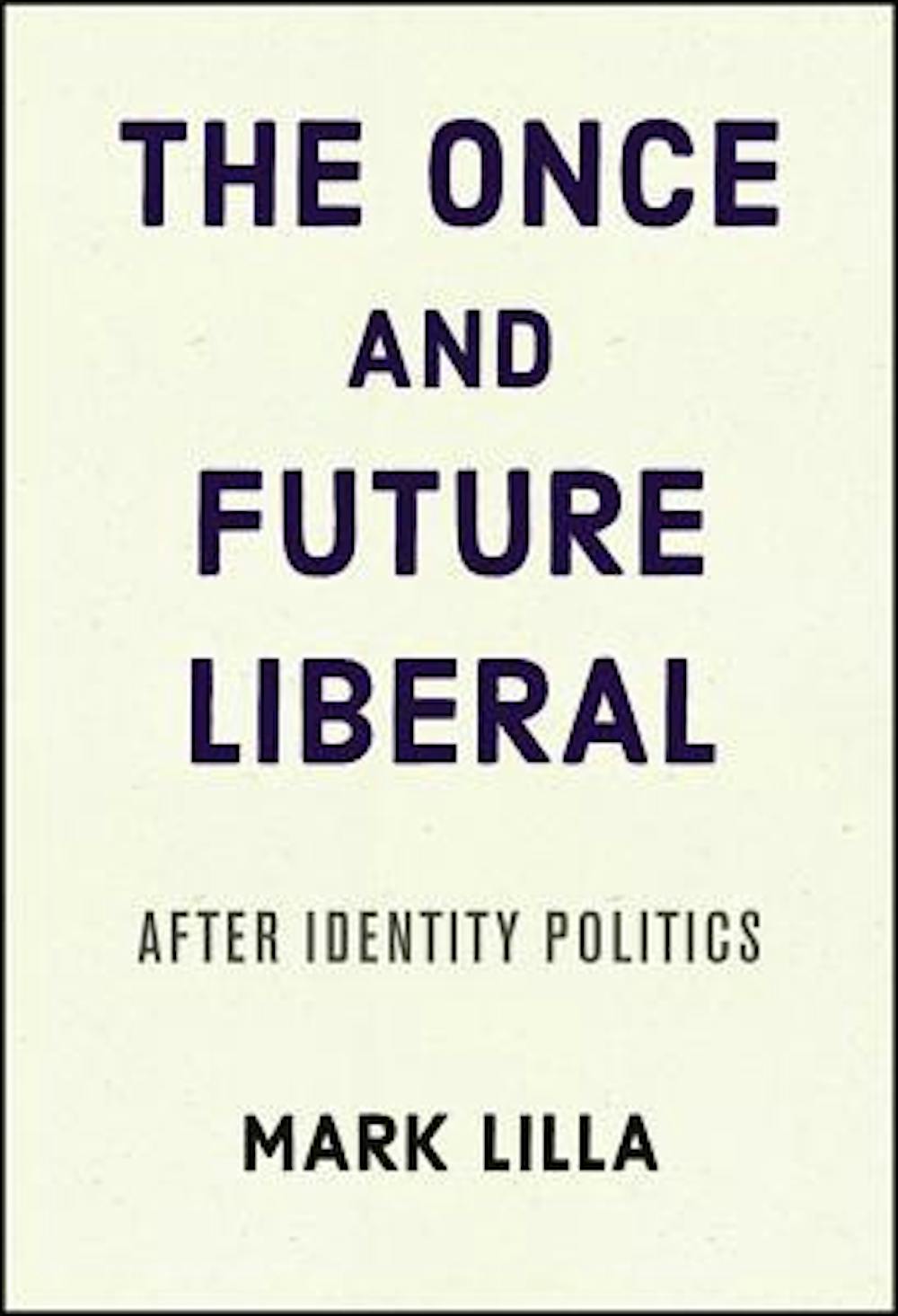 Lilla argues that we must instead reassert the importance of appeals to a “universal democratic ‘we’” (as opposed to “I”) “on which solidarity can be built, duty instilled and action inspired”.
One of the reasons this is so difficult to do is that our identity does matter when we confront many genuine political grievances. Racism, poverty, misogyny, homophobia are, alas, very real problems. They affect us individually very differently depending on how others perceive us - or we perceive ourselves - in terms of race, gender, class, sexuality and the like.
To effectively solve the injustices that arise out of these social phenomena, it is necessary to recognise that the significant forms of disadvantage and discrimination they cause are not natural, but socially constructed. They need to be contested and addressed as such.
Lilla is right to argue, nevertheless, that we risk taking our focus on identity too far. The emergence of a Journal of Controversial Ideas is only one particular sign that our once generally accepted belief in the possibility of disinterested political, theoretical, or even scientific, knowledge may be threatened by an over-focus on identity.
Other signs include the rise of an “alternative facts” discourse and the now widespread lack of trust in public broadcasting and other forms of so-called “mainstream” media.
New forms of social media, on the other hand, are perfectly made for identity politics because they allow us easily to inhabit identity-based silos. Safe in these communities of shared background and interest, we risk never having to meet, let alone debate with, people who might think or act differently to us.
Cultural value
The influence of identity politics is felt in my own academic field of music. Here, questions of musical value are increasingly being understood as little more than a reflection of an individual’s contingent cultural appetites. Experience-centred methodologies such as autoethnography and action research, which license a researcher to make themselves the principal subject of research, lend this shift in perspective scholarly respectability.
But by focusing on the centrality of personal experience over shared knowledge, we can avoid having to consider a more inclusive or idealistic understanding of what our musical culture is. Or, indeed, ought to be.
We also risk becoming less concerned to learn about, or seek out, cultural experiences or perspectives that would seek to push us beyond the immediate limits of our own experiences and imagination.
Lilla argues that we must instead reassert the importance of appeals to a “universal democratic ‘we’” (as opposed to “I”) “on which solidarity can be built, duty instilled and action inspired”.
One of the reasons this is so difficult to do is that our identity does matter when we confront many genuine political grievances. Racism, poverty, misogyny, homophobia are, alas, very real problems. They affect us individually very differently depending on how others perceive us - or we perceive ourselves - in terms of race, gender, class, sexuality and the like.
To effectively solve the injustices that arise out of these social phenomena, it is necessary to recognise that the significant forms of disadvantage and discrimination they cause are not natural, but socially constructed. They need to be contested and addressed as such.
Lilla is right to argue, nevertheless, that we risk taking our focus on identity too far. The emergence of a Journal of Controversial Ideas is only one particular sign that our once generally accepted belief in the possibility of disinterested political, theoretical, or even scientific, knowledge may be threatened by an over-focus on identity.
Other signs include the rise of an “alternative facts” discourse and the now widespread lack of trust in public broadcasting and other forms of so-called “mainstream” media.
New forms of social media, on the other hand, are perfectly made for identity politics because they allow us easily to inhabit identity-based silos. Safe in these communities of shared background and interest, we risk never having to meet, let alone debate with, people who might think or act differently to us.
Cultural value
The influence of identity politics is felt in my own academic field of music. Here, questions of musical value are increasingly being understood as little more than a reflection of an individual’s contingent cultural appetites. Experience-centred methodologies such as autoethnography and action research, which license a researcher to make themselves the principal subject of research, lend this shift in perspective scholarly respectability.
But by focusing on the centrality of personal experience over shared knowledge, we can avoid having to consider a more inclusive or idealistic understanding of what our musical culture is. Or, indeed, ought to be.
We also risk becoming less concerned to learn about, or seek out, cultural experiences or perspectives that would seek to push us beyond the immediate limits of our own experiences and imagination.
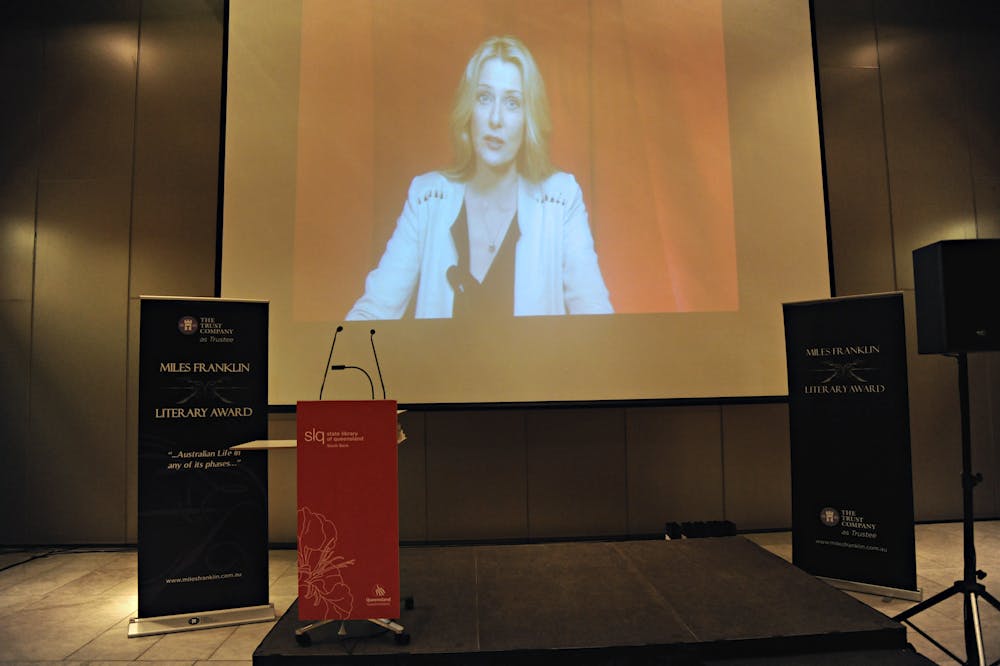 Anna Funder (speaking here in 2012) declined to judge the Horne Prize under restrictive new guidelines which, she said, would disqualify a lot of her own work.
Honner Media
Indeed, we start actively to avoid or suppress such perspectives altogether. The organisers of the Horne Prize in effect did this when they sought to disqualify “writing that purports to represent the experiences of those in any minority community of which the writer is not a member”. Judges David Marr and Anna Funder both resigned in protest and in the end the organisers backtracked.
The protests that erupted earlier this year concerning Opera Australia’s casting of the role of Maria for its forthcoming production of West Side Story is another example. Here it was argued Australian-born Julie Lea Goodwin, who has been cast as Maria, should instead have been of the same ethnic origin as Maria herself. This is despite the fact that West Side Story is itself a reworking of Shakespeare’s Romeo and Juliet (c.1595) by two Jewish-American men (Leonard Bernstein and Stephen Sondheim). Maria’s identity will always be more complex than the politics of identity would seem to allow.
Such a focus on identity may also distract us from considering the underlying economic forces that might be shaping particular forms of cultural or social behaviour, including identity politics itself. It is surely no coincidence that it is flourishing at the very same time we are being encouraged by online businesses to bracket ourselves by ethnicity, political affiliation, cultural tastes, sexuality, class, and so on. Just whose interests are ultimately being served?
To be sure, our identity unquestionably shapes (and can limit) how we interact with the world but it should not become the only foundation upon which we build our understanding of it. Claims to scholarly or political authority made on the basis of identity should also be subject to the same rigorous scrutiny and critique as any other form of public knowledge.
It is our rational systems of enquiry, and our underlying belief in the possibility of objective truth, that ultimately requires bolstering and defending by our universities, not narrow forms of knowing that would instead give primacy to our lived experience.
Without a continuing trust in such shared values we run the risk of being unable to convince people different from ourselves why they might wish to think or feel, let alone vote or act, like we do.
Anna Funder (speaking here in 2012) declined to judge the Horne Prize under restrictive new guidelines which, she said, would disqualify a lot of her own work.
Honner Media
Indeed, we start actively to avoid or suppress such perspectives altogether. The organisers of the Horne Prize in effect did this when they sought to disqualify “writing that purports to represent the experiences of those in any minority community of which the writer is not a member”. Judges David Marr and Anna Funder both resigned in protest and in the end the organisers backtracked.
The protests that erupted earlier this year concerning Opera Australia’s casting of the role of Maria for its forthcoming production of West Side Story is another example. Here it was argued Australian-born Julie Lea Goodwin, who has been cast as Maria, should instead have been of the same ethnic origin as Maria herself. This is despite the fact that West Side Story is itself a reworking of Shakespeare’s Romeo and Juliet (c.1595) by two Jewish-American men (Leonard Bernstein and Stephen Sondheim). Maria’s identity will always be more complex than the politics of identity would seem to allow.
Such a focus on identity may also distract us from considering the underlying economic forces that might be shaping particular forms of cultural or social behaviour, including identity politics itself. It is surely no coincidence that it is flourishing at the very same time we are being encouraged by online businesses to bracket ourselves by ethnicity, political affiliation, cultural tastes, sexuality, class, and so on. Just whose interests are ultimately being served?
To be sure, our identity unquestionably shapes (and can limit) how we interact with the world but it should not become the only foundation upon which we build our understanding of it. Claims to scholarly or political authority made on the basis of identity should also be subject to the same rigorous scrutiny and critique as any other form of public knowledge.
It is our rational systems of enquiry, and our underlying belief in the possibility of objective truth, that ultimately requires bolstering and defending by our universities, not narrow forms of knowing that would instead give primacy to our lived experience.
Without a continuing trust in such shared values we run the risk of being unable to convince people different from ourselves why they might wish to think or feel, let alone vote or act, like we do.
Authors: Peter Tregear, Honorary Principal Fellow, University of Melbourne
Read more http://theconversation.com/friday-essay-identity-politics-and-the-case-for-shared-values-107010


















