

the NDIS was designed to give participants choice, but mandatory registration could threaten this
- Written by: Sam Bennett, Disability Program Director, Grattan Institute
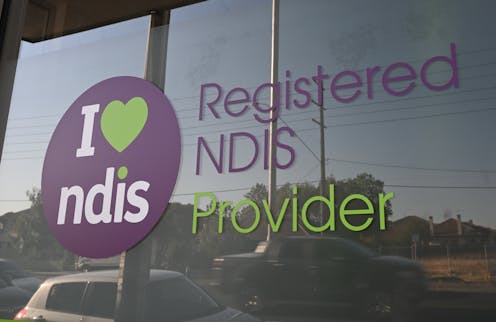
Many Australians with disability feel on the edge of a precipice right now. Recommendations from the disability royal commission and the NDIS review were released late last year. Now a draft NDIS reform bill has been tabled. In this series, experts examine what new proposals could mean for people with disability.
One of the main proposals of the review of the National Disability Insurance Scheme (NDIS) is the mandatory registration of all service providers. It is also one of the most controversial. A taskforce investigating the idea, announced by NDIS Minister Bill Shorten, will report by the end of June.
At present, registration is voluntary, except for a few high-risk services such as those that use restrictive practices or provide specialist disability accommodation. About 16,000 providers are registered, but more than 150,000 are unregistered.
Many people in the disability community are distressed by the plan. They say it will reduce their ability to choose people they know and trust as their service providers if those providers remain unregistered.
Extending provider registration (including in shared accommodation) makes sense, but not in the way proposed.
The NDIS review wants to make people in the scheme safer, get them higher-quality services, and collect data to better track the market – including monitoring abusive providers and workers. But instead of lurching to mandatory registration for all, the government could take a more nuanced approach to balance safety with the “dignity of risk”.
The recommendations
The premise of registration reforms is that the riskier the service provided, the more stringent the registration process should be. The review calls this a “graduated risk-proportionate regulatory model”. For example, a local laundry service would need to “enrol” with the National Disability Insurance Agency (the NDIA, which administers the scheme). This would involve an online application, ABN, Digital ID, bank account and contact details. The online application would also enable NDIA payments.
Then there would be three tiers of registration: basic, general, and advanced. Basic registration would involve self-assessment and stated commitment to NDIS Practice Standards. General and advanced registration would involve an audit that providers arrange and pay for themselves. For many small businesses and contractors, this could prove onerous and expensive.
The review proposes using one dimension to determine risk: the kind of service being provided. But this does not give NDIS participants – the people receiving services – the ability to take on some of the risk of screening workers themselves if they so choose.

Read more: Draft NDIS bill is the first step to reform – but some details have disability advocates worried
Some people with disability want more options, even if it involves risk
When the NDIS was designed more than a decade ago, it purposely enabled the use of unregistered providers by legislating different plan management options. This deliberate policy choice was to encourage competition and innovation.
Nearly a third of NDIS participants are self-managing. This means they manage their plan budget and can choose to screen their own workers and hire their own staff.
All providers, whether they register or not, have responsibilities to participants. All providers can have complaints raised against them through the NDIS Quality and Safeguards Commission and are held to the NDIS Code of Conduct. And who is allowed to self-manage is already subject to a risk assessment undertaken by the NDIA.
Deciding who supports them matters to people with disability, especially when support workers are in their homes and helping them with the most personal of care, such as getting in and out of bed, dressing or showering.
Trusted networks of workers may have been built up over many years. Yet, by categorising this kind of care as “high risk”, the proposal for mandatory registration means directly hired staff could have to undergo and pay for an audit and do extra training. Such requirements could make many established support arrangements unviable.
Australia doesn’t have to go this way. In England, under a comparable scheme, more than 69,000 people with disability directly employ more than 130,000 “personal assistants”. Direct employers are encouraged to invest in training for their staff, but it is not mandated through formal registration.
Read more: States agreed to share foundational support costs. So why the backlash against NDIS reforms now?
Thin markets
Some people in the NDIS use unregistered providers not by choice, but by necessity. In areas where there are very few providers, termed “thin markets”, working with unregistered providers can be the difference between getting a service and receiving no services at all.
Unregistered providers tend to provide more short-term or one-off services, meaning the costs of registration might outweigh the benefits for some providers. For example, some providers who mainly work with non-disabled clients might choose to stop providing NDIS services rather than register, which would be a problem in markets with few or one provider.
A new payment system will help
A lot of the data the government needs to track down and strike off dodgy providers or workers will come through the enrolment process into the scheme’s new payment system once established. This will record providers’ business name, ABN or Digital ID, bank account details, location and contact details.
This information means authorities stand a much better chance of tracking spending and taking enforcement action when needed. It should help the government keep participants safer while cracking down on fraud – without necessarily requiring mandatory provider registration.
Where to from here
We need to see less heat and more light around the purpose of regulatory reform.
The focus on mandatory registration comes at the expense of deeper thinking about the problems good regulatory design needs to solve, like the shocking abuse Lee-Anne Mackey suffered from carers in her group home.
People with disability deserve a more nuanced approach to regulating disability services – one that retains choice while enhancing regulatory and other protections in the settings where it is most needed.
Authors: Sam Bennett, Disability Program Director, Grattan Institute


















