

You could help minimise harm in a public attack. Here’s what it means to be a ‘zero responder’
- Written by: Milad Haghani, Senior Lecturer of Urban Mobility, Public Safety & Disaster Risk, UNSW Sydney
The tragic Westfield attack in Sydney highlights the vulnerability of crowded public spaces. Six people were killed and many were injured by a knife-wielding attacker in a short period of time.
For people with malicious intent, crowded venues such as shopping centres, concerts, sporting events and public transport are often easy targets for maximising harm.
Traditionally, in response to mass casualty events, we depend on the actions of first responders, including police and ambulance services, who are the trained professionals. But there’s always a gap, however short, between when a crisis begins and when authorities arrive.
The actions of people at the scene are crucial in bridging this gap. The “zero responders” – bystanders who proactively assist – play a pivotal role in the immediate response. They can be key players in preventing, reporting and containing an incident.
Read more: As Australia reels from the Bondi attack, such mass murder incidents remain rare
No, crowds don’t panic
An outdated and scientifically debunked theory about crowd behaviour in emergencies negatively characterises the role of the public. This theory, which incorrectly posits that crowds act irrationally and are driven by panic during life-threatening situations, is still widely believed.
In fact, this misconception has often led authorities to withhold information during emergencies to prevent panic.
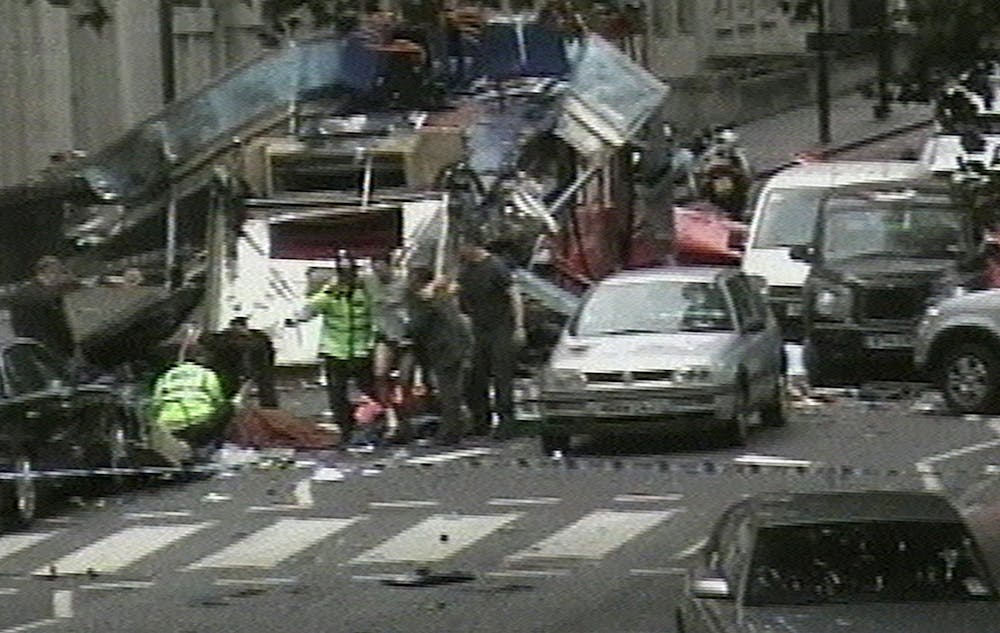
However, empirical evidence tells a different story. Research on the 2005 London bombings, for example, reveals people often respond with rationality and altruism. Survivor accounts emphasise widespread acts of assistance and emotional support.
I have conducted experiments that simulate life-threatening scenarios to study crowd responses, including their flight and escape behaviours. These studies reveal that as the level of perceived urgency increases, people’s actions tend to become more constructive than irrational. Survival instinct is deeply entrenched within us and can be easily activated.
People can prevent harm
So, what do these insights say about responses to mass casualty events in crowded places? They suggest the public should be considered part of the emergency response team. I call them “zero responders” because these proactive individuals can save lives and minimise harm in the crucial initial moments before emergency services take control.
Zero responders can help prevent harm by reporting crises quickly. For instance, an analysis of 640 mass attacks in the United States from 1995 to 2020 highlights the crucial role of public awareness and swift reporting. More than half of these incidents were thwarted before anyone got hurt.
The US Department of Homeland Security’s If You See Something, Say Something campaign engages the public as key players in preventing terrorist attacks. This is a positive step toward including them in emergency preparedness and response. However, the initiative could extend beyond reporting to authorities. People can also act to minimise harm.
Read more: Sydneysiders witnessed horrific scenes. How do you process and recover from such an event?
A prime example was observed during the recent tragic attack in Sydney, where active bystanders played a crucial role. Actions such as a samaritan confronting the attacker by using a bollard to create a barrier delayed the assailant’s progress.
This engagement impeded the attacker and bought precious seconds that may have saved lives. Therefore, referring to these individuals merely as “bystanders” does not do justice to their role. They acted as part of the emergency response, as immediate responders.
Zero responders’ role can also be significant in providing first aid to those who are injured. Since the September 11 terrorist attacks, there have been significant efforts in the United States to train the public in first aid CPR.
For those not positioned to intervene directly (those not near the source of danger or unable to assist), making efficient escape and evacuation decisions and encouraging others to do so is also vital in minimising harm.
My research, using computer simulations and controlled crowd experiments, has explored how simple behaviour changes, both in decision-making and physical actions, can make evacuations more effective.
Act swiftly and decisively
Many are familiar with the “run, hide, fight” protocol, which suggests people try to escape first, find a place to hide if they can’t leave, and confront the attacker as a last resort. While this is widely promoted in the US for active shooter situations, there are additional, more nuanced actions that can further enhance survival.
The misconception that people in a crisis typically panic can cause them to go out of their way not to appear scared. Consequently, some delay their response to assess the situation, worry about the embarrassment of reacting to a false alarm, or walk slowly away from the danger rather than run.
However, empirical evidence and my research consistently show these reactions are not the best. Being swift and decisive typically leads to more efficient evacuations, for the individual and the crowd as a whole.
The minimal risk of overreacting in the event of a false alarm is far outweighed by the potential benefits of immediate action. This, in fact, demonstrates vigilance and risk awareness, rather than overreaction.
Another key aspect is agility in decision-making. This includes the willingness to revise initial decisions, such as which exit to use, as the situation evolves.
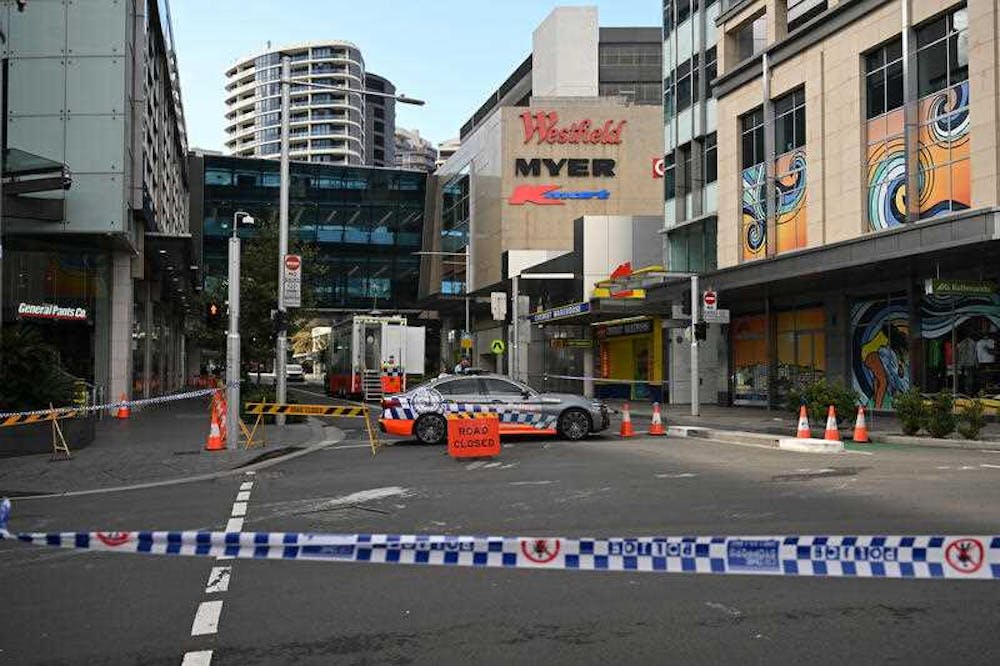 The tragic stabbing event at Westfield Bondi Junction showed how people in crises can help each other.
Dean Lewins/AAP
The tragic stabbing event at Westfield Bondi Junction showed how people in crises can help each other.
Dean Lewins/AAP
The public as responders
Different cultures and countries have different attitudes to zero responders. For instance, Israel enacted the Good Samaritan Law in 1998 to protect active bystanders from civil liability. This law compels bystanders to assist people in serious danger and even provides compensation for any costs or health damages incurred during the rescue.
Statistically, the more zero responders present during an emergency, the higher the likelihood of survival. While it is unrealistic to expect the entire population can be educated or trained for such scenarios, as not everyone may be willing or able to participate, research indicates comprehensive training of the entire community isn’t necessary for the benefits to be substantial.
Anyone can be a zero responder. Whether it’s through actions that impede or prevent an attack, assist the injured, or facilitate an efficient evacuation or sheltering, everyone has a role to play.
We should not overlook the crucial role of the public during mass casualty incidents. Societies can enhance their own protection by supporting zero responders and training for the public.
Authors: Milad Haghani, Senior Lecturer of Urban Mobility, Public Safety & Disaster Risk, UNSW Sydney


















