

Australia’s long-sought stronger environmental laws just got indefinitely deferred. It’s back to business as usual
- Written by: Euan Ritchie, Professor in Wildlife Ecology and Conservation, School of Life & Environmental Sciences, Deakin University
We’ve long known Australia’s main environmental protection laws aren’t doing their job, and we know Australians want better laws. Labor was elected promising to fix them.
But yesterday, the government walked back its commitments, deferring the necessary reforms to the Environment Protection and Biodiversity Conservation Act indefinitely in the face of pressure from the state Labor government in Western Australia and the mining and resources industries.
Federal Environment Minister Tanya Plibersek was on the front foot yesterday, promising the new national agency Environment Protection Australia and Environmental Information Australia will still go ahead.
But decisions by the planned agency can be overruled by the minister via expansive “call in” powers. And because Labor has backed away from rolling out essential legally enforceable national environmental standards this term, it’s hard to see how the agency can actually be the “tough cop on the beat” we were promised.
Labor promised substantive change that would prevent further species extinctions. But yesterday’s announcement was basically the continuation of business as usual.
Environmental organisations such as the Australian Conservation Foundation – which backed many of Labor’s proposed reforms – are now “deeply disappointed”.
What just happened?
Yesterday’s announcement effectively defers substantive change until after the next federal election.
Rather than a full package, the government has split its planned reforms into three parts, under the umbrella name of the Nature Positive Plan.
Read more: 5 things we need to see in Australia's new nature laws
The first is the nature repair market, which many stakeholders – conservationists and business leaders alike – have been sceptical of. It was legislated in December, but nature repair projects can’t start until the market governance and methods are established.
The second will create the federal Environmental Protection Australia agency and Environment Information Australia body. The agency will be responsible for development assessments, decisions and compliance and enforcement, with staff drawn from existing divisions within the department, while the information agency will support decision-making with data, as well as report on progress against environmental targets.
But the third is the crucial bit – the reformed environment protection and biodiversity laws, and the legally enforceable national environmental standards underpinning them.
We need these standards and laws to properly address longstanding deficiencies such as lack of clear policy objectives and “no go” zones for development, failure to account for climate change impacts, ongoing native vegetation clearing and habitat destruction that drives extinction, and a lack of alignment with other laws.
But these vital elements have been deferred to “an unspecified date”. Despite the urgency of our extinction crisis, we have a cart but no horse in sight.
How did we get here?
In 2020, Graeme Samuel released his scathing report detailing the many failings of the Environmental Protection and Biodiversity Conservation Act. The laws, he wrote, were “ineffective” and needed fundamental reform. Labor came to office pledging to end extinctions, tackle climate change, and repair nature.
But two years later, little solid progress has been made. In cases such as the controversial Lee Point development planned in Darwin, the government has appeared to put development ahead of considerations of threatened species and First Nations’ cultural values.
Samuel called for comprehensive amendments to the laws within 12 months, and for full reform by 2022. Instead, the government only began consulting in May 2023, undertook a “lockup” consultation with peak environment bodies in October, and ran public consultation in November. Now we hear these reforms have been pushed back indefinitely.
In the West Australian, Minister Plibersek describes the changes as:
a staged rollout of sensible reforms that better protect Australia’s natural wonders, while also supporting faster, more efficient decision making […] This package is a win for the environment and a win for business
Speaking on ABC radio, she denied there was any “unnecessary delay”:
there is a careful approach to make sure we get this right, because this is generational change […] I’m not going to go into the parliament with a flawed set of laws that we can’t get support for.
This is questionable. In 2022, Australia signed up to the ambitious global push to turn around the destruction of the natural world, the Kunming-Montreal Global Biodiversity Framework. We agreed to work to bring biodiversity loss almost to zero by 2030 and for native wild species to become more abundant and resilient by 2050. Deferring our main environment laws is not the way to do this.
Restoring nature isn’t possible without stronger environment laws
Preserving nature can only be done with substantive legislative reform, given Australia’s existing environmental laws do not effectively regulate and stop the ongoing destruction of nature.
As Samuel pointed out, our current laws are not keeping the environment in good shape. They focus on individual approvals for projects, not clear outcomes for the environment.
Read more: 'Nature positive' isn't just planting a few trees – it's actually stopping the damage we do
As it stands there will be no climate trigger – meaning no assessment of impact on climate change – despite the threat this poses to biodiversity. The Great Barrier Reef is suffering its worst recorded mass bleaching this year, the fifth in eight years.
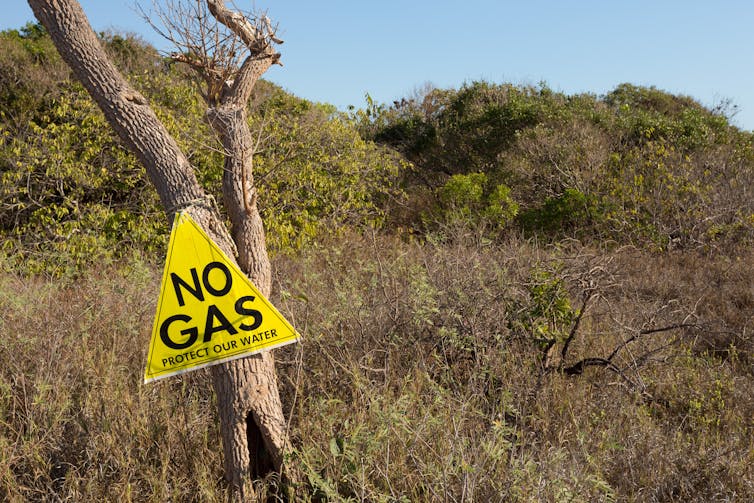
Even so, fossil fuel production continues with many more projects awaiting approval.
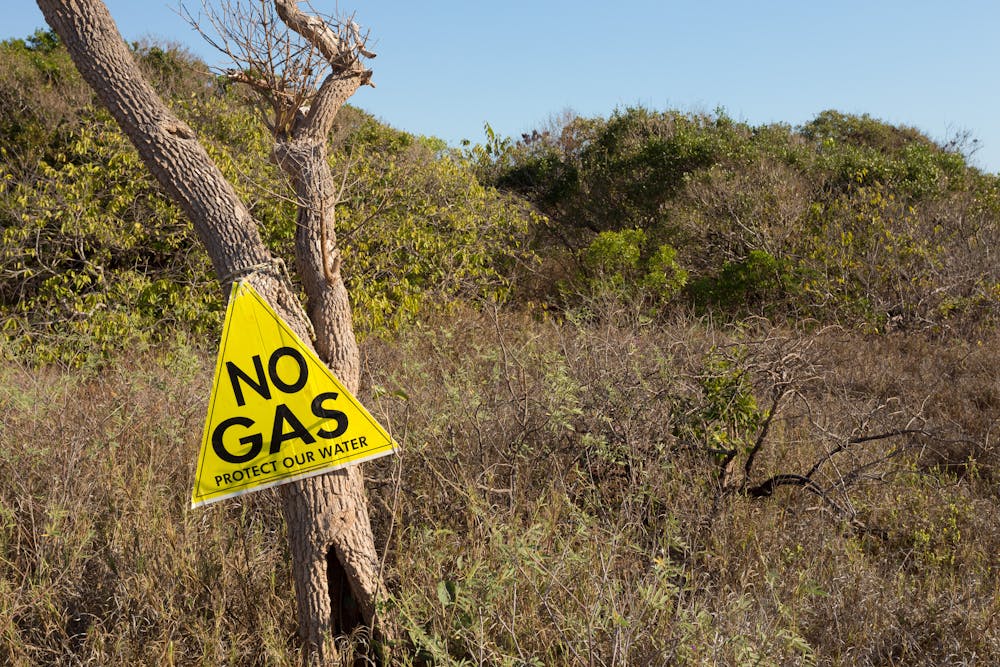 Fossil fuel production continues apace.
Phillip Schubert/Shutterstock
Fossil fuel production continues apace.
Phillip Schubert/Shutterstock
Nature can’t afford further delays
Without the reformed environment protection laws, the strengthened Safeguard Mechanism – the government’s main plan to drive down emissions from large polluters – will not work properly. This is because environmental law needs to be amended so greenhouse gas emissions from new coal and gas developments are reported on and tracked.
In fact, without the national environmental standards – which the federal environment department dubs the “centrepiece of our reforms” – the whole package of reform seems toothless.
Labor’s failure so far to deliver on its promise puts their goals of “no new extinctions” and a “nature positive” future for Australia at risk.
Read more: Get the basics right for National Environmental Standards to ensure truly sustainable development
Authors: Euan Ritchie, Professor in Wildlife Ecology and Conservation, School of Life & Environmental Sciences, Deakin University



















