

Modern Australian
Times Advertising

how to avoid a repeat of this circular economy scandal

  • Written by Salman Shooshtarian, Senior Lecturer, School of Property, Construction and Project Management, RMIT University
how to avoid a repeat of this circular economy scandal

Asbestos has been found in mulch used for playgrounds, schools, parks and gardens across Sydney and Melbourne. Local communities naturally fear for the health of their loved ones. Exposure to asbestos is a serious health risk – depending on its intensity, frequency and duration – as it may lead to chronic lung diseases.

The source of contamination is believed to be timber waste from construction and demolition sites that was turned into mulch. So far, 60 locations in Sydney and 12 in Melbourne have been identified as contaminated with asbestos to various degrees. The numbers could increase as investigations continue.

Following the initial detection in New South Wales and Victoria, an investigation in Queensland detected asbestos in one compost and one mulch product.

The severity, spread and impact of the issue convince us to call it the largest scandal in the history of Australia’s circular economy. A circular economy recycles and reuses materials or products with the goal of being more sustainable.

Our research highlights the importance of making it mandatory to certify recycled products such as mulch to ensure their safety. We found none of the local, state or national policies on sustainable procurement practices recommend recycled product certification as a preventive strategy. We also found significant levels of ignorance and resistance to certification schemes in the recycling sector.

These obstacles must be overcome so we have certification of recycled products that ensures their quality, performance, environmental friendliness and safety.

Read more: Building activity produces 18% of emissions and a shocking 40% of our landfill waste. We must move to a circular economy – here’s how

Scandal is damaging for the circular economy

The discovery in January of asbestos in mulch in NSW triggered a series of actions. These have involved the NSW and Victorian Environment Protection Authorities, local councils, Fire and Rescue NSW and a NSW taskforce, drawing from agencies such as SafeWork, Public Works and the Natural Resources Access Regulator. The actions include testing in identified areas, cordoning off and signposting affected garden beds, engaging licensed asbestos removalists, and sampling to determine disposal options.

Unfortunately, this contaminated mulch raises concerns about the reckless implementation of circular economy principles in Australia. This scandal could make users of recycled materials, particularly local councils, hesitate about procuring these resources, if not dissuade them altogether.

Understandably, the waste management and resource recovery sector is in a state of shock. More broadly, this scandal could undermine efforts to advance the circular economy in Australia.

It’s a reminder that the circular economy concept is based on a system-thinking approach, where all elements must work in harmony. A failure in one can result in the entire system collapsing.

Read more: Asbestos in mulch? Here's the risk if you've been exposed

Regulations don’t go far enough

Under NSW legislation, mulch must not contain asbestos, engineered wood products, preservative-treated or coated wood residues, or physical contaminants such as glass or plastics.

However, it isn’t mandatory for suppliers to test for contaminants in mulch. There are no specified procedures they must follow to ensure mulch doesn’t contain asbestos.

The fact is existing policies and regulations, such as the NSW Environment Protection Authority’s Mulch Order 2016, failed to prevent mulch contamination. It’s a reminder of the need for effective strategies to ensure a circular economy will not go wrong.

These strategies must integrate encouragement, education and enforcement. Otherwise, we risk facing unintended economic, environmental and social consequences.

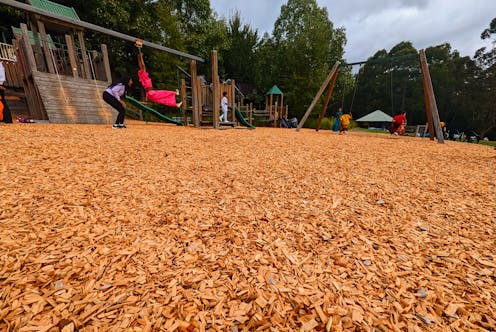
‘Soft fall’ mulch in a playground in Melbourne. Salman Shooshtarian.

Read more: Buildings used iron from sunken ships centuries ago. The use of recycled materials should be business as usual by now

Why isn’t certification standard practice?

At RMIT University’s Construction Waste Lab (CWL), we have been researching and sharing key strategies with policymakers and industry. In 2022 and 2023, working with researchers from Griffith and Curtin universities and our industry partners, we explored the use of recycled product certification schemes.

In our research, supported by the Sustainable Built Environment National Research Centre, we gathered insights from 16 industry professionals engaged in projects involving large quantities of recycled materials. We specifically asked for their views on certification schemes for these materials.

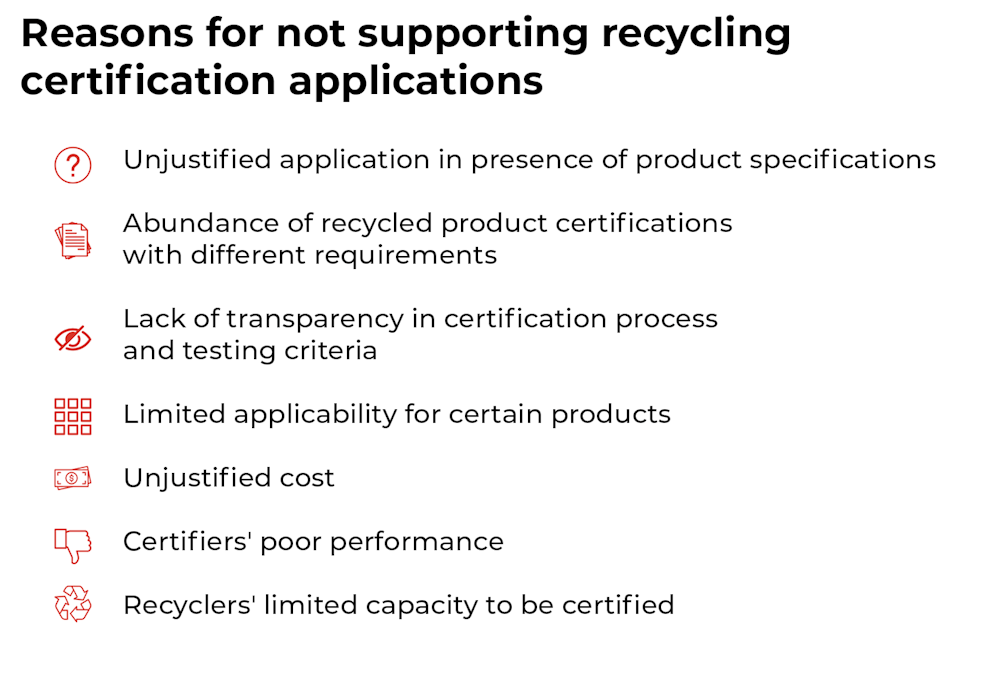
We found only nine of them were aware of such schemes in Australia. A similar number supported their use for construction projects. The main reasons for not supporting them are shown below.
Data: S. Shooshtarian et al 2023 David Baggs is chief executive and cofounder of Global GreenTag International, a recycled product certifier that operates nationally and internationally. He told us a major barrier to the uptake of these schemes is that they’re simply not a priority for many organisations. He added: The cost of certification is a fraction of whatever their marketing budget might be in any single month, let alone a year. So, particularly for the bigger companies, it’s not about cost, it’s about priorities. If they can see that their certification becomes part of their marketing budget, then the cost of certification is a single-digit percentage of most marketing budgets. Read more: Turning the housing crisis around: how a circular economy can give us affordable, sustainable homes What more can be done? To encourage builders to use these schemes, the Green Building Council of Australia provides a list of endorsed certifiers. Our research identified seven major drivers for adopting certification schemes when procuring recycled materials, as shown below. Read more: Trash TV: streaming giants are failing to educate the young about waste recycling. Here's why it matters The CEO of the Waste Management and Resource Recovery Association of Australia, Gayle Sloan, has highlighted the need for effective reforms of waste regulations. In addition, we stress the importance of directories of approved recyclers to ensure end users have access to quality, uncontaminated recycled materials. An example is Sustainability Victoria’s Buy Recycled Directory. These directories should require listed suppliers to provide certification for their recycled products. It will help distinguish reputable suppliers from rogue suppliers. Authors: Salman Shooshtarian, Senior Lecturer, School of Property, Construction and Project Management, RMIT University

Read more https://theconversation.com/asbestos-in-playground-mulch-how-to-avoid-a-repeat-of-this-circular-economy-scandal-227766

Interstate Car Transporter Urges Buyers to Book Early

As the conflict in the Middle East continues to put increasing pressure on local fuel supply, Australian transport companies are experiencing increasi...

Digital Minimalism for Business Owners: Fewer Tools, Better Systems

Be honest. How many apps are open right now? One for scheduling, another for invoices, a third for customer notes, plus a spreadsheet someone email...

The Importance Of Proactive NDIS Renewal Preparation For Sustaining Your Provider Business

Your NDIS renewal notice is not a signal to start preparing. By the time it arrives, preparation should already be well underway. For new providers, s...

Why Fire Extinguisher Testing in Sydney Is Becoming a Records Game, Not Only a Maintenance Job

A fire extinguisher used to feel like one of the simpler parts of building safety. It hung on the wall, wore a service tag, and sat there quietly unle...

The Switchboard Upgrade Question Every Melbourne Renovator Should Ask Before the Walls Close Up

Renovations have a funny way of making people think on surfaces first. Splashback, stone, joinery, tapware, paint. Fair enough too. That is the exciti...

Winter Sanitation Gaps in Parramatta Kitchens: A Hidden Pest Risk

Winter brings a host of changes to our homes, from the chill in the air to the cozy warmth indoors. However, this season also introduces sanitation ch...

When to Seek Advice from Employment Lawyers in Melbourne

Australian employment law is detailed and, at times, complex, with rights and obligations that aren't always obvious to employees or employers witho...

7 Benefits of Professional Gutter Cleaning for Australian Homeowners

Gutters aren't exactly glamorous. They sit up there on the edge of your roof, doing their job quietly - until they stop working. Clogged, overflowing ...

Pipe Floats Strengthening Pipeline Performance In Demanding Environments

Pipelines often travel through environments that are anything but predictable, water currents shift, terrain changes, and materials keep moving unde...

Why Ceiling Fans Are Essential For Comfort, Efficiency, And Modern Living

Creating a comfortable indoor environment is not just about temperature; it is about how air moves, how a room feels, and how efficiently energy is ...

Why Duct Cleaning In Melbourne Is A Smart Investment For Healthier Living Spaces

Behind your walls, ceilings, and vents lies a network quietly working every day to keep your home comfortable. Yet over time, this system can become...

Disability Service Providers Supporting Inclusive And Independent Living

Finding the right support system can feel like assembling a puzzle where every piece must fit just right. For individuals and families navigating di...

A Beginner's Guide to Owning a Caravan in Australia

Owning a caravan opens up a style of travel that's hard to match for freedom and flexibility. However, for those just starting out, the process of c...

Preparing Your Air Conditioner for Summer: What Most Homeowners Overlook

As temperatures rise, many homeowners switch on their air conditioning for the first time in months — only to find it’s not performing the way i...

What Actually Adds Value to Properties in Newcastle

Newcastle has seen steady growth over the past few years, with more buyers looking beyond Sydney for lifestyle, space, and long-term value. As dema...

What is Design and Build in Construction?

Imagine you’re about to start a new construction project, maybe it’s a custom home or a commercial building. You’ve got the idea, the land, an...

Commercial roof leak detection: why early action protects your building

Water ingress is one of the most disruptive and costly issues facing commercial properties. For property managers and facilities teams, even a minor...

Custom Photo Frames: Turning Everyday Moments into Lasting Displays

Photos capture moments, but how you display them determines how they’re experienced every day. A meaningful photograph deserves more than a generi...
















