

Many prisoners go years without touching a smartphone. It means they struggle to navigate life on the outside
- Written by: Ye In (Jane) Hwang, Postdoctoral Research Associate at School of Population Health, UNSW Sydney
You’d be hard pressed to find any aspect of daily life that doesn’t require some form of digital literacy. We need only to look back ten years to realise how quickly things have changed.
In 2013, we were still predominantly buying paper bus tickets and using Facebook on a desktop computer. Now, we order food by scanning codes and tap our cards to make payments.
Digital inclusion (someone’s ability to keep up with technology) is an important health and social equity issue, amplified by the rapid digital developments that arose during the COVID pandemic.
Among those who are prone to digital exclusion, there is one group who, due to a collision of several trends, may be hit the hardest: people leaving prison and re-entering society at an older age, or after lengthy periods of imprisonment. In a new study, we interviewed former prisoners about their experiences with trying to adapt to ubiquitous technology after years of going without.
Read more: Teaching prisoners to start businesses can help them return to society
Unfamiliar tech damaging confidence
Prison populations are getting older worldwide for a few reasons, including general population ageing, trends towards people entering prison at an older age, or staying in for longer. At the same time, Australian prisons remain highly technologically restricted environments, mostly for security reasons.
We interviewed 15 Australians (aged 47–69 years) about their experiences of reintegration following release from prison.
The (primarily male) interviewees recalled a tense and troublesome time. They described feeling like a stranger thrown into a world where survival depended on their ability to use technology.
Regardless of their experiences before imprisonment, the rapid digitisation of daily functions that were once familiar to them rendered their skills and confidence irrelevant. One former inmate said:
There’s a significant gap […] for anybody who’s done, I’m gonna say, probably more than five to seven years [in prison]. Because things change so quickly […] they do not know what the world looks like.
Read more: New report reveals shocking state of prisoner health. Here's what needs to be done
This deeply affected their sense of self and self-efficacy, and heightened the stigma they experienced, adding a weighty psychological and emotional burden to an already stressful time. They told us:
You want to fit in, you want to be invisible, to either fit in and be part of the crowd or just invisible. Because for a lot of people leaving prison, they’re still wearing their crime or their offending on their shoulders. And anything that sort of has their head pop up outside of the norm really triggers people’s anxiety.
There will be people where those trip-ups of technology are a really big deal and really impact your anxiety, really impacts your need and want to socialise and interact with other people.
Exacerbating recidivism
Post-prison reintegration is already a challenge. There’s concerning evidence around recidivism, risk of post-release mortality, social isolation, unemployment and homelessness.
Digital exclusion creates an additional barrier for those who are older, who already face a high risk of medical and social marginalisation. A former prisoner said:
Think about it, after being in ten years, well you think, okay, where do I start? And everything is hard. And sometimes this is why people fall back into their same situations because it’s just too hard.
Technology isn’t completely absent from Australian prisons, but interviewees described the programs and technology as outdated, basic or limited in relevance to their immediate daily, post-release lives.
Recent attempts to bring in touchscreen devices to NSW prisons suggests positive change. However, our interviewees claimed there was a lack of education around these, adding to the risk of digital division even within the prison.
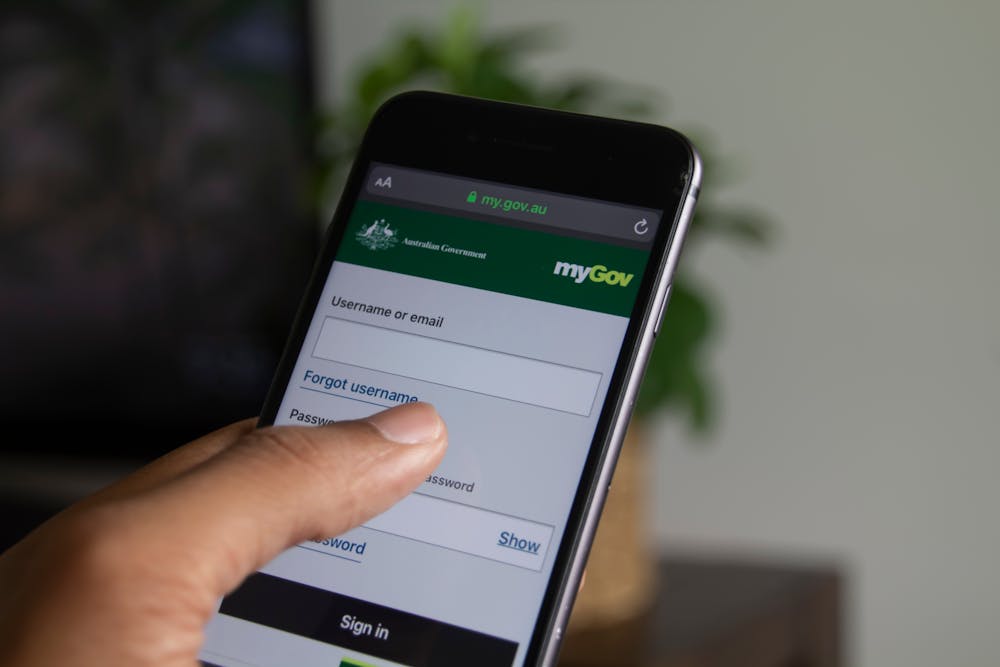 Interviewees said it would be helpful if someone worked with them on using services like MyGov in preparation for leaving prison.
Shutterstock
Interviewees said it would be helpful if someone worked with them on using services like MyGov in preparation for leaving prison.
Shutterstock
What can be done?
There must be investment in specific digital literacy or technology readiness programs tailored to the unique needs of this population both prior to, and following release.
The interviewees provided suggestions for how such programs could be delivered and a keenness to engage with them. They tended to focus on learning in environments free from stigma and judgement of their literacy level or histories, with hands-on experience and face to face support. Interviewees favoured learning while in prison, with additional support available on the outside. Three interviewees said:
If they could somehow incorporate it into the prisons where you know, they actually showed them how to use them and how to download an app and how to use the basic apps such as, you know, Centrelink, MyGov, it’d be a lot better life for them when they get out.
I think a lot of ex-prisoners shy away from doing these community type education stuff. Because they’re paranoid, basically.
As you’d be aware, it’s no good someone’s sitting there telling you how it works, you need to experience it yourself.
At a broader level, improving the digital inclusion of people in prison requires attitudinal change by government stakeholders and the community. Ultimately, it calls for a commitment to practices that put rehabilitation at the centre, whilst managing competing needs for security and segregation.
Based on the evidence, we can be certain this will encourage positive change for the 95% of Australian prisoners who will eventually be released.
Authors: Ye In (Jane) Hwang, Postdoctoral Research Associate at School of Population Health, UNSW Sydney


















