

If plastic manufacturing goes up 10%, plastic pollution goes up 10% – and we’re set for a huge surge in production
- Written by Kathryn Willis, Postdoctoral Researcher, CSIRO
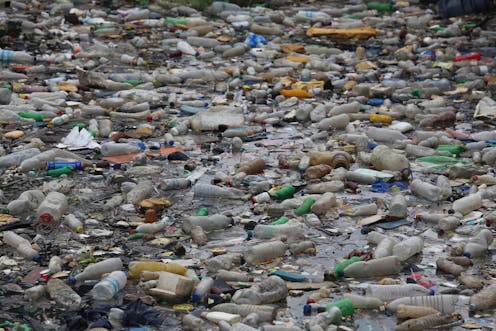
In the two decades to 2019, global plastic production doubled. By 2040, plastic manufacturing and processing could consume as much as 20% of global oil production and use up 15% of the annual carbon emissions budget.
Most of the plastic we make ends up as waste. As plastic manufacturers increase production, more and more of it will end up in our landfills, rivers and oceans. Plastic waste is set to triple by 2060.
Producers often put the onus back on consumers by pointing to recycling schemes as a solution to plastic pollution. If we recycle our plastics, it shouldn’t matter how much we produce – right?
Not quite. The key question here is how close the is relationship between plastic production and pollution. Our new research found the relationship is direct – a 1% increase in plastic production leads to a 1% increase in plastic pollution, meaning unmanaged waste such as bottles in rivers and floating plastic in the oceans.
Not only that, but over half of branded plastic pollution is linked to just 56 companies worldwide. The Coca-Cola Company accounts for 11% of branded waste and PepsiCo 5%. If these companies introduce effective plastic reduction plans, we could see a measurable reduction in plastic in the environment.
The problem is only going to get more urgent. By the end of the current decade, experts estimate another 53 million tons will end up in the oceans every single year. That’s bad for us, and for other species. Plastics can cause real damage to our health. Our first exposure to them starts in the womb. In the seas, plastics can choke turtles and seabirds. On land, they can poison groundwater. Socially and economically, plastic pollution now costs us about A$3.8 trillion a year.
This week, negotiators are gathered in Canada to continue developing a legally binding global plastics treaty.
Plastic fantastic?
In the 1960s and 70s, plastics were seen as a modern wonder. Soon, they became common – and then ubiquitous. Single-use plastics appeared everywhere. After being tossed onto roadsides or in rivers, these plastics can make their way to the ocean.
Today, about 36% of all the world’s plastic pollution comes from the packaging sector in the form of single-use plastics.
To find out how plastic production influences waste, we turned to global data from litter audits, surveys of waste in the environment. Data from these audits is useful to understand changes in types and volumes of plastic waste. We used five years of audit data from more than 1,500 audits across 84 countries. The audits showed 48% of the litter had a brand name, and 52% was unbranded.
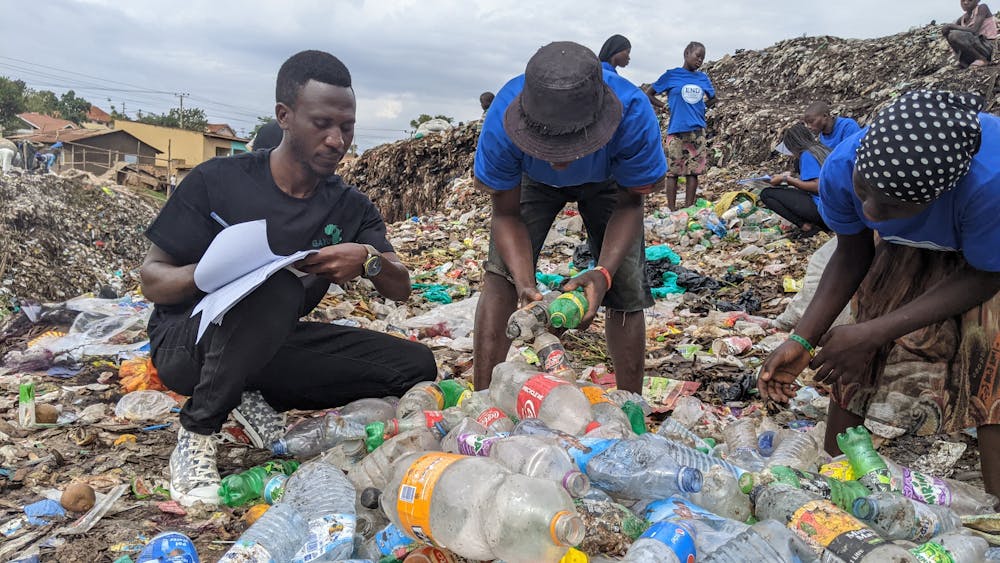
To assess production levels, we used data reported to a circular economy organisation by major plastics companies and compared it against levels of branded plastic pollution.
We expected more production would mean more waste, but not such a direct correlation. The fact it’s a 1:1 ratio is eye-opening. What this means is as plastic-packaging producing companies scale up their operations, they directly contribute more waste to the environment.
We found just 13 companies individually contributed 1% or more of the total branded plastic observed. All of these companies produce food, beverage, or tobacco products, usually packaged in single-use plastic.
The Coca-Cola Company products were the top source of branded plastic pollution, representing 11% of all branded litter.
Right now, companies get to sell their products in single-use plastics and the onus is on consumers to recycle or bin the plastic. This in turn creates high costs for local governments, who run the waste services. There’s also the cost of a degraded environment we all bear.
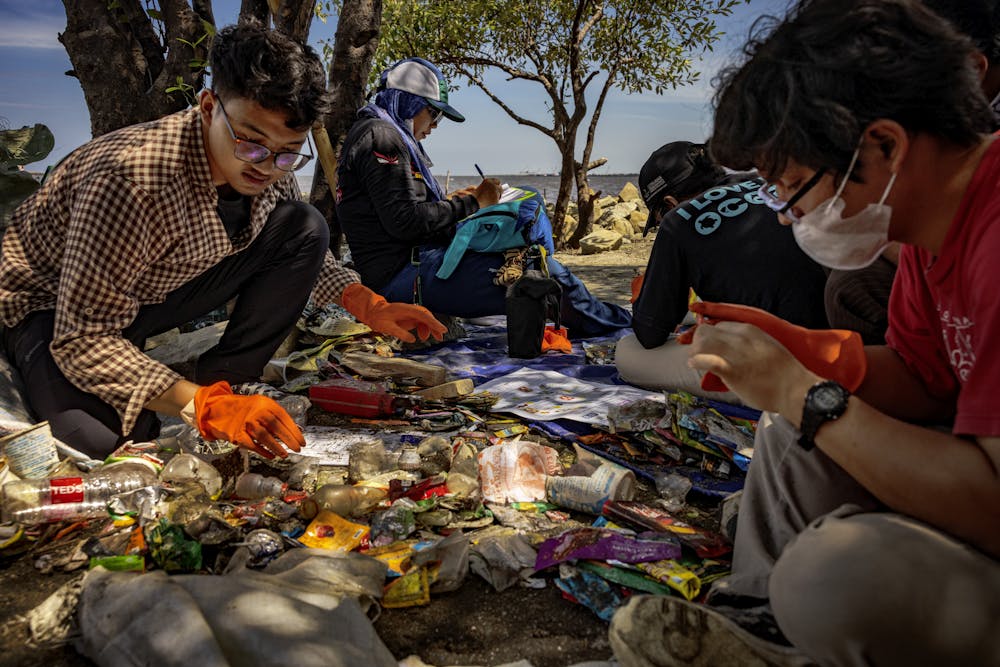 Volunteers for Greenpeace Indonesia take part in a brand audit in 2024 in Jakarta, Indonesia.
Ezra Acayan, Break Free From Plastic, Author provided (no reuse)
Volunteers for Greenpeace Indonesia take part in a brand audit in 2024 in Jakarta, Indonesia.
Ezra Acayan, Break Free From Plastic, Author provided (no reuse)
Many major companies have made voluntary commitments to reduce plastic. However, many of these companies are missing their targets, suggesting these voluntary measures are proving ineffective.
There’s a better alternative. Producer responsibility schemes could help to shift the costs and responsibility away from consumers and back to the producers. This is in line with the “polluter pays” principle – companies making products that become waste have the responsibility to ensure it’s appropriately managed.
Where these schemes are up and running, such as in the European Union, companies often respond by changing how they package products. If it costs them money, they will act.
The problem of single-use plastics
Even when collected, single-use plastics are a difficult waste stream to manage as they have little or no recycling value. Sometimes these plastics are burned as fuel for cement kilns or used in waste-to-energy facilities.
Recycling can be a surprisingly large source of microplastics, as mechanical recycling methods chew up bottles into tiny bits.
Then there’s the fact recycling is not a circle, as the famous logo might suggest. The more we recycle plastic, the more degraded it becomes. Eventually, this plastic becomes waste.
To stop plastic waste, stop making more plastic
If recycling and landfilling can only go so far, the missing piece of the puzzle has to be capping plastic production.
What would that look like?
It would involve requiring manufacturers to steadily reduce the amount of plastic used in their products over time and adopt safe, sustainable plastic alternatives as they become available.
Countries could:
set measurable targets to phase out non-essential, hazardous and unsustainable single-use products, such as take-away containers, plastic cutlery and single-use plastic bags
work to design safe and sustainable products to cut global demand for new plastic while increasing reuse, refilling, repairing, and recycling
invest in non-plastic alternatives and substitutes with better social, economic and environmental profiles, such as old-fashioned reusables.
What about the 52% of unbranded plastic waste? To tackle this requires better data and accountability, such as through an international open-access database of plastic producers or through international standards for package branding. Australia is moving towards this with its planned reforms for packaging.
One thing is certain – current trends mean ever more plastic, and more plastic means more plastic pollution.
Authors: Kathryn Willis, Postdoctoral Researcher, CSIRO

















