

Have smartphones created an ‘anxious generation’? Jonathan Haidt sounds the alarm
- Written by: Hugh Breakey, Deputy Director, Institute for Ethics, Governance & Law, Griffith University

The social psychologist Jonathan Haidt’s new book The Anxious Generation delivers an urgent call for action.
Haidt argues that the evidence is in. Teenagers’ widespread use of smartphones is causing a mental health crisis. Individual, collective and legislative action is required to limit their smartphone access.
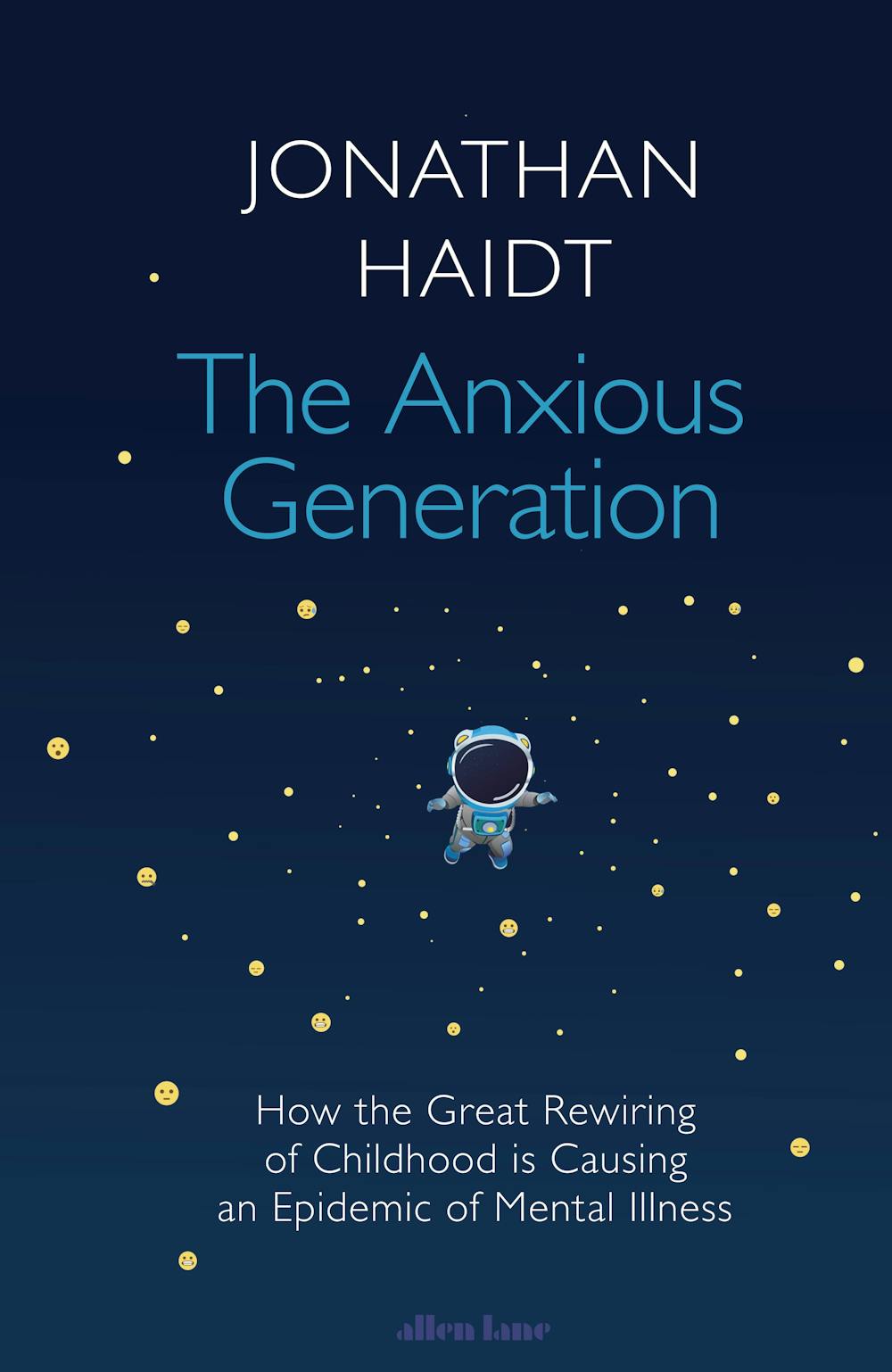
Review: The Anxious Generation: How the Great Rewiring of Childhood is Causing an Epidemic of Mental Illness (Allen Lane)
Haidt begins his book with an allegory. Imagine someone offered you the opportunity to have your ten-year-old child grow up on Mars, even though there is every reason to believe that radiation and low gravity could greatly disrupt healthy adolescent development, leading to long-term afflictions. Surely, given the risks, you would refuse the offer.
A decade ago, parents could not have known the threats lying within the shiny new smartphones they presented to their excited teenagers. But the evidence is mounting that the children who grew up with smartphones are struggling.
Haidt calls the period from 2010 to 2015 the “great rewiring”. This was a period when adolescents had their neural systems primed for anxiety and depression by extensive daily smartphone use.
The kids aren’t alright
 Jonathan Haidt argues smartphones pose a threat to the mental health of young people.
Miller Center, via Wikimedia Commons, CC BY
Read more:
No, you're probably not 'addicted' to your smartphone – but you might use it too much
Insert your ideological preference
If we accept there is a serious problem, then the question arises as to its cause. Again, we must resist intuitively appealing answers to this question. The worry is that we will all look into a “witch’s mirror”, seeing what we want to see or what our preferred ideology tells us we should expect. I am old enough to remember panics about heavy metal music and Dungeons & Dragons.
Indeed, it is possible that Haidt himself fell into this trap, at least in part. In a previous book, The Coddling of the American Mind, Haidt and his co-author Greg Lukianoff argued that harmful worldviews and beliefs prevalent in US educational settings were priming young people for worrying mental health outcomes.
Jonathan Haidt argues smartphones pose a threat to the mental health of young people.
Miller Center, via Wikimedia Commons, CC BY
Read more:
No, you're probably not 'addicted' to your smartphone – but you might use it too much
Insert your ideological preference
If we accept there is a serious problem, then the question arises as to its cause. Again, we must resist intuitively appealing answers to this question. The worry is that we will all look into a “witch’s mirror”, seeing what we want to see or what our preferred ideology tells us we should expect. I am old enough to remember panics about heavy metal music and Dungeons & Dragons.
Indeed, it is possible that Haidt himself fell into this trap, at least in part. In a previous book, The Coddling of the American Mind, Haidt and his co-author Greg Lukianoff argued that harmful worldviews and beliefs prevalent in US educational settings were priming young people for worrying mental health outcomes.
 Haidt thinks this coddling remains a factor, but now recognises the hypothesis fails to fit the data. Specifically, he acknowledges the plummeting mental health of adolescents is evident in many countries, and across all educational levels and social classes.
Are there alternative hypotheses that fit this data? Perhaps kids today are anxious and depressed because they should be anxious and depressed? After all, they inherit a world facing runaway global warming, systemic injustices, insecure work futures and more. Yet Haidt rightly observes that past generations with dire prospects did not show similar mental health outcomes.
Ultimately, the problem is likely to stem from a mix of factors. Haidt argues the current situation was not caused exclusively by smartphone use. Recent decades have also seen the rise of “safetyism” – a term he and Lukianoff coined to describe the preferencing of individual safety ahead of other values – and helicopter parenting. These phenomena have increasingly shielded children from the vital development provided by physical play and unsupervised exploration of the real world.
Haidt argues that parents became fearful of the healthy risks posed by the outside world, even as they catastrophically opened their children up to the unhealthy dangers of the virtual world.
Read more:
Too much love: helicopter parents could be raising anxious, narcissistic children
Developmental concerns
Smartphones did not initially raise major developmental concerns for children. The problems started around 2010 when they combined with other factors like social media, high-speed internet, a backward-facing camera (encouraging selfies), addictive games, easily accessible pornography, and free apps that maximise profit by cultivating addiction and social contagion.
This toxic technological mix allowed smartphones to take over children’s lives. Usage rates averaging seven hours a day gradually but profoundly rewired their maturing brains. Haidt thinks this rewiring gives rise to four “foundational concerns”:
Social deprivation: a smartphone is an “experience blocker”, taking up hours a day that would otherwise be spent in physical play or in-person conversations with friends and family.
Sleep deprivation: too many teenagers stay on their smartphones late at night when they need rest.
Attention fragmentation: alerts and messages continually drag teenagers away from the present moment and tasks requiring concentration.
Addiction: apps and social media are deliberately designed to hack vulnerabilities in teenagers’ psychologies, leading to an inability to enjoy anything else.
Building on these foundational concerns are ones specific to each gender. Girls proved more vulnerable to the damaging effects of social media, while boys retreated into online gaming and pornography.
Dangers to adolescent mental health
An intriguing part of Haidt’s book is its account of the way smartphones became addictive and damaging.
Teenagers, like all humans, have several basic needs and emotional drivers: for social connection and inclusion, for a sense of individual empowerment and agency, for sexual fulfillment, and so on.
Haidt explains that, normally, for almost all human history and evolution, these incentives drove teenagers to do things in person, in the real world – things like making friends, playing games together, navigating disputes, getting tasks done, developing romantic attachments and taking physical risks.
While these activities can lead to injuries, tears and frustrations, they are nevertheless important for teenagers’ mental health and development. Children are antifragile: they need these types of risks and stressors to grow properly.
Smartphones – and their apps, games and social media – also provide responses to all these drivers. But they do so without prompting the above activities and the important outcomes they deliver, such as close friendships and resilience.
For example, a teenager might feel lonely and want connection, so they join Instagram or TikTok. Social media provides a type of connection and delivers a temporary dopamine hit. But it fulfils the teenager’s immediate need in a way that does not involve real world connections and challenges. This only makes them lonelier and more isolated in the longer term.
Haidt thinks this coddling remains a factor, but now recognises the hypothesis fails to fit the data. Specifically, he acknowledges the plummeting mental health of adolescents is evident in many countries, and across all educational levels and social classes.
Are there alternative hypotheses that fit this data? Perhaps kids today are anxious and depressed because they should be anxious and depressed? After all, they inherit a world facing runaway global warming, systemic injustices, insecure work futures and more. Yet Haidt rightly observes that past generations with dire prospects did not show similar mental health outcomes.
Ultimately, the problem is likely to stem from a mix of factors. Haidt argues the current situation was not caused exclusively by smartphone use. Recent decades have also seen the rise of “safetyism” – a term he and Lukianoff coined to describe the preferencing of individual safety ahead of other values – and helicopter parenting. These phenomena have increasingly shielded children from the vital development provided by physical play and unsupervised exploration of the real world.
Haidt argues that parents became fearful of the healthy risks posed by the outside world, even as they catastrophically opened their children up to the unhealthy dangers of the virtual world.
Read more:
Too much love: helicopter parents could be raising anxious, narcissistic children
Developmental concerns
Smartphones did not initially raise major developmental concerns for children. The problems started around 2010 when they combined with other factors like social media, high-speed internet, a backward-facing camera (encouraging selfies), addictive games, easily accessible pornography, and free apps that maximise profit by cultivating addiction and social contagion.
This toxic technological mix allowed smartphones to take over children’s lives. Usage rates averaging seven hours a day gradually but profoundly rewired their maturing brains. Haidt thinks this rewiring gives rise to four “foundational concerns”:
Social deprivation: a smartphone is an “experience blocker”, taking up hours a day that would otherwise be spent in physical play or in-person conversations with friends and family.
Sleep deprivation: too many teenagers stay on their smartphones late at night when they need rest.
Attention fragmentation: alerts and messages continually drag teenagers away from the present moment and tasks requiring concentration.
Addiction: apps and social media are deliberately designed to hack vulnerabilities in teenagers’ psychologies, leading to an inability to enjoy anything else.
Building on these foundational concerns are ones specific to each gender. Girls proved more vulnerable to the damaging effects of social media, while boys retreated into online gaming and pornography.
Dangers to adolescent mental health
An intriguing part of Haidt’s book is its account of the way smartphones became addictive and damaging.
Teenagers, like all humans, have several basic needs and emotional drivers: for social connection and inclusion, for a sense of individual empowerment and agency, for sexual fulfillment, and so on.
Haidt explains that, normally, for almost all human history and evolution, these incentives drove teenagers to do things in person, in the real world – things like making friends, playing games together, navigating disputes, getting tasks done, developing romantic attachments and taking physical risks.
While these activities can lead to injuries, tears and frustrations, they are nevertheless important for teenagers’ mental health and development. Children are antifragile: they need these types of risks and stressors to grow properly.
Smartphones – and their apps, games and social media – also provide responses to all these drivers. But they do so without prompting the above activities and the important outcomes they deliver, such as close friendships and resilience.
For example, a teenager might feel lonely and want connection, so they join Instagram or TikTok. Social media provides a type of connection and delivers a temporary dopamine hit. But it fulfils the teenager’s immediate need in a way that does not involve real world connections and challenges. This only makes them lonelier and more isolated in the longer term.



















.jpg)