

We found pesticides in a third of Australian frogs we tested. Did these cause mass deaths?
- Written by: Jodi Rowley, Curator, Amphibian & Reptile Conservation Biology, Australian Museum, UNSW Sydney
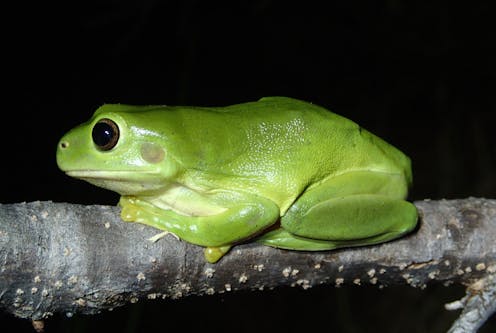
In winter 2021, Australia’s frogs started dropping dead. People began posting images of dead frogs on social media. Unable to travel to investigate the deaths ourselves because of COVID lockdowns, we asked the public to report to us any sick or dead frogs.
Within 24 hours we received 160 reports of sick and dying frogs, sometimes in their dozens, from across the country. That winter, we received more than 1,600 reports of more than 40 frog species.

We needed help to investigate these deaths. We asked people across New South Wales to collect any dead frogs and store them frozen until travel restrictions eased and we could pick them up for testing. Hundreds of people stepped up to assist.
What could be causing these deaths? Aside from the obvious suspect, disease, many people wondered about pesticides and other chemicals. One email we received pondered:
Maybe a lot of these Green Frogs that are turning up dead have in fact died from chemicals.
Another asked:
Is there any relationship between chemicals being used to control the current mice plague in Eastern Australia and effects on frogs?
In our newly published research, we detected pesticides in more than one in three frogs we tested. We found a rodenticide in one in six frogs.
Pesticides have been shown to be a major cause of worldwide declines in amphibians, including frogs and toads. In the case of the mass deaths in Australia, we don’t believe pesticides were the main cause, for reasons we’ll explain.
What did the research find?
As soon as travel restrictions eased, we drove around the state with a portable freezer collecting these dead frogs. We began investigating the role of disease, pesticides and other potential factors in this awful event.
We tested liver samples of 77 frogs of six species from across New South Wales for more than 600 different pesticides. We detected at least one pesticide in 36% of these frogs.
Our most significant discovery was the rodenticide Brodifacoum in 17% of the frogs. This is the first report of rodenticides – chemicals meant to poison only rodents – in wild frogs.
We found it in four species: the eastern banjo frog (Limnodynastes dumerilii), green tree frog (Litoria caerulea), Peron’s tree frog (Litoria peronii) and the introduced cane toad (Rhinella marina).
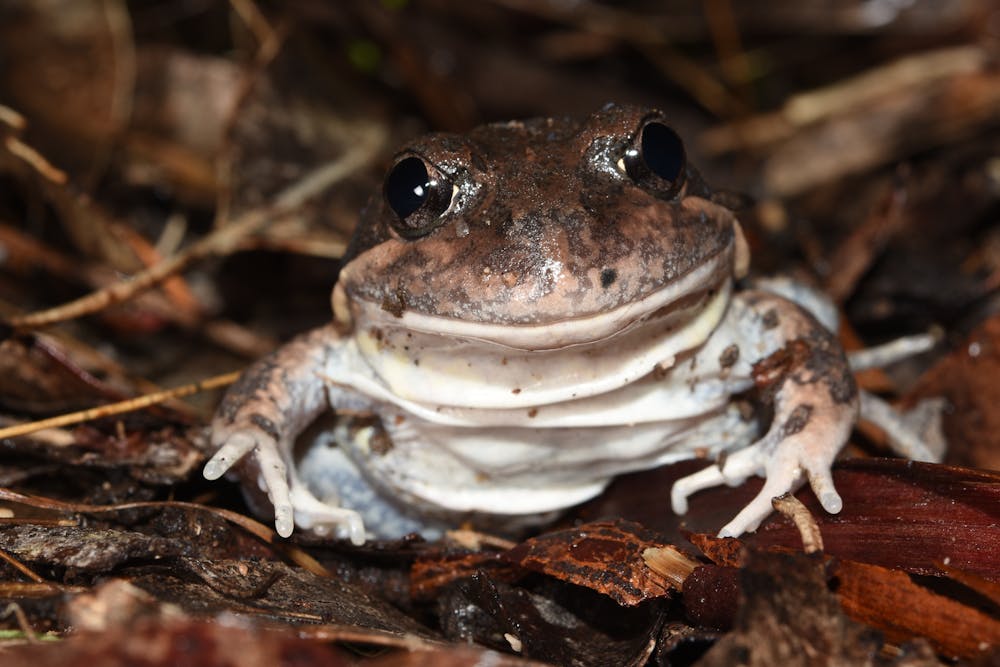 The eastern banjo frog (Limnodynastes dumerilii) was one of the species in which rodenticide was detected.
Jodi Rowley, CC BY-NC-ND
The eastern banjo frog (Limnodynastes dumerilii) was one of the species in which rodenticide was detected.
Jodi Rowley, CC BY-NC-ND
How did these poisons get into frogs?
How were frogs exposed to a rodenticide? And what harm is it likely to be causing? Unfortunately, we don’t know.
Until now, frogs weren’t known to be exposed to rodenticides. They now join the list of non-rodent animals shown to be exposed – invertebrates, birds, small mammals, reptiles and even fish.
It’s possible large frogs are eating rodents that have eaten a bait. Or frogs could be eating contaminated invertebrates or coming into contact with bait stations or contaminated water. Whatever the impact, and the route, our findings show we may need to think about how we use rodenticides.
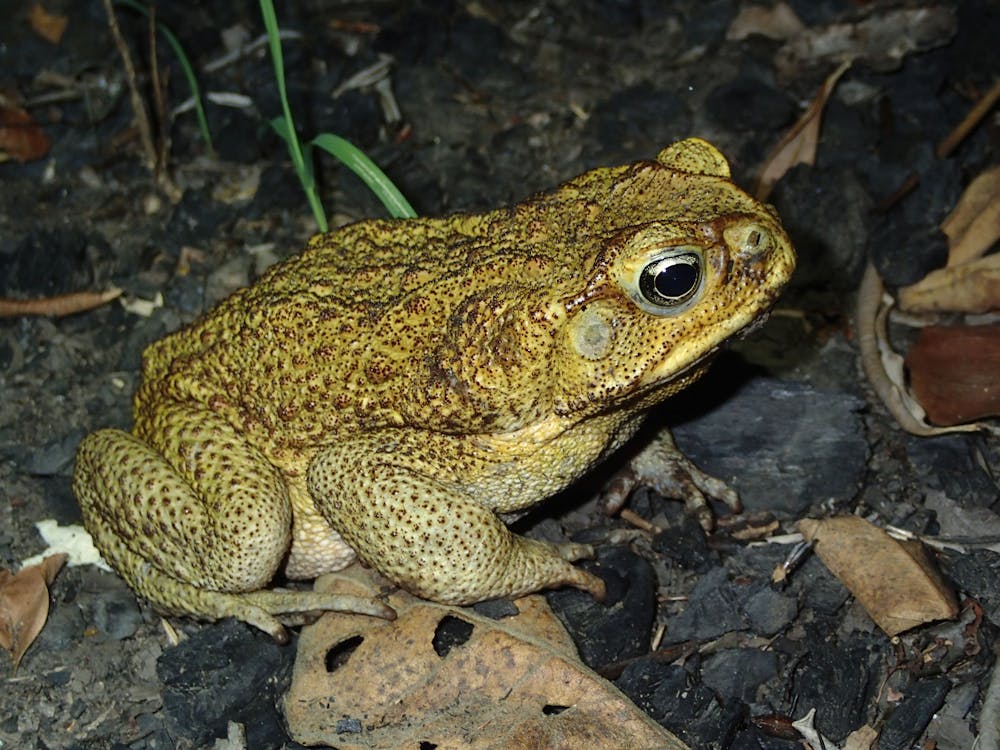 Large species like the cane toad (Rhinella marina) could eat rodents that have ingested baits.
Jodi Rowley, CC BY-NC-ND
Large species like the cane toad (Rhinella marina) could eat rodents that have ingested baits.
Jodi Rowley, CC BY-NC-ND
Two pesticides detected in frogs were organochlorine compounds dieldrin and heptachlor. A third, DDE, is a breakdown product of the notorious organochlorine, DDT.
These pesticides have been banned in Australia for decades, so how did they get into the frogs? Unfortunately, these legacy pesticides are very stable chemicals and take a long time to break down. They usually bind to organic material such as soils and sediments and can wash into waterways after rain.
As a result, these pesticides can accumulate in plants and animals. It’s why they have been banned around the world.
We also found the herbicide MCPA and fipronil sulfone, a breakdown product of the insecticide fipronil. Fipronil is registered for use in agriculture, home veterinary products (for flea and tick control) and around the house for control of termites, cockroaches and ants. MCPA has both agricultural and household uses, including lawn treatments.
What are the impacts on frogs?
There’s very little research on the impact of pesticides on frogs in general, particularly adult frogs and particularly in Australia.
However, from research overseas, we know pesticides could kill frogs, or cause sub-lethal impacts such as suppressing the immune system or malformations, or changes in growth, development and reproduction. Pesticides are considered a threat to almost 700 amphibian species.
Unfortunately for them, frogs do have characteristics that make them highly likely to come into contact with pesticides.
Most frog species spend time in both freshwater systems, such as wetlands, ponds and streams (particularly at the egg and tadpole stage), and on the land. This increases their opportunities for exposure.
Second, frogs have highly permeable skin, which is likely a major route for pesticides to enter the body. Frogs obtain water through their skin – you’ll never see a frog drinking – and also breathe through their skin.
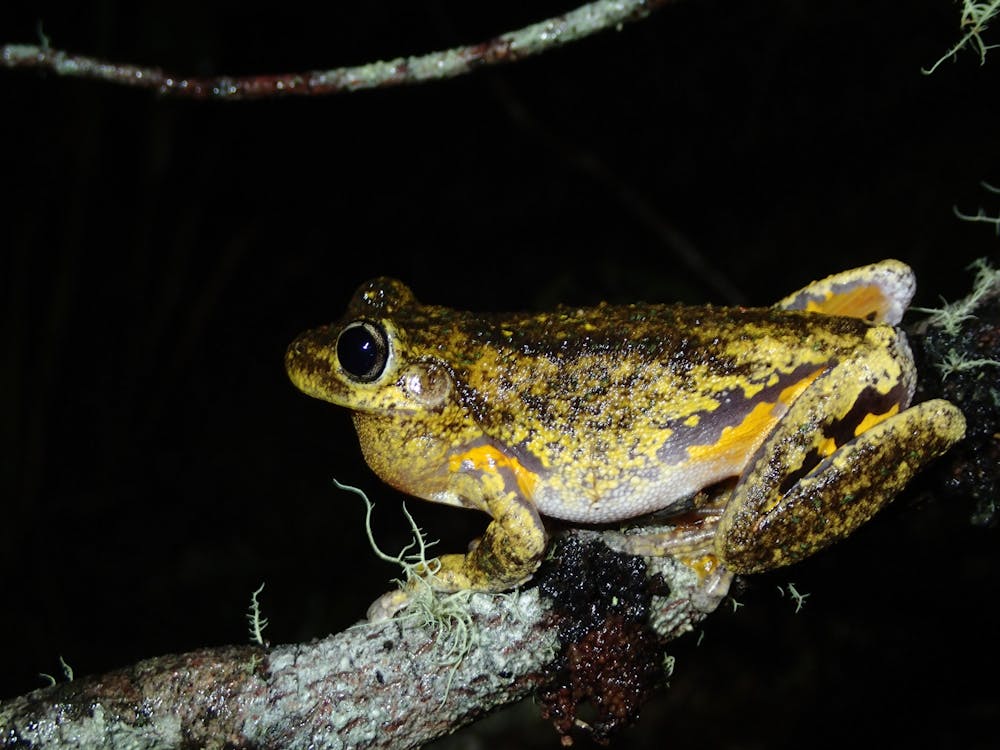 Peron’s tree frog (Litoria peronii) is one of the common species in which pesticides were detected.
Jodi Rowley, CC BY-NC-ND
Peron’s tree frog (Litoria peronii) is one of the common species in which pesticides were detected.
Jodi Rowley, CC BY-NC-ND
Our findings are a reminder that frogs are sensitive indicators of environmental health. Their recognition as bioindicators, or “canaries in the coalmine”, is warranted.
Frogs and other amphibians are the most threatened group of vertebrates on the planet. More research is needed to determine just how our use of pesticides is contributing to ongoing population declines in frogs.
So, were pesticides the major driver of the mass frog deaths in 2021? We don’t believe so.
We didn’t detect pesticides in most frogs and the five pesticides detected were not consistently found across all samples. It’s certainly possible they contributed to this event, along with other factors such as disease and climatic conditions, but it’s not the smoking gun.
Our investigation, with the help of the public, is ongoing.
Chris Doyle, from the NSW Department of Climate Change, Energy, the Environment and Water, contributed to this article.
Authors: Jodi Rowley, Curator, Amphibian & Reptile Conservation Biology, Australian Museum, UNSW Sydney


















