

Violence against women is both a legal and cultural problem. What can we do to address it?
- Written by: Rosalind Dixon, Director, Gilbert + Tobin Centre of Public Law, UNSW Sydney
Australia is finally having a sustained conversation about violence against women and what we can do about it.
It is more than time. Australian women and girls continue to experience unacceptably high rates of domestic, family and sexual violence. An Australian woman dies every 15 days at the hands of a current or former partner, and most partner homicides follow a history of male-perpetrated violence.
As part of this conversation, many Australians are asking how we can do better at addressing such a complicated issue. Some suggested solutions are institutional and legal, but others point to the need for cultural change. While everyone can agree on the need for action, what’s the best way forward?
Legal options
Institutional reform to address gendered violence could operate across four broad levels.
First could be criminal justice reforms such as improving risk assessment in bail decisions and appropriately restricting bail. Police-monitored GPS tracking of those subject to an apprehended violence order (AVO) who are identified as posing an especially high risk could also be implemented. Some forms of tracking of high-risk domestic and family violence offenders have been shown to deter violence in the US and Spain.
These reforms would aim to improve the enforcement of apprehended violence orders and the visibility of people who use serious violence. It is clear such orders can work, but they don’t work well enough to protect victims.
Any such reforms would also need to be accompanied by training and support for police responders and judicial decision-makers in the fair but robust use of these powers, as well as a moratorium on police mixing responses to family violence with other forms of enforcement action. In other words, police should not show up with other warrants when they come to protect victims.
Secondly, institutional reforms could include changes to family, property and tenancy laws to give victims greater short and long-term protection.
For instance, the Commonwealth currently gives only limited funding in family law matters, based on strict means and merits testing. Increasing funding could give women greater support if they decide to leave an abusive relationship.
So too could state property and tenancy laws be improved to allow women to exclude an abusive partner from joint property, even without an apprehended violence order in place.
Thirdly, institutional reforms could extend to issues adjacent to domestic and family violence. This includes mental health support, drug and alcohol regulation and improved service provision, aiming to reduce the role these factors play in gendered violence. More funding for social workers, psychiatrists and acute crisis teams, for example, would be a good start. So would more state-funded drug and alcohol rehabilitation programs.
Fourthly, institutional reforms should surely include increased funding for support services, including psychological, financial, housing and specialist service support. These services, often referred to as “crisis services” can support victims in the immediate aftermath of violence or in their recovery.
And longer-term options, like social housing, provide a path from leaving an abusive relationship to building a new life. Yet there are clear shortages and delays in accessing such housing in many states. This obviously needs to be fixed.
There is evidence from Australia and overseas that reforms of this kind can make a difference.
For criminal justice reforms in particular, legitimate concerns can be raised about their impact on civil liberties and their negative impact on marginalised or over-criminalised groups such as First Nations people. Any such reforms must therefore be considered extremely carefully, with these concerns in mind, and we need to carefully scrutinise how they can be justified.
A culturally entrenched problem
That still begs the question, however, of how much institutional reforms can achieve in the absence of deeper cultural change.
Our society needs to better understand gendered violence is a form of violence. For kids and young people, violence may be normalised in computer games and online, but we need to do a lot more to educate them about the harms of violence offline.
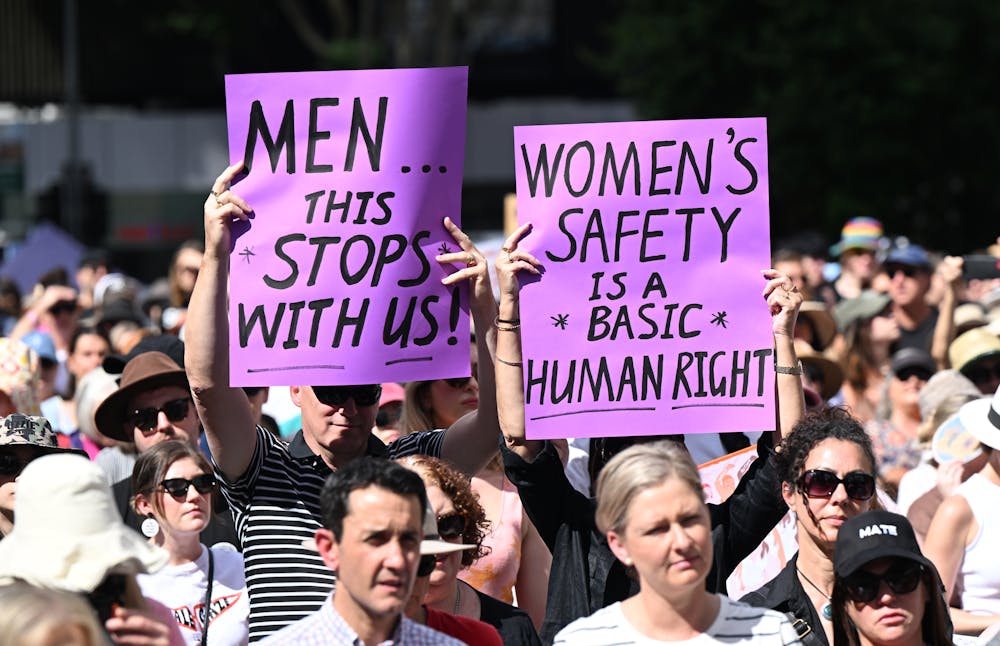
This includes ensuring young people understand the dangers of material like violent pornography, but also that online behaviours such as stalking and harassment can themselves amount to violence.
We also need to better recognise gendered violence is a problem of gender norms and attitudes.
We have made huge strides compared to prior decades in how we think and talk about gender inequality. Over the past decade our knowledge of gender violence has also improved. Many men are doing much better than their fathers to set the right example for their sons, friends and co-workers in this context.
But men and boys are still often raised to expect women will meet their needs, when asked, whether it be at work, in the home or sexually. And they are conditioned to think it is okay to be angry with women who say no to these expectations. We still have a deep-seated problem of both “mantitlement” and misogyny.
Without addressing these twin problems and changing how we view and what we expect of women, we are also very unlikely to see any fundamental change in patterns of sexual and family violence.
Any response to the current gender-based violence crisis, therefore, must include a focus on cultural and educational change, alongside appropriate and considered institutional reform. It must include a focus on, and government investment in, meaningful prevention including prevention targeted towards those who need it the most: men and boys.
Act immediately and continuously
At the same time, we must be careful to ensure that we don’t use the importance of cultural change as yet another reason to stall or avoid hard decisions about institutional reform. The two must go together.
Institutional change is something governments often have a lot more control over than culture. There is more evidence in this sphere about what works, compared to in the context of educational and cultural change. And it is something that can deliver real gains this month or this year.
Cultural change, in contrast, is likely to take longer. It requires resetting how we talk to young people about violence and gender, including at home and in schools, and then waiting the one to two decades it’s likely to take for this to filter through into their intimate relationships.
Of course, we can also educate adults about respectful relationships. And we can educate women about their options, and police about their powers and responsibilities. This is part and parcel of good institutional reform.
But true cultural change is likely to be a longer game, and hence one we need to pursue along with more short and medium-term measures.
Institutional change may be the only hope for our sisters and mothers and it will be cultural change that benefits our daughters.
Authors: Rosalind Dixon, Director, Gilbert + Tobin Centre of Public Law, UNSW Sydney


















