

China’s new Moon mission is about to launch, and it’s a rare example of countries working together
- Written by: Richard de Grijs, Professor of Astrophysics, Macquarie University
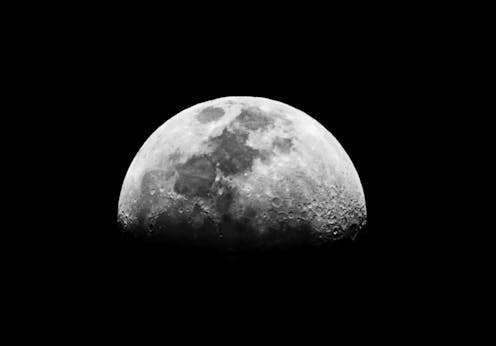
All systems are “go” for tonight’s launch of China’s next step in a carefully planned lunar exploration program. Placed on top of a powerful Long March 5 rocket, the Chang'e 6 mission is due to lift off from the Wenchang Space Launch Site on southern Hainan Island at 7:30pm AEST.
It aims to deliver several “firsts” in the increasingly crowded and competitive arena of Moon exploration.
Chang'e 6 will be only the second mission to land on the lunar far side, after Chang'e 4 successfully touched down first in 2019.
It’s the latest mission in China’s successful and long-running lunar exploration program, aimed at proving new technological advances with each mission. And this time, it’s also an inspiring feat of international collaboration.
What’s on the far side of the Moon?
The spacecraft was originally built as a backup for the previous mission – Chang'e 5 – which successfully brought back 1.73 kilograms of lunar regolith (soil) from the Moon’s near side in 2020.
However, the Chang'e 6 mission parameters are more ambitious and scientifically more highly anticipated. It is also a complicated mission. Its four separate spacecraft must work in close coordination to successfully return up to 2kg of regolith from the Moon’s far side.
From our vantage point on Earth, the Moon’s far side is never visible. The Earth-Moon system is tidally locked: even though both rotate, we always face the same half of the Moon.
When the Soviet Union’s Luna 3 probe returned the first images of the Moon’s far side in 1959, they showed a heavily cratered surface. It’s quite different from that of the familiar near side.

This pockmarked appearance, combined with samples returned by NASA’s Apollo missions, offered some support for the popular “Late Heavy Bombardment” theory. Although this theory is not universally accepted, its proponents suggest that large numbers of meteorites and asteroids may have impacted the Solar System’s rocky planets (and their moons) at an early stage of their formation.
Chang'e 6 aims to collect samples from the oldest lunar impact crater, the South Pole-Aitken basin. Many recent missions to the Moon have targeted the lunar south polar region. This was, in part, driven by the discovery of water ice in the area’s dark craters and its potential exploitation for future lunar bases.
With this imminent sample return, we are now getting tantalisingly close to learning what the lunar far side is made of and its age. It would provide more detail than ever before. This could help us really understand the early history of the Solar System and whether the Late Heavy Bombardment theory needs a rethink.
Science without borders
Any specimens retrieved will be shared with the international community for in-depth analysis, just like the Chang'e 5 samples and data from China’s other space science missions – including its recent high-resolution Moon atlas.
In the current era of increased geopolitical tensions, the Chang'e 6 mission is a rare example of constructive international collaboration. The probe carries instruments contributed by France, Italy, Pakistan and Sweden. The Swedish payload was developed with funding from the European Space Agency (ESA).
This may seem surprising given the current state of world affairs. But ESA and the Chinese Academy of Sciences share a history of joint space missions, although relations have withered somewhat in recent years.
A refreshing development
From a scientific perspective, Chang'e 6’s international engagement is a refreshing development. Scientists are driven by universal principles underpinning the scientific approach. We place great value on collaborative efforts, irrespective of one’s national origin. Science doesn’t know borders.
With space missions being just one example, Chinese scientists are rapidly gaining ground and increasingly leading global scientific achievements. Chinese prowess in science and technology has now reached levels that can no longer be ignored by international collaborators and competitors alike.
Yet real-world constraints in an increasingly geopolitically fraught environment do affect our work as scientists, influencing what can be shared between colleagues internationally, and must be factored into our practical decision making.
It’s important to strike a careful balance between protecting national interests and the free flow of ideas that may ultimately lead to scientific breakthroughs.
Not every scientific exchange reaches a level that warrants triggering national security or foreign interference alerts. To paraphrase the Australian government’s foreign relations policy, “collaborate where we can; exercise restraint where we must”. The Change'6 mission is an excellent example of this kind of productive international partnership.
Authors: Richard de Grijs, Professor of Astrophysics, Macquarie University


















