

What is fate? And how can it both limit and liberate us?
- Written by: Michael Allen Fox, Adjunct Professor of Humanities, University of New England
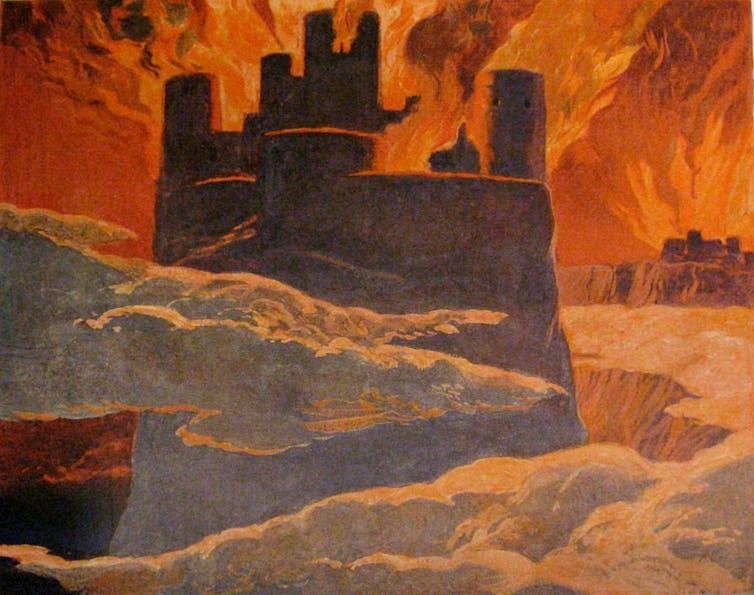
The concept of fate, or the idea of fatefulness, seems to crop up everywhere we look in one form or another. Fate is a key belief enduring across cultures and generations.
What is fate? Generally speaking, fate is thought of as a power or agency determining events and destinies, acting beyond our control.
An Amazon search for books in print centring on fate generates over 50,000 entries. They are mostly potboiler novels, modern mythologies, paranormal speculations, self-help manuals, and studies of specific historical events and eras.
This astonishing figure should not surprise us, because talk about fate has no limits of time or space, confining the notion to a particular age, society, or type of worldview. Fate, quite simply, is an essential part of the way people think and talk about the universe and their place in it.
Fateful ideas drive the disturbing visions of terrorists and cultists, energise the followers of millennial social movements, and endlessly inspire pundits, futurologists, utopian and dystopian theorists, and storytellers. Such ideas resurface as well in today’s debates about environmental collapse, pandemics, the possibility of World War III, and other issues.
Visions of fate
Many of us picture fate as a towering, aloof, controlling force or identify it with cataclysmic scenarios such as Armageddon and Ragnarok. This idea of a remotely acting fate haunts everyday expressions: “she was abandoned to her fate”; “as fate would have it”; “what fate decreed”; “it was meant to happen”; “it must have been written in the stars”.
The same vision is embedded in the mythologies of various cultures. For example, the ancient Greeks believed in three fateful figures (Clotho, Lachesis, and Atropos) who spun and allotted the thread of life, deciding when to cut it off. In the works of Homer, however, there appears Moira, an impersonal force akin to a deity, whose decrees even the gods cannot evade.

In Norse mythology, three mysterious, powerful beings (Urd, Verdandi, and Skuld) represent past, present, and future, and they likewise control the thread of life.
Meanwhile, geographically and temporally distant from these depictions, the belief system of the Omaha tribe of the North American Great Plains features Wakonda, a spirit who directs life experiences from a level beyond human control.
Fate is sometimes conceived of as God’s will superimposing itself on the course of events. Examples of this interpretation can be found in Islamic and Christian thought, which both struggle to solve the problem of reconciling divine decree with free will. This conundrum manifests itself in everyday conversation when people say, “God willing” or “Inshallah” (“if Allah wills it”).
Within non-Western forms of spirituality, such as Daoism, one can also find the supreme force of the universe acting itself out. One must either act in accordance with the Dao (“go with the flow,” as it were) or be ever frustrated in life.
A more realistic perspective
Is fatalism (the doctrine that everything’s preordained to happen as it does) true or false?
Philosophers from the time of Aristotle have engaged in serious attempts to discover a rationally defensible answer to this question. The jury is still out, and so the concepts of fate and fatalism continue to flourish.
But what if we looked at fate from a more realistic, down-to-earth perspective – as comprising the fixed conditions of life plus the imponderable way certain unanticipated events alter our path over the course of time?
When we confront fate in this fashion, we find it can be integrated into views of life that preserve and perhaps even enhance our sense of agency and purpose.
The fixed conditions of life are for the most part fairly obvious, but we don’t often think of them as fateful.
They are things like birth, the inevitability of growing older (the “one-wayness of time”), death, the place and historical moment of one’s existence, each person’s genetically inherited traits, ethnicity, socio-cultural setting, and first language.
 The fixed conditions of life, such as growing old, are for the most part fairly obvious, but we don’t often think of them as fateful.
Tish1/Shutterstock
The fixed conditions of life, such as growing old, are for the most part fairly obvious, but we don’t often think of them as fateful.
Tish1/Shutterstock
These are fateful because we do not choose them but have to make of them what we can and will.
In addition, each of us eventually faces situations and occurrences that are life-changing, sometimes in far-reaching ways. These may come about because of things we do/fail to do or choices we make/omit.
Philosopher Søren Kierkegaard revealingly suggested we all encounter “that fork on the road […] where the path branches off.”
While he means a critical juncture at which we decide to make a major free choice, there is something about this act that is fateful as well. We can neither turn back nor turn away from it. Nor can we undo or redo it, predict or escape from its long-term consequences.
“Fate,” considered more carefully, refers to those circumstances of existence that are given and unalterable, or that come into play in an arbitrary, inexplicable manner, often having a momentous impact on our lives.
‘Elegance and complexity’
Contemporary writers of fiction acknowledge and elaborate upon the fatefulness of our acts, and it is astonishing how often one encounters such reflections without even trying. Here are two instances from books I have casually picked up at my local library in recent months.
A character in Jane Smiley’s novel A Thousand Acres (2003) asserts,
I always think that things have to happen the way they do happen, that there are so many inner and outer forces joining at every event that it becomes a kind of fate. I learned from Buddhism that there’s beauty, and certainly a lot of peace, in accepting that.
 Author Jane Smiley.
Quique García/AAP
Author Jane Smiley.
Quique García/AAP
Joanne Harris writes, in her short story collection Jigs & Reels (2004), that
every choice, every step of the journey, from crossing the road to boarding that fatal flight, is governed by probabilities of near-infinite elegance and complexity.
Like all good literature, these works make you question basic assumptions and expand your awareness.
We also recognise, without generally reflecting on the fact, that historical events over which we have no control and happening at a distance, may determine the course of our lives ever afterwards.
Consider three examples. Scientists and military personnel based in Los Alamos, New Mexico decided the second atomic bomb would be dropped on August 9, 1945, on Nagasaki rather than some other Japanese city. European wars had lasting effects on colonies in the New World. Wall Street stockbrokers make choices whose effects ripple across the globe.
 Wall St stockbrokers make decisions that ripple around the world.
Mary Altaffer/AP
Wall St stockbrokers make decisions that ripple around the world.
Mary Altaffer/AP
Fate, thus, functions importantly in the many ways we interact with the world and each other, and in how we cognitively process our experience. And unsurprisingly, fateful ideas have been misused and abused in the cause of social and political control.
Racism, sexism, belief in castes – these are all based on the notion that people’s fixed or given (that is, fated) identities make them somehow inferior (or superior) and subject as a result to discriminatory (or privileged) treatment.
The now discredited pseudoscience of eugenics (the program to breed “superior” races), lauded by the Nazis among others, was the product of this kind of thinking.
In the 16th century, Calvinists persecuted and killed Christians and others who disavowed the Calvinist belief in the peculiar doctrine that we are all “predestined” to either heaven or hell. And in our own era, Uighurs, Jews, Roma, and many other groups have been persecuted or exterminated because of real or imagined characteristics associated with their fateful genetic inheritance.
On a somewhat different plane, political leaders have often called upon the destiny “divine providence” has bestowed on their countries to justify war and colonialism. This is a fate-infused idea too, deriving from an underlying belief in the inevitability of history.
A brighter side
In spite of the fact that fate has been co-opted many times for evil ends, there is a brighter story to tell as well.
Fate can help shape a positive, balanced, meaningful outlook on life. Each of us has a given heritage, but we also encounter events that are life-changing in unaccountable, often profound ways. How we come to terms with these “acts of fate” is of singular importance and may be uniquely self-determining.
The stories of several “heroes of fate” portrayed in literature and mythology are inspirational here. For example, Sophocles’ famous character Antigone defies King Creon in order to give her brother the burial he deserves. She then acts out the fateful death sentence imposed on her by taking her own life.
Sisyphus, a man condemned by Zeus to roll his stone uphill eternally, scornfully takes ownership of his absurd fate in French writer Albert Camus’ version of the myth, achieving contentment in doing so.
In Hindu scripture, the warrior Arjuna has revealed to him by the god Krishna a mighty vision of the world’s fate and of his own role in the final battle that will end in universal destruction.
After wrestling with himself over his conflicting duties (since some of his enemies will be his own kin), Arjuna commits himself to fight, thus willingly carrying out his fate.
But there are plentiful examples of the transformative processes experienced by ordinary individuals too, when they face inevitable circumstances and work through them to their advantage. We encounter these in the news, in memoirs, in the lives of our friends and acquaintances, and in our own lives.
 McGill-Queen's University Press
Fate, therefore, has the potential to become a liberating idea, and to be a kind of anchor for constructing one’s viewpoint on the world and our life-narrative.
This approach was developed by the ancient Stoics, who taught we strive in vain to change the way the world is. The course of wisdom is to focus on changing ourselves for the better, whatever situation we find ourselves in.
Down the centuries there are many parallel forms of insight, such as Friedrich Nietzsche’s notion of amor fati (“love of fate”).
This embodies the goal to be the kind of individual who says “yes” to life as a whole, including its highs and lows, its blessings, limitations, and drawbacks. Let us suppose, says Nietzsche, it’s as if we had willed everything to happen just as it does and go on from there.
Thinking about fate has much to teach us about who we are, how we see the world, and our evaluation of the possibilities life presents.
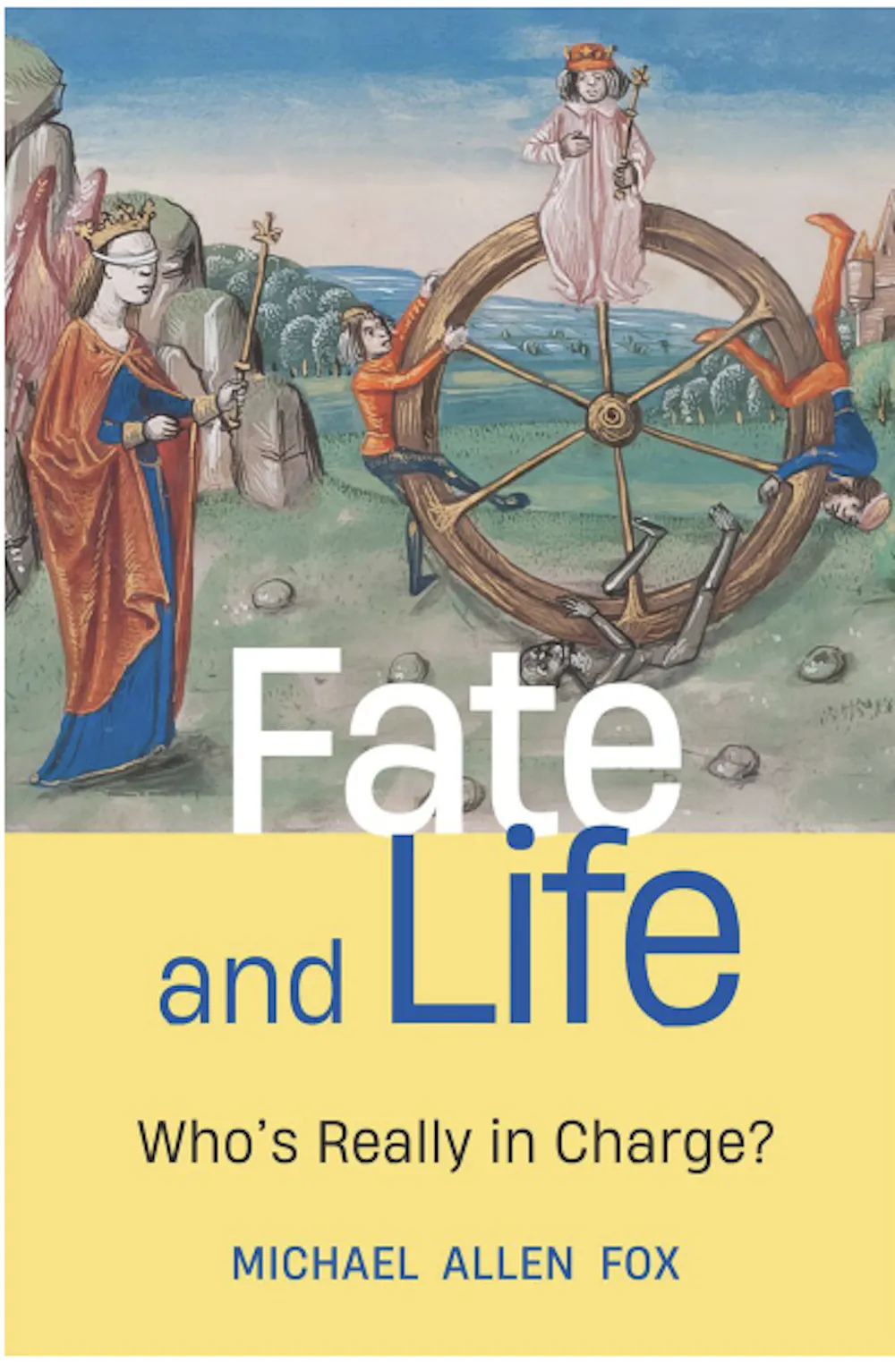
Michael Allen Fox is author of the book Fate and Life: Who’s Really in Charge?.
Authors: Michael Allen Fox, Adjunct Professor of Humanities, University of New England
McGill-Queen's University Press
Fate, therefore, has the potential to become a liberating idea, and to be a kind of anchor for constructing one’s viewpoint on the world and our life-narrative.
This approach was developed by the ancient Stoics, who taught we strive in vain to change the way the world is. The course of wisdom is to focus on changing ourselves for the better, whatever situation we find ourselves in.
Down the centuries there are many parallel forms of insight, such as Friedrich Nietzsche’s notion of amor fati (“love of fate”).
This embodies the goal to be the kind of individual who says “yes” to life as a whole, including its highs and lows, its blessings, limitations, and drawbacks. Let us suppose, says Nietzsche, it’s as if we had willed everything to happen just as it does and go on from there.
Thinking about fate has much to teach us about who we are, how we see the world, and our evaluation of the possibilities life presents.
Michael Allen Fox is author of the book Fate and Life: Who’s Really in Charge?.
Authors: Michael Allen Fox, Adjunct Professor of Humanities, University of New EnglandRead more https://theconversation.com/what-is-fate-and-how-can-it-both-limit-and-liberate-us-226742



















