

trickle-down economics was an idiotic idea. How do we fix the inequality it causes?
- Written by: Carl Rhodes, Professor of Organization Studies, University of Technology Sydney
In his 2024 State of the Union address, US president Joe Biden announced his plans for a bold set of tax reforms. Tax on corporations would go up. Deductions for high-income earners would come down. Tax breaks on corporate jets would take a hit. Low-income taxpayers would benefit, as would middle-income house buyers.
Most controversially, Biden called for a “billionaire tax”. He planned to raise US$500 billion over ten years by imposing a minimum 25% tax on Americans whose wealth exceeded $100 million. “No billionaire should pay a lower tax rate than a teacher, a sanitation worker, a nurse,” he declared.
Biden’s proposal was a reversal of Donald Trump’s Tax Cuts and Jobs Act, which was signed into law in 2017. The act involved significant reductions in tax rates on corporate profits, investment earnings and high personal incomes. Trump described the plan as “the rocket fuel our economy needs to soar higher than ever before”.
As Gods Among Men: A History of the Rich in the West – Guido Alfani (Princeton University Press); Limitarianism: The Case Against Extreme Wealth – Ingrid Robeyns (Allen Lane)
The polarisation of tax policy between Trump and Biden can be traced back at least 40 years. In the 1980s, the world’s economies were shaken up by the idea that if big corporations and wealthy individuals were taxed less and freed from the encumbrance of government regulations, they would grow the economy and people of all socioeconomic groups would be better off financially.
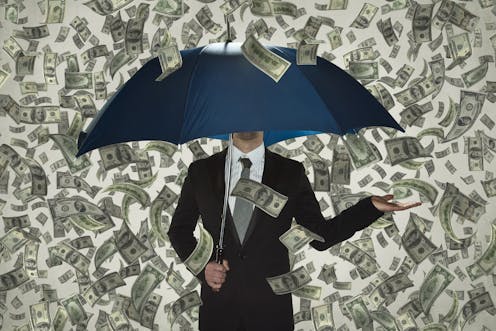
It was dubbed “trickle-down economics”. The story was that through a natural process, some of the wealth created by and for those at the top would trickle down through the rest of the economy, so everyone would benefit from liberating the economic might of the wealthy.
Of course, everybody has not won. Since the advent of the global neoliberal experiment in the 1980s, the world has become increasingly divided into rich and poor. Economic inequality has soared to new heights.
Things have got so bad globally that the World Bank declared 2023 “the year of inequality”. The losses people have suffered as a result of COVID-19, climate change, political conflict and inflation have fuelled the fire of raging inequality. Political populism around the world fans that flame.
Since 2017’s tax act, the collective wealth of American billionaires grew by a staggering $2.2 trillion. If reelected into the US presidency, Trump promises to do it again next year. He has committed to slashing billionaire tax rates even further.

While the US is an extreme example, it reflects the dominant trend in fiscal policy across the liberal-democratic world. Among the G20 countries, the highest tax rates have fallen by around a third over the past 40 years. Meanwhile, the share of national income sequestered by the wealthiest 1% has grown by 45%.
The systemic changes made to global economies since the heyday of trickle-down economics have created a world increasingly ruled by billionaires. These billionaires like to take credit for their wealth as “self-made men” (most of them are male). It is not so. Macho hubris aside, today’s billionaires are a consequence of devastating errors in government policy that were made decades ago and are still being prosecuted today.
Fortunately, an increasing number of people are speaking out against inequality and its overwhelming destructiveness. They are also proposing bold policy measures that can address it.
Two of these people are Guido Alfani, author of As Gods Among Men: A History of the Rich in the West, and Ingrid Robeyns, author of Limitarianism: The Case Against Extreme Wealth. Their books are very different, but complementary. They help to understand the problem of inequality that billionaires so conspicuously represent, and how the problem might be remedied in the name of justice and shared prosperity.
Gods among men
Alfani takes on the ambitious project of writing a history of the rich in the West from the Middle Ages to the present day. In doing so, he looks for the commonalities the economic elites shared during this time, as well as the social disquiet their existence provoked.
Alfani’s writing shows the detail and meticulousness one would expect from a historian. He painstakingly presents facts and arguments, setting out who the rich are, how they have attained wealth, and how society has regarded them through the ages.
 The title of Alfani’s book is especially telling. He takes the phrase “gods among men” from 14th-century French philosopher Nicole Oresme. Oresme was particularly scathing of the rich, arguing that they should be expelled from democratically governed cities because their wealth enabled them to mobilise levels of power not available to other citizens. Indeed, they had so much power they could behave with the sovereign might of a god, unbeholden to earthy laws.
Wealth, Orseme recognised, is not just about economic inequality but also about political inequality.
The threat of extreme wealth to the political promise of democracy runs like a red thread through Alfani’s book. He demonstrates that, despite their power, rich people have been treated historically with suspicion and even disdain: considered dubious for their lack of a valuable social role or political contribution.
The wealthy generally lack understanding or sympathy for the struggles of the less fortunate, choosing instead to moralise their wealth through the pretence to good deeds or merit. As a result, Alfani concludes that wealthy people hold a fragile social position, always running the risk that the majority will turn against them.
In his book’s final pages, Alfani sums up how expecting benevolence from the rich is not a solution to political and economic inequality. The answer lies in taxation. Political representatives of democratic society must be put in charge of deploying excess resources for the common good. If not, the ultra-wealthy will act “as gods among men, wrecking democratic institutions”.
Are there no limits?
While the two authors do not reference each other, in many ways, Robeyns picks up where Alfani leaves off. The “limitarianism” she proposes is a political system that sets strict limits on how wealthy any individual can be.
The title of Alfani’s book is especially telling. He takes the phrase “gods among men” from 14th-century French philosopher Nicole Oresme. Oresme was particularly scathing of the rich, arguing that they should be expelled from democratically governed cities because their wealth enabled them to mobilise levels of power not available to other citizens. Indeed, they had so much power they could behave with the sovereign might of a god, unbeholden to earthy laws.
Wealth, Orseme recognised, is not just about economic inequality but also about political inequality.
The threat of extreme wealth to the political promise of democracy runs like a red thread through Alfani’s book. He demonstrates that, despite their power, rich people have been treated historically with suspicion and even disdain: considered dubious for their lack of a valuable social role or political contribution.
The wealthy generally lack understanding or sympathy for the struggles of the less fortunate, choosing instead to moralise their wealth through the pretence to good deeds or merit. As a result, Alfani concludes that wealthy people hold a fragile social position, always running the risk that the majority will turn against them.
In his book’s final pages, Alfani sums up how expecting benevolence from the rich is not a solution to political and economic inequality. The answer lies in taxation. Political representatives of democratic society must be put in charge of deploying excess resources for the common good. If not, the ultra-wealthy will act “as gods among men, wrecking democratic institutions”.
Are there no limits?
While the two authors do not reference each other, in many ways, Robeyns picks up where Alfani leaves off. The “limitarianism” she proposes is a political system that sets strict limits on how wealthy any individual can be.
 Robeyns opens her book by asking, “can a person be too rich?” With this question, she delves into the ethics of excessive wealth, arguing it should not exist because it legitimatises extreme inequality. Limits should be set such that wealth is capped at a socially agreed amount.
Robeyns clearly states that her idea of limitarianism is not a specific proposal for public policy, but rather a “regulative ideal” that can inform policy direction. The idea is that the wealth held by any individual should be limited by democratic society through government regulation. It is a simple idea, as Robeyns makes clear, yet one that is not easy.
She proposes three types of action that can be taken to pursue her limitarian idea.
First, societies should ensure all citizens have decent living standards and genuine equality of opportunity through education, child care and anti-poverty strategies.
Second, taxation and benefits should be organised so everyone can live a dignified life and excessive economic inequality is prevented.
Third, societies need to adopt a “limitarian ethos”, so that social values adapt to recognise the value of the social and economic justice that is violated by the existence of extreme wealth.
Robeyns’ broad achievement is to stimulate a discussion about the need to take concrete action against the threat of inequality without limits. Importantly, she is not suggesting societies should aim to eliminate economic inequality altogether. To do so would remove the financial incentives that lead people to work hard, take on responsible jobs, and lead innovation.
The question is about how much inequality is desirable. Wherever one might stand on this matter, it is hard to argue with the proposition that the current state of the world is well beyond that limit.
Time for change
Taken together, Alfani and Robeyns yield two critical conclusions.
The first is that the extreme inequality represented by the ultra-wealthy is a significant social problem, and it is getting worse. The pivotal historical point at which this turn for the worse happened was the advent of globalised neoliberalism some 40 years ago.
Inequality has since become so ingrained in the contemporary world as “normal” that, for some, it is thought of as a natural outcome of a meritocratic system. For others, inequality is a sad reality that cannot be changed, no matter how unjust and undesirable.
Fortunately, reading Alfani and Robeyns together yields a second conclusion. Their work resists both neoliberal triumphalism and cynicism. Inequality, they show, is a social and historical phenomenon, therefore it is not immutable.
Change towards greater justice may be difficult, but there is no reason to believe it is impossible. We know now definitively that the idea of a trickle-down economy is as idiotic an idea as it seems on face value. That people ever accepted it is reason for embarrassment. That some people are still backing it is insulting to all.
Forty years of the neoliberal experiment have created a world of vast and increasing inequality rationalised by the false promises of a global free market. But this can change, and it should change. Most importantly, as these two books attest, there is a growing will to change and to create fairer societies, where the material benefits of the world’s wealth do not accrue to an extreme minority.
Authors: Carl Rhodes, Professor of Organization Studies, University of Technology Sydney
Robeyns opens her book by asking, “can a person be too rich?” With this question, she delves into the ethics of excessive wealth, arguing it should not exist because it legitimatises extreme inequality. Limits should be set such that wealth is capped at a socially agreed amount.
Robeyns clearly states that her idea of limitarianism is not a specific proposal for public policy, but rather a “regulative ideal” that can inform policy direction. The idea is that the wealth held by any individual should be limited by democratic society through government regulation. It is a simple idea, as Robeyns makes clear, yet one that is not easy.
She proposes three types of action that can be taken to pursue her limitarian idea.
First, societies should ensure all citizens have decent living standards and genuine equality of opportunity through education, child care and anti-poverty strategies.
Second, taxation and benefits should be organised so everyone can live a dignified life and excessive economic inequality is prevented.
Third, societies need to adopt a “limitarian ethos”, so that social values adapt to recognise the value of the social and economic justice that is violated by the existence of extreme wealth.
Robeyns’ broad achievement is to stimulate a discussion about the need to take concrete action against the threat of inequality without limits. Importantly, she is not suggesting societies should aim to eliminate economic inequality altogether. To do so would remove the financial incentives that lead people to work hard, take on responsible jobs, and lead innovation.
The question is about how much inequality is desirable. Wherever one might stand on this matter, it is hard to argue with the proposition that the current state of the world is well beyond that limit.
Time for change
Taken together, Alfani and Robeyns yield two critical conclusions.
The first is that the extreme inequality represented by the ultra-wealthy is a significant social problem, and it is getting worse. The pivotal historical point at which this turn for the worse happened was the advent of globalised neoliberalism some 40 years ago.
Inequality has since become so ingrained in the contemporary world as “normal” that, for some, it is thought of as a natural outcome of a meritocratic system. For others, inequality is a sad reality that cannot be changed, no matter how unjust and undesirable.
Fortunately, reading Alfani and Robeyns together yields a second conclusion. Their work resists both neoliberal triumphalism and cynicism. Inequality, they show, is a social and historical phenomenon, therefore it is not immutable.
Change towards greater justice may be difficult, but there is no reason to believe it is impossible. We know now definitively that the idea of a trickle-down economy is as idiotic an idea as it seems on face value. That people ever accepted it is reason for embarrassment. That some people are still backing it is insulting to all.
Forty years of the neoliberal experiment have created a world of vast and increasing inequality rationalised by the false promises of a global free market. But this can change, and it should change. Most importantly, as these two books attest, there is a growing will to change and to create fairer societies, where the material benefits of the world’s wealth do not accrue to an extreme minority.
Authors: Carl Rhodes, Professor of Organization Studies, University of Technology Sydney 

















