

how to make our homes comfortable without cranking up the aircon
- Written by: Trivess Moore, Lecturer, RMIT University
Summer in Australia seems to bite harder each year. Adelaide set a record maximum temperature for the nation’s capital cities of 46.6°C last week and there have been extreme heatwaves around Australia. The challenge to remain at a comfortable temperature in our homes is unprecedented.
Early European design influence used shade and ventilation strategies. The wrap-around veranda and classical Queenslander are examples that respond to the harsh Australian summer. This design response was typically paired with behaviour like children playing under the lawn sprinkler, or sleeping under the veranda to catch the evening breeze.
The rise of air conditioning has moved us away from climatically and culturally sensitive ways to deliver comfort during extremes. For many, the press of a button provides superior and controllable comfort. This has led to high energy and energy infrastructure costs, especially when used in peak heatwave periods. It also increases carbon dioxide emissions, which are driving climate change.
Design for climate
Low-energy and zero-energy homes can reduce energy demand and environmental impact. They can also improve liveability, affordability and the health of occupants.
These homes represent a modern reinterpretation of design for climate, based on the science of energy and materials. Such homes are a marriage of passive solar design, building material characteristics and technologies to reduce energy use and provide energy on site.
In this context, recently published research conducted in South Australia asks: are we unlearning coping strategies used to actively manage our thermal comfort? We interviewed householders of the Lochiel Park green village in Adelaide to explore individuals’ housing histories to understand the changing relationship between the occupant, the building and the resultant energy use.
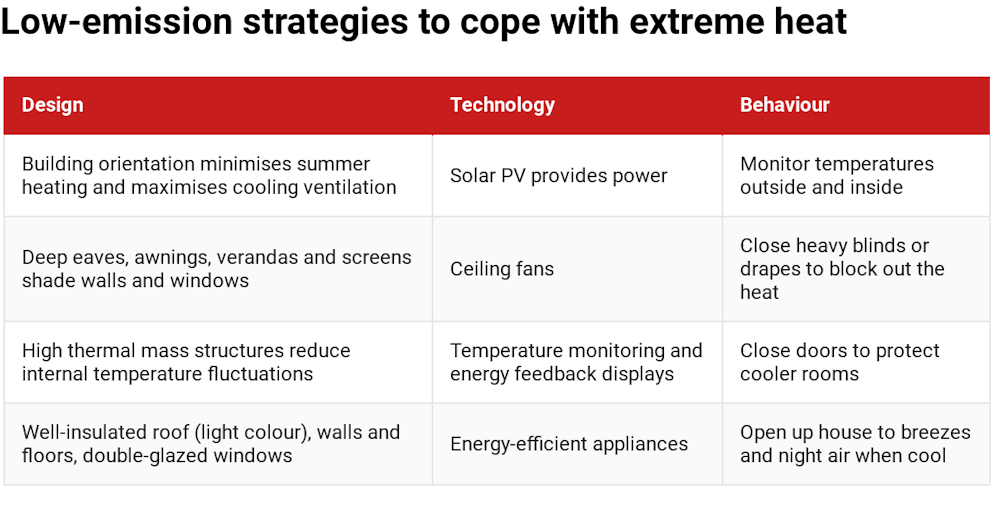
Lochiel Park was Australia’s first large-scale attempt to create homes that use near net zero energy in a net zero-carbon precinct. The homes are rated a minimum 7.5 NatHERS stars. They have double glazing, ceiling fans, solar water heaters, solar PV, energy-efficient appliances and energy-feedback displays. All of these features were, and remain, well above the requirements of building regulations.
Read more: Getting practical with push for zero-carbon homes
Read more: Sustainable housing’s expensive, right? Not when you look at the whole equation
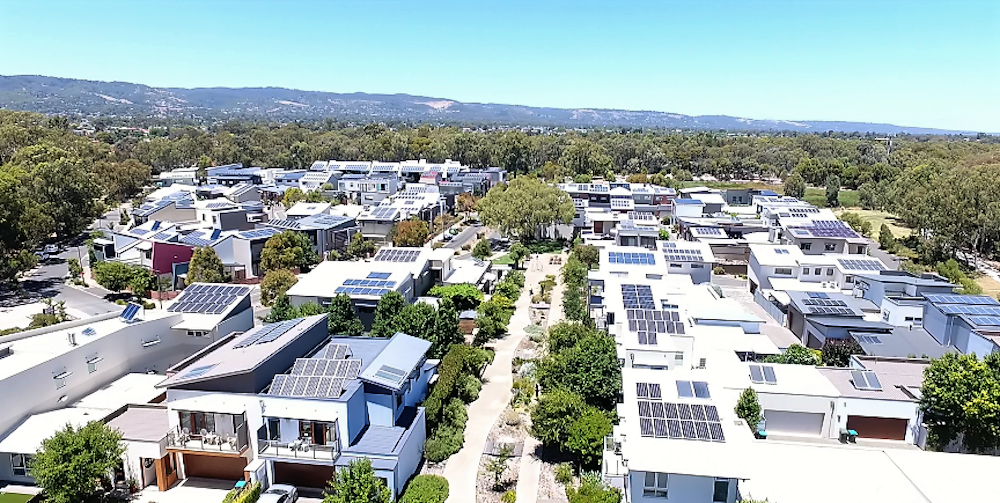 Solar PV and water heating are standard on Lochiel Park houses, but like many features of low-energy homes are not required by Australian building regulations.
University of South Australia, Author provided
Solar PV and water heating are standard on Lochiel Park houses, but like many features of low-energy homes are not required by Australian building regulations.
University of South Australia, Author provided
The research revealed occupants had used a wide range of practices to adapt to extremes in their previous houses. They discussed strategies like sleeping downstairs, in well-vented hallways, or outside under the veranda where it cooled down more quickly at night. Typical behavioural responses included active management of homes like closing curtains and blinds to shut out the sun, fixing temporary shade-screens or opening the house to gully breezes each evening.
The introduction of the air conditioner changed buildings and lifestyles. Single-room air conditioners redefined strategies: instead of sleeping outdoors, residents might drag mattresses into the lounge room. No longer did the local swimming pool look as inviting. As one resident put it: “… I’m not going to go outside in the heat to get in the pool.”
External shading or heavy drapes were no longer seen as necessary. Venetian blinds and other lightweight window furnishings became popular. Active operation by opening and closing windows, doors and curtains became less important.
 Relearning almost-forgotten strategies
New generations of families grew up in an environment where they did not need to learn those previously essential active coping strategies. The move to a purpose-built low-energy home, designed to include active participation by occupants, has reintroduced some of these almost-forgotten coping strategies.
However, they have been placed in the contemporary context of societal perceptions of public safety. For example, one householder noted:
You’d sleep outside of a night. Do that now, you might not wake up in the morning.
Read more:
How safe is Australia? The numbers show public attacks are rare and on the decline
Relearning almost-forgotten strategies
New generations of families grew up in an environment where they did not need to learn those previously essential active coping strategies. The move to a purpose-built low-energy home, designed to include active participation by occupants, has reintroduced some of these almost-forgotten coping strategies.
However, they have been placed in the contemporary context of societal perceptions of public safety. For example, one householder noted:
You’d sleep outside of a night. Do that now, you might not wake up in the morning.
Read more:
How safe is Australia? The numbers show public attacks are rare and on the decline
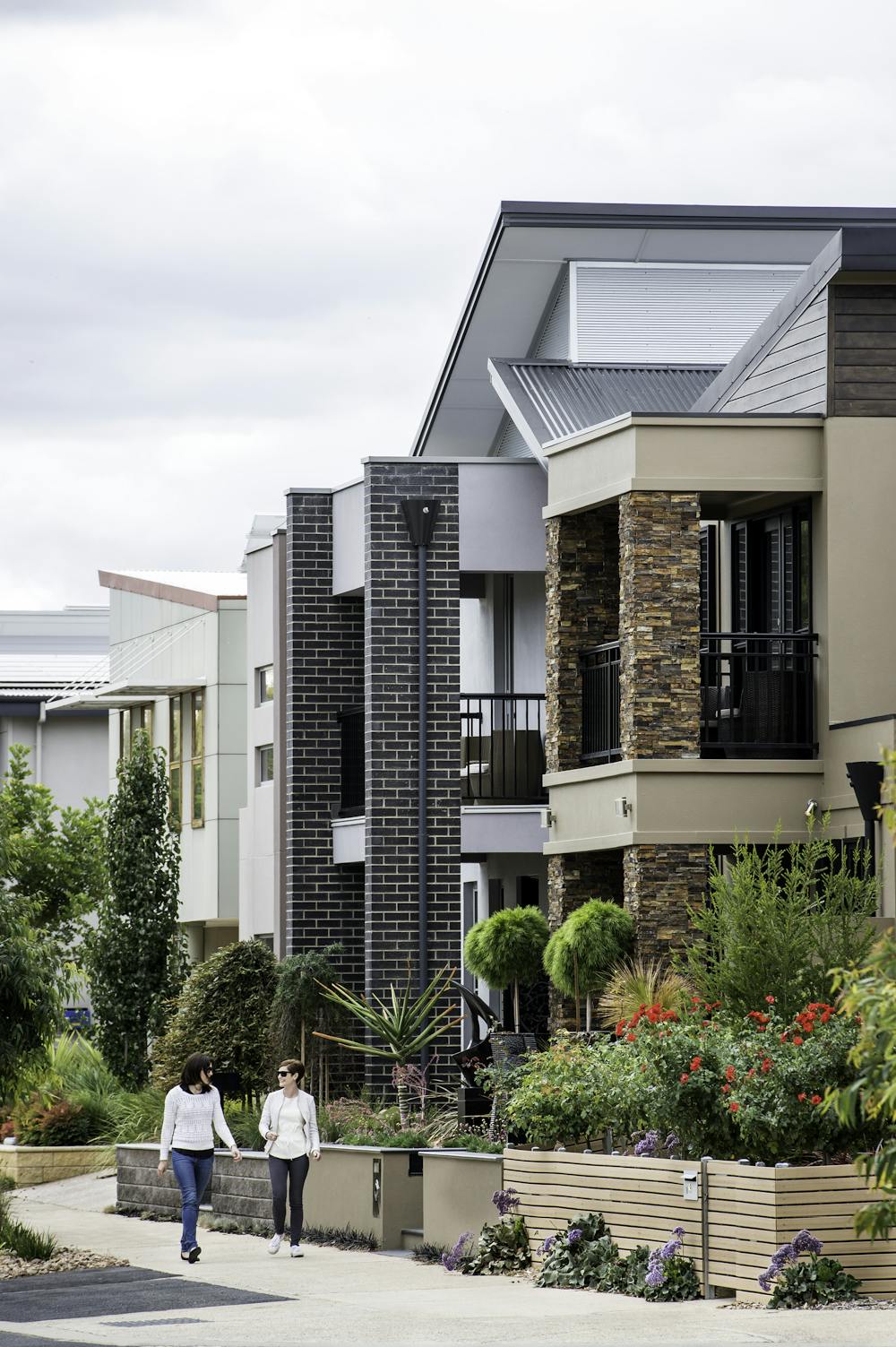 New research on Lochiel Park looked at what households are doing to cope with heatwaves.
Stephen Berry, Author provided
For some, the homes held the promise of “perfect comfort” without the need for cooling. The research finds that moving to a “low-energy” home has reduced, rather than eliminated, their active involvement.
Data from monitoring temperature and energy use show that Lochiel Park homes perform significantly better than most other dwellings. The houses are only 7.5 stars out of a 10-star NatHERS scale, however, so their investment has not afforded occupants year-round “perfect comfort” without the need for adaptation or active heating or cooling.
Tracing the housing histories of residents has revealed an ongoing dynamic of coping with extremes and trying to create a comfortable indoor environment. Comfort has been transformed from being mostly an achievement of the householder to an outcome of technology and, more recently, to an attribute that occupants expect their building to provide.
It remains to be seen if and when net-zero-energy homes will replace the current housing stock. What is clear is that even in high-performance housing residents still have a role in creating a comfortable temperature and coping with extremes of climate.
A key concern is the high risk that “unlearning” traditional comfort practices increases our vulnerability and reduces adaptive capacity to heatwaves. As we saw last week with rolling blackouts hitting more than 200,000 homes in Victoria, relying on air-conditioning creates challenges for our energy networks during extreme weather. The impact on emissions makes this reliance doubly problematic.
New research on Lochiel Park looked at what households are doing to cope with heatwaves.
Stephen Berry, Author provided
For some, the homes held the promise of “perfect comfort” without the need for cooling. The research finds that moving to a “low-energy” home has reduced, rather than eliminated, their active involvement.
Data from monitoring temperature and energy use show that Lochiel Park homes perform significantly better than most other dwellings. The houses are only 7.5 stars out of a 10-star NatHERS scale, however, so their investment has not afforded occupants year-round “perfect comfort” without the need for adaptation or active heating or cooling.
Tracing the housing histories of residents has revealed an ongoing dynamic of coping with extremes and trying to create a comfortable indoor environment. Comfort has been transformed from being mostly an achievement of the householder to an outcome of technology and, more recently, to an attribute that occupants expect their building to provide.
It remains to be seen if and when net-zero-energy homes will replace the current housing stock. What is clear is that even in high-performance housing residents still have a role in creating a comfortable temperature and coping with extremes of climate.
A key concern is the high risk that “unlearning” traditional comfort practices increases our vulnerability and reduces adaptive capacity to heatwaves. As we saw last week with rolling blackouts hitting more than 200,000 homes in Victoria, relying on air-conditioning creates challenges for our energy networks during extreme weather. The impact on emissions makes this reliance doubly problematic.
Authors: Trivess Moore, Lecturer, RMIT University


















