

Patents based on traditional knowledge are often ‘biopiracy’. A new international treaty will finally combat this
- Written by: Miri (Margaret) Raven, Senior Scientia Lecturer (Research), UNSW Sydney
Last week, at a conference in Geneva, the member states of the World Intellectual Property Organisation agreed on a new treaty aimed at preventing the for-profit piracy of traditional knowledge.
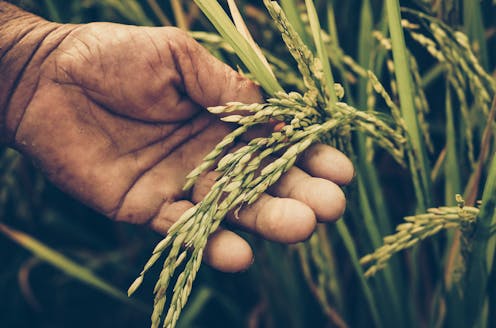
So-called “biopiracy”, in which companies lift ideas from traditional knowledge and patent them, is a significant problem. In one case a US company patented derivatives of the neem tree as pesticides, when the plant’s properties were already well known to local communities in India. There have also been attempts to patent traditionally cultivated plant varieties, such as basmati rice and jasmine rice.
The main purpose of the new Treaty on Intellectual Property, Genetic Resources and Associated Traditional Knowledge is to ensure patent applications disclose any involvement of traditional knowledge.
At last week’s conference, we contributed advice on the treaty text to the Indigenous Caucus, member states and advisors, and gave presentations at side events. The final text of the treaty, while it does contain some compromises, is an important step for protection of traditional knowledge after 24 years of deliberation.
What international law says
International law already has protections for genetic resources and traditional knowledge. The 2010 Nagoya Protocol established some rules.
Under the Nagoya Protocol, “users” of genetic resources and associated traditional knowledge must obtain permission from “providers”. “Users” must also come to agreements with “providers” and traditional knowledge holders about sharing the fruits of their research and development activities.
However, the Nagoya Protocol doesn’t cover patents. That’s where the new treaty comes in. It contains three key provisions on genetic resources and associated traditional knowledge.
Disclosure: where did the resources and knowledge come from?
The treaty requires applicants for patent claims “based on” genetic resources to disclose where the genetic resources came from. This is often places such as herbariums or gene banks.
For patents “based on” traditional knowledge, applicants must disclose the Indigenous peoples and local communities who provided it. If this is unknown, the applicant must disclose where they sourced it from.
Sometimes the applicant doesn’t know where the genetic resources or traditional knowledge came from. In these cases they must declare they genuinely don’t know the source.
Patent officers are expected to provide guidance to help applicants with the disclosure requirement. They should also provide opportunities to fix any failures to disclose.
The disclosure requirement is not retroactive: it doesn’t apply to patents granted in the past.
Sanctions and remedies: what happens if people don’t follow the rules?
During the treaty negotiations, Japan, the United States and the Republic of Korea claimed that punitive measures for not disclosing would dampen innovation. On the other hand, the Group of Latin American Countries, the Indigenous Caucus and the African Group argued that a treaty without teeth would do little to rein in biopiracy and patent fraud.
This negotiation resulted in a compromise. The treaty doesn’t allow patents to be revoked or made unenforceable if an applicant has failed to disclose. However, it does allow other sanctions and remedies if a patent holder has failed to disclose with “fraudulent intent”, which may include fines.
Information systems: what is already known?
The treaty allows states to establish systems (such as databases) of information about genetic resources and associated traditional knowledge. This is to be done in consultation with Indigenous peoples, local communities and other stakeholders.
These systems should then be available to patent offices to use when determining whether patent applications are actually new or cover information that is already publicly available.
While this provision mentions “appropriate safeguards” for these information systems, it doesn’t indicate who should own and control the systems. This is a shortcoming, as it disregards the idea that Indigenous peoples should retain sovereignty over their own data.
Treaty negotiations and compromises
At the conference, members of the Indigenous Caucus made suggestions on the draft treaty text. However, this text needed to be endorsed by a member state to be considered in the negotiations.
This is something of a flaw in the process, as the treaty relates specifically to Indigenous peoples’ knowledge.
The final treaty reflects compromises between the member states of the World Intellectual Property Organisation (influenced by the Indigenous Caucus), industry bodies and representatives of civil society.
What is Australia’s role in combatting biopiracy?
In Australia, patents relating to Kakadu plum, emu oil and native tobacco include claims that seem to be based on traditional knowledge and uses.
Australia’s government agency for intellectual property rights, IP Australia, has created an Indigenous Knowledge Initiative to improve the handling of Indigenous knowledge in our intellectual property system.
Australia played an important role in the treaty negotiations, with an Australian delegate – Jodie McAlister from IP Australia – elected president of one of the two main committees. Australia welcomed Indigenous participation both in informal and formal negotiations, as well as supporting the text proposed to protect traditional knowledge.
Australia’s progress on protecting Indigenous knowledge will be influenced by future negotiations at the World Intellectual Property Organisation. These will include working out exactly what sanctions will be faced by those who breach the patent disclosure requirement.
Authors: Miri (Margaret) Raven, Senior Scientia Lecturer (Research), UNSW Sydney


















