

Google AI


Modern Australian

Our smartphone screening tool could help detect strokes faster – and lead to quicker treatment

  • Written by: Dinesh Kumar, Professor, Electrical and Biomedical Engineering, RMIT University
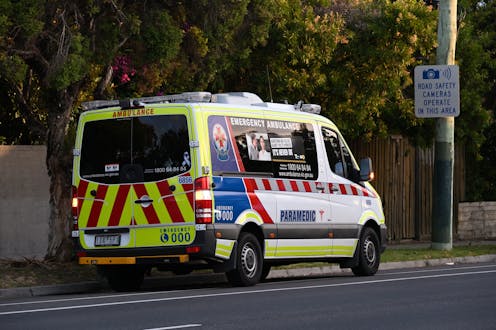
Our smartphone screening tool could help detect strokes faster – and lead to quicker treatment

In Australia, stroke is among the leading causes of death and permanent disability. Some 5% of deaths are due to stroke, while strokes cost the Australian health-care system A$6.2 billion annually.

Strokes occur when there’s a sudden loss of blood flow in the brain. This prevents the brain tissue from getting the oxygen and nutrients it needs, which can lead to damage to sections of the brain.

Timely stroke treatment can limit brain damage and improve outcomes for patients. But this depends on early recognition of the symptoms, which is not always easy.

Our team has developed a new smartphone app to screen a person’s facial expressions and detect whether they’ve had a stroke. We’ve recently published the results of a pilot study of this tool, and found it could identify if someone has had a stroke quickly and relatively accurately.

Scanning facial expressions

One of the earliest external symptoms of stroke can be found in facial expressions such as droop, where one side of the mouth is not activated when a person tries to smile.

However, paramedics responding to emergencies and hospital emergency department staff often miss stroke cases. Facial expressions are naturally different between people, and identifying subtle changes in a high-stress environment is challenging. This can become even more difficult if the patient is from a different ethnicity or cultural background.

With our smartphone app, a paramedic or other first responder asks the patient to try to smile, and “films” the patient’s face while they do so. An AI-based model then analyses the video recording, looking for similar signs as used by clinicians to identify stroke, namely the asymmetrical drooping of the mouth.

PhD scholar Guilherme Camargo de Oliveira (right) demonstrates the face screening tool with Visiting Associate Professor Nemuel Daniel Pah from RMIT University.
Guilherme Camargo de Oliveira (right) demonstrates the face screening tool with Nemuel Daniel Pah. Seamus Daniel, RMIT University

The app is designed for simplicity – the user just has to point the camera to the patient and press a button. To ensure the patient’s privacy, the video is analysed in real time and does not have to be stored. This device would only need a smartphone, so would be easy to deploy, and would be a cost-effective solution.

The idea is that first responders such as paramedics or nurses in the emergency department would have this app on their smartphones. When they first see a patient who has experienced a medical emergency, they can use the app to detect if the patient may have suffered a stroke in seconds. That way, treatment can be fast-tracked accordingly.

Our pilot study

We tested the tool on a small dataset, using video recordings of 14 people who had experienced a stroke, and 11 healthy controls.

We found it was 82% accurate, meaning it correctly identified a stroke 82% of the time. Our tool is not designed to replace comprehensive clinical diagnostic tests for stroke, but it could help identify people needing treatment much sooner and assist clinicians.

Dinesh Kumar explains the tool.

While these results are promising, we’re planning to continue to optimise the model. Our hope is the accuracy will improve as we build a bigger dataset, with recordings of more patients.

At this stage, the AI model has only been trained and developed on a small dataset, and the data lacks diversity in ethnicity and demographics. It will be essential to refine and test the app for people of different cultural and ethnic backgrounds.

Down the track, we plan to partner with clinicians, emergency departments and ambulance services to conduct clinical trials. We’ll need to test the effectiveness of this tool in the hands of the actual users, such as paramedics, to confirm it helps them look after their patients.

Authors: Dinesh Kumar, Professor, Electrical and Biomedical Engineering, RMIT University

Read more https://theconversation.com/our-smartphone-screening-tool-could-help-detect-strokes-faster-and-lead-to-quicker-treatment-232710

Pool and Deck Design: How to Plan the Perfect Outdoor Living Space for Your Sydney Home

For many Australians, the backyard is where life happens. Summer barbecues, weekend swims and long evenings outdoors are all part of the lifestyle, ...

Is Solar Pool Heating Worth It? What Sydney Homeowners Should Know

There's nothing quite like a backyard pool on a hot Sydney day. But once autumn rolls in, many pools sit unused for months because the water is simp...

Planning a Luxury House Move: A Week-by-Week Timeline for Prestige Sydney Homes

Selling or buying a prestige home is a major milestone. Whether it's a waterfront residence in Birchgrove, a grand Federation home in Haberfield or ...

Downsizing or Upgrading Your Caravan? Here's How to Sell It Without the Hassle

Selling a caravan can feel like a major task, especially when you are unsure about its value, paperwork, or how to find a buyer. Whether you are dow...

The Best Overseas Adventure Holidays for Australians Who Love the Outdoors

Australia offers no shortage of incredible outdoor experiences, but sometimes the best way to satisfy your sense of adventure is to head overseas. A...

Cape Town Wine Shuttle: Winelands Tasting & Tours

Embark on an unforgettable journey through the picturesque Cape Winelands, where world-class wines and breathtaking scenery await. Our Cape Town Win...

Metal Fabrication: Choosing Metal Fabrication Melbourne Services for Custom Projects

What Modern Metal Fabrication Involves From individual components to complete structures, metal fabrication brings together processes such as desig...

Why Giant Rats Tail Grass Keeps Coming Back After Spraying

Giant Rats Tail Grass (GRT) is one of the most frustrating pasture weeds for farmers and lifestyle property owners. You spray an infested area, see th...

When Custom Cardboard Boxes Make Sense for Your Business

Custom cardboard boxes can be useful when a standard carton does not fit a product, packing method or presentation requirement particularly well. A ...

Bottle Label Printing: Key Factors for a Professional Finish

Why the Printing Method Matters When businesses need packaging or printed containers developed for a particular application, the right supplier can m...

Virtual Livestock Fencing and GPS Tracking: Improving Visibility Across Cattle Properties

What Virtual Livestock Fencing Means for Modern Cattle Management Managing cattle across extensive properties requires more than knowing where anim...

Sydney Pawnbrokers Explained: How Hocking Your Car Actually Works

Sometimes you need cash, and you need it soon. If you own a car, you may already have a way to get it. That's what people mean when they say they've...

Moving Interstate from the Gold Coast to Brisbane (or Back)? What Removalists Wish You Knew First

Have you talked to anyone who’s done the move? They say the same thing: the drive up the M1 is the easy part. It's everything around it that catches...

Why the Spring School Holidays Are a Great Time to Visit Coffs Harbour

The spring school holidays are a good time to spend a few days on the Coffs Coast. The weather is starting to warm up, there is plenty to do outdoor...

What to Do When an Older Car Is No Longer Worth Keeping in Melbourne

Ever looked at another repair quote and wondered whether your old car is still worth the trouble? It is a common turning point for Melbourne motoris...

Your Baby's First Year: A Local Guide to Feeding, Sleep, and When to Get Extra Support

Ask ten parents in a Brisbane mothers' group how their baby is feeding or sleeping, and expect ten different answers.  Someone's baby sleeps throug...

Kitchen and Laundry Makeover Ideas That Don't Require a Full Renovation

Full kitchen renos are expensive — and most people don't actually need one.  They need the kitchen to stop looking like it's stuck in 2009, or they...

How Technology Is Reshaping the Modern Australian Commercial Kitchen

The commercial kitchen has always been shaped by technology. Refrigeration changed how ingredients could be stored, modern ventilation transformed k...

















