

Modern Australian
The Times

Most plastics are made from fossil fuels and end up in the ocean, but marine microbes can’t degrade them – new research

  • Written by Victor Gambarini, PhD Student in Marine Science, University of Auckland, Waipapa Taumata Rau
Most plastics are made from fossil fuels and end up in the ocean, but marine microbes can’t degrade them – new research

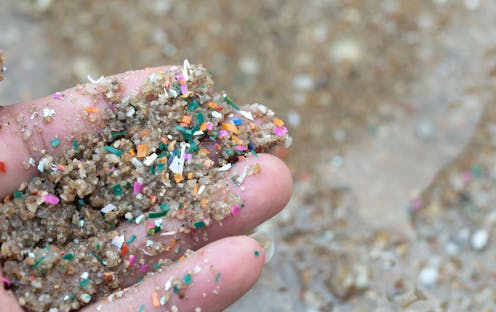
Marine plastic pollution is a massive environmental issue, with a plastic smog of an estimated 170 trillion particles afloat in the world’s oceans. This highlights how urgently we need to develop strategies to mitigate this environmental crisis.

We know some microbes can break down certain plastics, but our new study finds no clear correlation between plastic pollution levels and the production of plastic-degrading enzymes by marine microorganisms.

To address this issue, we need to understand the varying properties and environmental impacts of different types of plastic.

Most plastics are not degradable

There are four main types of plastics: biodegradable, bio-based, fossil-based and non-biodegradable. The terms can be confusing and lead to misunderstandings about their environmental impact.

Biodegradable plastics can break down naturally through the action of living organisms such as bacteria. They are made from renewable sources such as corn starch or sugar cane and don’t linger in the environment for long periods. Examples of biodegradable plastics are polycaprolactone (PCL), polylactic acid (PLA) and polyhydroxybutyrate (PHB).

Bio-based plastics are also derived from natural materials such as plants. These plastics include polyethylene terephthalate (PET), which is widely used for clothing and containers for liquids and food. However, while PET can be made from renewable sources, most of its production is derived from fossil fuels.

Fossil-based plastics are made from oil and gas. They include common types like polyethylene (PE), which is used for single-use food packaging, and polyvinyl chloride (PVC), commonly used for water pipes and wire insulation.

These plastics are generally not biodegradable. They do not decompose naturally and can persist in the environment for centuries, contributing significantly to pollution and global warming.

This Venn diagram shows plastic classifications and how different types of plastics overlap
Truly sustainable and degradable plastics are made from biological materials. Victor Gambarini, CC BY-SA

PE is the most manufactured plastic type in the world. It accounts for 103.9 million metric tonnes (mmt) per year, followed by PET (65.4 mmt) and PVC (50.5 mmt). However, globally only 9% of all plastic waste is recycled.

According to Plastics NZ, terms such as “bioplastic”, “biopolymer”, “bio-based” and “biodegradable” are being used interchangeably, even though they signify entirely different things.

Ocean microbes cannot break down plastics

Our study analysed genetic information from microorganisms in the ocean, using data from hundreds of water samples collected during expeditions.

This provided us with insights about the genes marine bacteria use to make enzymes, including the one they use to degrade some plastics. We can then track which enzymes these microbes use at any given time.

The idea is that if marine microorganisms are breaking down plastics, they have to produce the enzymes capable of doing it. Therefore, if microbes are biodegrading plastics in our oceans, locations with more plastic pollution should have higher levels of enzymes for plastic degradation.

This map shows the distribution of plastic pollution across the ocean.
This map shows the distribution of plastic pollution across the ocean, with higher concentrations in the main oceanic gyres. Victor Gambarini, CC BY-SA

Our study found no clear global connection between plastic pollution levels in the ocean and the enzymes produced by marine microbes to degrade plastics. This suggests the ocean microbiome hasn’t evolved efficient mechanisms to break down various types of plastic.

There are several reasons for this. Plastics are very different and complex. Each type of plastic has its own structure and properties, and microbes might not have had enough time or pressure to evolve special enzymes for each type.

Environmental conditions such as temperature, currents and nutrient availability could also play a role in influencing microbial plastic degradation.

This graph shows that locations with more plastic pollution do not necessarily have higher amounts of enzymes for plastic degradation.
This graph shows that locations with more plastic pollution do not necessarily have higher amounts of enzymes for plastic degradation. Victor Gambarini, CC BY-SA

Overall, our findings suggest the global ocean microbiome has not yet evolved to efficiently degrade the many types of plastic pollution plaguing marine ecosystems. This highlights the ongoing danger plastic pollution poses for marine environments.

Developing solutions will likely require dramatically reducing new plastic waste, recovering existing ocean plastic and shifting to biodegradable plastic types.

While disappointing from an environmental remediation perspective, the lack of widespread microbial plastic degradation confirms the durability of synthetic polymers and highlights the vast challenge we face to clean up the oceans.

Authors: Victor Gambarini, PhD Student in Marine Science, University of Auckland, Waipapa Taumata Rau


Read more https://theconversation.com/most-plastics-are-made-from-fossil-fuels-and-end-up-in-the-ocean-but-marine-microbes-cant-degrade-them-new-research-230530

A Digital Preparation Checklist For International Medical Conferences

An international medical conference compresses many responsibilities into a few days. A delegate may need to present research, move between venues, ...

The Growing Popularity of Lab Grown Diamonds in Sydney and Hong Kong

The diamond industry has changed significantly in recent years as more buyers seek ethical, affordable, and sustainable alternatives to mined diamon...

Modern AI SEO Agency vs Traditional SEO: What’s the Difference

Search engine optimisation has changed dramatically over the past few years. Search engines have become smarter, user behaviour has evolved, and bus...

Caravan Travel for Modern Australian Getaways: Plan a Comfortable Holiday

A family road trip is one of the best ways to explore Australia together. And, travelling by caravan gives you the freedom to take your time, stop a...

Mini Excavator and Trailer Package for Sale: What I Buy as One Deal in 2026

The first client who asked me for a mini excavator and trailer package for sale wasn’t trying to save a few hundred dollars on shipping. They we...

Make Dad a Guest in His Own Home This Father’s Day

Father’s Day can accidentally turn Dad into the unpaid event manager of his own celebration. He lights the barbecue, finds extra chairs, checks wh...

Where to Enjoy Your Off-Road Caravan on the Gold Coast

With a caravan, you can travel anywhere and everywhere without battling the rush of the peak holiday season or last-minute reservations. While the r...

How Osteopathy Supports Recovery from Sciatica and Nerve Pain

Sciatica isn't just annoying. It's genuinely painful. It sits deep in your glute and shoots straight down the back of your leg. It turns something as...

The Winter Jewellery Edit: Five Pieces You'll Wear All Season

As wardrobes shift to cosy knits, tailored coats and rich seasonal textures, jewellery becomes the finishing touch that pulls every winter outfit to...

7 Signs It's Time to Upgrade Your Piston Air Compressor

If you run a workshop, panel shop, or fabrication business anywhere around Perth, you already know what heat and dust do to equipment over a few sum...

How Long Do Bathroom Renovations Melbourne Take? Step-by-Step Process Explained

Planning a bathroom renovation is exciting, but one of the biggest questions homeowners ask is, "How long will it take?" While every project is uniq...

Why Your Skin Breaks Out: The Science of Acne Explained

Acne is the most common skin condition in the world. An estimated 85% of people experience it at some point between the ages of 12 and 24, and a gro...

10 Swimwear Trends Australian Women Are Wearing This Summer

Every Australian summer brings a fresh wave of swimwear trends, but some styles have much greater staying power than others. While fashion constantly ...

Why Regular Skills Updates Are Essential for Licensed Security Officers

A guard at a Brisbane shopping centre gets a call about a shoplifter who's turned aggressive.  They’ve done the job for six years. But their de-...

10 Benefits of Choosing Professional Tutoring Penrith Services

Every student has unique learning strengths, challenges, and academic goals. While classroom teaching provides essential knowledge and structure, so...

Sunshine Coast Baby Classes Prove Big Hit Among First-Time Mums

There's a movement gaining traction on the Sunshine Coast, providing a village of support, socialisation and relief for first-time mothers and babie...

Father's Day Gift Ideas for Men Who Are Hard to Buy For

Some dads are easy to buy for. Others do not want anything, already have everything, or give you the classic "don't worry about me" answer every yea...

Top 5 Mistakes That Wear Out Your Brakes Faster

Brakes don't need frequent replacements like oil changes do.   But a lot of the wear happens quietly, over months, because of habits most drivers...
















