

A wealthy housewife longs to go wild, in a brilliant riff on Virginia Woolf
- Written by: Deborah Pike, Senior Lecturer in English Literature, University of Notre Dame Australia
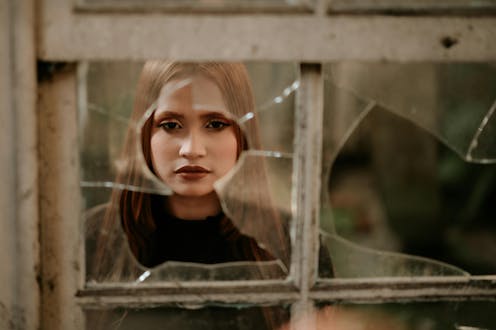
A storm is brewing, both literal and metaphoric, in “the suburbs of the east”. In a burst of poetic and darkly humorous prose, Miranda Darling’s Thunderhead unleashes the turbulent interior life of its protagonist, Winona Dalloway, onto the page.
Darling’s Mrs Dalloway appears 100 years later than Virginia Woolf’s original, which takes place in June 1923. At 35, she’s a good 16 years younger than Woolf’s Clarissa Dalloway, and she lives in Sydney (seemingly in Queens Park, Rose Bay or Vaucluse). She is a writer of “Romantic Fiction”, mother of two boys and married to a wealthy professional.
Review: Thunderhead – Miranda Darling (Scribe)
Like Woolf’s Mrs Dalloway, her stream-of-consciousness narration immerses us in the present and past and back again, over the course of one day.
There is a dinner party that evening and of course, flowers to be bought. The importance is not so much the events of the day, but the texture of Winona’s experience and the rendering of her exquisite, excruciating, at times jolting and jubilant self.

Glamorous suburban ennui
The day begins. Breathless, Winona awakes from a dream of being underwater and gazes at the red sky – some sort of warning. She tries to make the most of the “stolen hours” before the “Small Ones” awake. She writes, pleased, that her wordsmithing superpower can “resettle the upturned order of the world”.
But there will be no settling, no domesticating of this woman. She sees herself as a “Zebra, walking down New South Head Road during rush hour”. At odds with her lot as an urban housewife, she lists the ways she has failed at domestication: a finicky eater, the need for independence, a tendency to panic. Lists become another way she orders her own upturned world.
Winona muses upon Nora, the heroine of her latest novel – clearly a reference to Henrik Ibsen’s A Doll’s House. In Ibsen’s play, Nora’s husband Torvald patronises and oppresses her, however unwittingly; Nora rallies against him, bored and unfulfilled, yearning for freedom and opportunity.
 There is a dinner party that evening, and flowers to be bought.
Tara Winstead/Pexels
There is a dinner party that evening, and flowers to be bought.
Tara Winstead/Pexels
Art imitates life in this novel. Winona struggles with the strictures and ennui of her existence, in albeit a rather glamorous suburbia – lamenting the state of her marriage. She cannot seem to “break through […] to something more real” with her husband. Winona makes breakfast for her children and drives them to school, but nothing is straightforward. Rather, her day is filled with trepidation, uncertainty and menace.
Driving through Sydney traffic – surely enough to put even the sanest of us on edge – plunges her into worried introspection. She ponders being her husband’s third wife, recalling his initial certainty that they should marry and her own ambivalence.
His “certainty” grows into a force more sinister as the novel progresses. Her phone buzzes regularly with messages from him reminding her to collect dry cleaning, to let in the plumber: “YOU CAN DO WHATEVER YOU WANT AFTER THE PLUMBER COMES.” Meanwhile, she struggles with “Getting Things Done”.
In a surge of panic, Winona scrapes her car against a concrete column in the Megamall car park. We are flung not into the streets of London, but into what feels like Westfield Bondi Junction, with its vexing escalators and busy lights. Winona is awash with myriad anxieties – social, practical, existential – and feelings of lostness, a “mad longing” for all the things she had the potential to be, and for the things she once was.
There is a sense of entrapment, a need for more. She is thin, invisible, accused of being distracted and selfish by her husband. Such is the nature, we learn, of what she calls her “mental illness”.
An appointment with a hot cardiologist – thrilling, shocking – reveals another condition: her heart is too large. Perhaps she is not meant for this world. “Too sensitive”, she craves softness, gentleness, dislikes the “hardness of the suburbs”. An animal, she expresses a deep longing for the wild.
But Winona will not be tamed, despite her husband’s attempts to belittle, demean and coercively control her, and the suspicious looks and mutterings of the dinner party guests that evening.
‘Willing suspension of disbelief’
Darling’s novel offers acute observations on both the minutiae of suburban life (such as the humdrum of housework) and larger questions. She critiques the “Great Dads” who are mostly absent, but perform their fatherhood in ostentatious displays of fatherly affection. She is flummoxed about “How to Be” with the other mums during school pickup. There are musings on death, yearnings for transcendence.
 Winona is transformed and uplifted through extrospection, noticing the sky, birds, a lone frangipani flower, kissing the “juicy cheeks” of her children, whom she loves fiercely. There is joy – the sun on the sand, the triumph of narrowly avoiding a parking ticket. These are reminiscent of Woolf’s “Moments of Being”.
Winona will not be transcribed by all that oppresses her. Instead, she will mock it:
The willing suspension of disbelief is crucial to the enjoyment of fiction. It is perhaps also crucial to a harmonious marriage.
This harmony threatens to shatter.
A thunderhead is a cloud that heralds an oncoming storm. After the endless rains and disastrous floods of 2022 and the present spill of the Warragamba dam, it does not take much imagination to conjure a Sydney storm and its effects. It is an apt way to explore the mental illness of a Sydney mother and wife and its irreducibly gendered nature.
Darling invokes the brooding humidity of an impending storm: psychological, personal, real. The novel’s genius is in the way readers inhabit the narrator’s experience to such a degree that the madness belongs not to Winona, but to her husband and the society around her – a world that “domesticates” and does not permit her fullness.
Like in Meg Mason’s powerful novel Sorrow and Bliss, we sympathise with the narrator and adopt her perceptions, despite her moral or perceptual flaws.
A feminist bid for freedom
In 1949, Simone de Beauvoir wrote in The Second Sex:
The drama of woman is the conflict between the fundamental demand of every subject which always posits itself as essential, and the imperatives of a situation, which constitutes her as inessential. How, in the female condition, can a human being be realized in full? This means that in taking an interest in individual opportunities, we will not define these opportunities in terms of happiness, but in terms of freedom.
It appears Darling is still interested in exploring this drama: the imperative for freedom for women and mothers, and what this means in contemporary urban Australian life. But there is more that remains unsaid around the question of material wealth.
While interrogating one’s privilege risks becoming a tired or hollow gesture, Winona possesses a distinct lack of awareness about her extraordinary material advantage. She satirises the superficial conversations of her husband’s rich clients, but never entertains the potential realities of poverty, which going “wild” would entail.
Winona is transformed and uplifted through extrospection, noticing the sky, birds, a lone frangipani flower, kissing the “juicy cheeks” of her children, whom she loves fiercely. There is joy – the sun on the sand, the triumph of narrowly avoiding a parking ticket. These are reminiscent of Woolf’s “Moments of Being”.
Winona will not be transcribed by all that oppresses her. Instead, she will mock it:
The willing suspension of disbelief is crucial to the enjoyment of fiction. It is perhaps also crucial to a harmonious marriage.
This harmony threatens to shatter.
A thunderhead is a cloud that heralds an oncoming storm. After the endless rains and disastrous floods of 2022 and the present spill of the Warragamba dam, it does not take much imagination to conjure a Sydney storm and its effects. It is an apt way to explore the mental illness of a Sydney mother and wife and its irreducibly gendered nature.
Darling invokes the brooding humidity of an impending storm: psychological, personal, real. The novel’s genius is in the way readers inhabit the narrator’s experience to such a degree that the madness belongs not to Winona, but to her husband and the society around her – a world that “domesticates” and does not permit her fullness.
Like in Meg Mason’s powerful novel Sorrow and Bliss, we sympathise with the narrator and adopt her perceptions, despite her moral or perceptual flaws.
A feminist bid for freedom
In 1949, Simone de Beauvoir wrote in The Second Sex:
The drama of woman is the conflict between the fundamental demand of every subject which always posits itself as essential, and the imperatives of a situation, which constitutes her as inessential. How, in the female condition, can a human being be realized in full? This means that in taking an interest in individual opportunities, we will not define these opportunities in terms of happiness, but in terms of freedom.
It appears Darling is still interested in exploring this drama: the imperative for freedom for women and mothers, and what this means in contemporary urban Australian life. But there is more that remains unsaid around the question of material wealth.
While interrogating one’s privilege risks becoming a tired or hollow gesture, Winona possesses a distinct lack of awareness about her extraordinary material advantage. She satirises the superficial conversations of her husband’s rich clients, but never entertains the potential realities of poverty, which going “wild” would entail.
 Thunderhead is more a literary riffing off Mrs Dalloway than a modern-day rewriting of it. Nonetheless, the two texts bear comparison: Woolf’s edge is that she offers us multiple consciousnesses, some of which are tethered, as we slip in and out of different points of view.
For example, that of Miss Kilman, the poor unmarried governess of Mrs Dalloway’s daughter. Miss Kilman’s sharp criticism of Mrs Dalloway’s privilege and character, her wonderful sense of repressed, deep-seated resentment and hostility, provide us with a bigger picture.
In this text, we are given largely Winona’s consciousness, spliced with exclamations, declarations and messages in experimental typography. This gives the novel a modernist manifesto feel, punctuated by elements of comedy, and at times, another voice – but no outside perspective on her life.
Then again, this potent quality of voice could be the novel’s point. In the conclusion of Charlotte Perkins Gilman’s The Yellow Wallpaper (1899), the madwoman enters her hallucination, tears down the wallpaper and proclaims triumph over her odious husband, discarding his every edict.
Thunderhead, a brilliant work of feminist fiction with its superb, deft use of language, is a similar bid for freedom.
Authors: Deborah Pike, Senior Lecturer in English Literature, University of Notre Dame Australia
Thunderhead is more a literary riffing off Mrs Dalloway than a modern-day rewriting of it. Nonetheless, the two texts bear comparison: Woolf’s edge is that she offers us multiple consciousnesses, some of which are tethered, as we slip in and out of different points of view.
For example, that of Miss Kilman, the poor unmarried governess of Mrs Dalloway’s daughter. Miss Kilman’s sharp criticism of Mrs Dalloway’s privilege and character, her wonderful sense of repressed, deep-seated resentment and hostility, provide us with a bigger picture.
In this text, we are given largely Winona’s consciousness, spliced with exclamations, declarations and messages in experimental typography. This gives the novel a modernist manifesto feel, punctuated by elements of comedy, and at times, another voice – but no outside perspective on her life.
Then again, this potent quality of voice could be the novel’s point. In the conclusion of Charlotte Perkins Gilman’s The Yellow Wallpaper (1899), the madwoman enters her hallucination, tears down the wallpaper and proclaims triumph over her odious husband, discarding his every edict.
Thunderhead, a brilliant work of feminist fiction with its superb, deft use of language, is a similar bid for freedom.
Authors: Deborah Pike, Senior Lecturer in English Literature, University of Notre Dame Australia 

















