

What is ‘breathwork’? And do I need to do it?
- Written by: Theresa Larkin, Associate professor of Medical Sciences, University of Wollongong
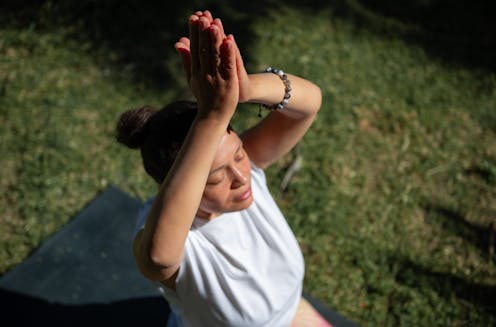
From “breathwork recipes” to breathing techniques, many social media and health websites are recommending breathwork to reduce stress.
But breathwork is not new. Rather it is the latest in a long history of breathing techniques such as Pranayama from India and qigong from China. Such practices have been used for thousands of years to promote a healthy mind and body.
The benefits can be immediate and obvious. Try taking a deep breath in through your nose and exhaling slowly. Do you feel a little calmer?
So, what’s the difference between the breathing we do to keep us alive and breathwork?
Breathwork is about control
Breathwork is not the same as other mindfulness practices. While the latter focus on observing the breath, breathwork is about controlling inhalation and exhalation.
Normally, breathing happens automatically via messages from the brain, outside our conscious control. But we can control our breath, by directing the movement of our diaphragm and mouth.
The diaphragm is a large muscle that separates our thoracic (chest) and abdominal (belly) cavities. When the diaphragm contracts, it expands the thoracic cavity and pulls air into the lungs.
Controlling how deep, how often, how fast and through what (nose or mouth) we inhale is the crux of breathwork, from fire breathing to the humming bee breath.
Breathwork can calm or excite
Even small bits of breathwork can have physical and mental health benefits and complete the stress cycle to avoid burnout.
Calming breathwork includes diaphragmatic (belly) breathing, slow breathing, pausing between breaths, and specifically slowing down the exhale.
In diaphragmatic breathing, you consciously contract your diaphragm down into your abdomen to inhale. This pushes your belly outwards and makes your breathing deeper and slower.
You can also slow the breath by doing:
box breathing (count to four for each of four steps: breathe in, hold, breathe out, hold), or
coherent breathing (controlled slow breathing of five or six breaths per minute), or
alternate nostril breathing (close the left nostril and breathe in slowly through the right nostril, then close the right nostril and breathe out slowly through the left nostril, then repeat the opposite way).
You can slow down the exhalation specifically by counting, humming or pursing your lips as you breathe out.
In contrast to these calming breathing practices, energising fast-paced breathwork increases arousal. For example, fire breathing (breathe in and out quickly, but not deeply, through your nose in a consistent rhythm) and Lion’s breath (breathe out through your mouth, stick your tongue out and make a strong “haa” sound).
What is happening in the body?
Deep and slow breathing, especially with a long exhale, is the best way to stimulate the vagus nerves. The vagus nerves pass through the diaphragm and are the main nerves of the parasympathetic nervous system.
Simulating the vagus nerves calms our sympathetic nervous system (fight or flight) stress response. This improves mood, lowers the stress hormone cortisol and helps to regulate emotions and responses. It also promotes more coordinated brain activity, improves immune function and reduces inflammation.
Taking deep, diaphragmatic breaths also has physical benefits. This improves blood flow, lung function and exercise performance, increases oxygen in the body, and strengthens the diaphragm.
Slow breathing reduces heart rate and blood pressure and increases heart rate variability (normal variation in time between heart beats). These are linked to better heart health.
Taking shallow, quick, rhythmic breaths in and out through your nose stimulates the sympathetic nervous system. Short-term, controlled activation of the stress response is healthy and develops resilience to stress.
Breathing in through the nose
We are designed to inhale through our nose, not our mouth. Inside our nose are lots of blood vessels, mucous glands and tiny hairs called cilia. These warm and humidify the air we breathe and filter out germs and toxins.
We want the air that reaches our airways and lungs to be clean and moist. Cold and dry air is irritating to our nose and throat, and we don’t want germs to get into the body.
Nasal breathing increases parasympathetic activity and releases nitric oxide, which improves airway dilation and lowers blood pressure.
Consistently breathing through our mouth is not healthy. It can lead to pollutants and infections reaching the lungs, snoring, sleep apnoea, and dental issues including cavities and jaw joint problems.

A free workout
Slow breathing – even short sessions at home – can reduce stress, anxiety and depression in the general population and among those with clinical depression or anxiety. Research on breathwork in helping post-traumatic stress disorder (PTSD) is also promising.
Diaphragmatic breathing to improve lung function and strengthen the diaphragm can improve breathing and exercise intolerance in chronic heart failure, chronic obstructive pulmonary disease and asthma. It can also improve exercise performance and reduce oxidative stress (an imbalance of more free radicals and/or less antioxidants, which can damage cells) after exercise.
 Waiting at the lights? This could be your signal to do some breathwork.
doublelee/Shutterstock
Waiting at the lights? This could be your signal to do some breathwork.
doublelee/Shutterstock
A mind-body connection you can access any time
If you feel stressed or anxious, you might subconsciously take shallow, quick breaths, but this can make you feel more anxious. Deep diaphragmatic breaths through your nose and focusing on strong exhalations can help break this cycle and bring calm and mental clarity.
Just a few minutes a day of breathwork can improve your physical and mental health and wellbeing. Daily deep breathing exercises in the workplace reduce blood pressure and stress, which is important since burnout rates are high.
Bottom line: any conscious control of your breath throughout the day is positive.
So, next time you are waiting in a line, at traffic lights or for the kettle to boil, take a moment to focus on your breath. Breathe deeply into your belly through your nose, exhale slowly, and enjoy the benefits.
Authors: Theresa Larkin, Associate professor of Medical Sciences, University of Wollongong
Read more https://theconversation.com/what-is-breathwork-and-do-i-need-to-do-it-231192


















