

saints or monsters, pop culture's limited view of nurses
- Written by: Donna Lee Brien, Professor, Creative Industries, CQUniversity Australia
When health care workers make news that news is usually bad. Either staff are protesting the lack of resources or patients and families are complaining about their standard of care.
When nursing hits the headlines, the news is usually worse. Neglect in aged care facilities or nurses exploiting vulnerable patients rightfully outrages us all. But until scandals are exposed, the public seems to take little interest in the challenges facing nurses. Nor does it ask their opinion on important matters.
To the public, nursing work is much like teaching work – known to be valuable, but not worthy of much critical attention. This is reflected in how nursing is rarely represented in any depth in popular culture. While films and television series can create vivid, believable characters and contexts for them to act in, the representation of nurses themselves can be quite unrealistic.
This has consequences. When hospital nurses are portrayed on screen, for instance, as endlessly giving and selfless, people expect this treatment in real life.
In the early 20th century, nurses were usually portrayed in films as either angels of mercy or sex objects. When TV medical dramas like Ben Casey and Dr Kildare gained mass audiences, nurses faded into the background as doctors moved to the dramatic fore. Then, as these formulaic medical stories became too predictable for a more freethinking younger audience, nurses (and their access to power and influence) began to be used in more intelligent and thought provoking ways.
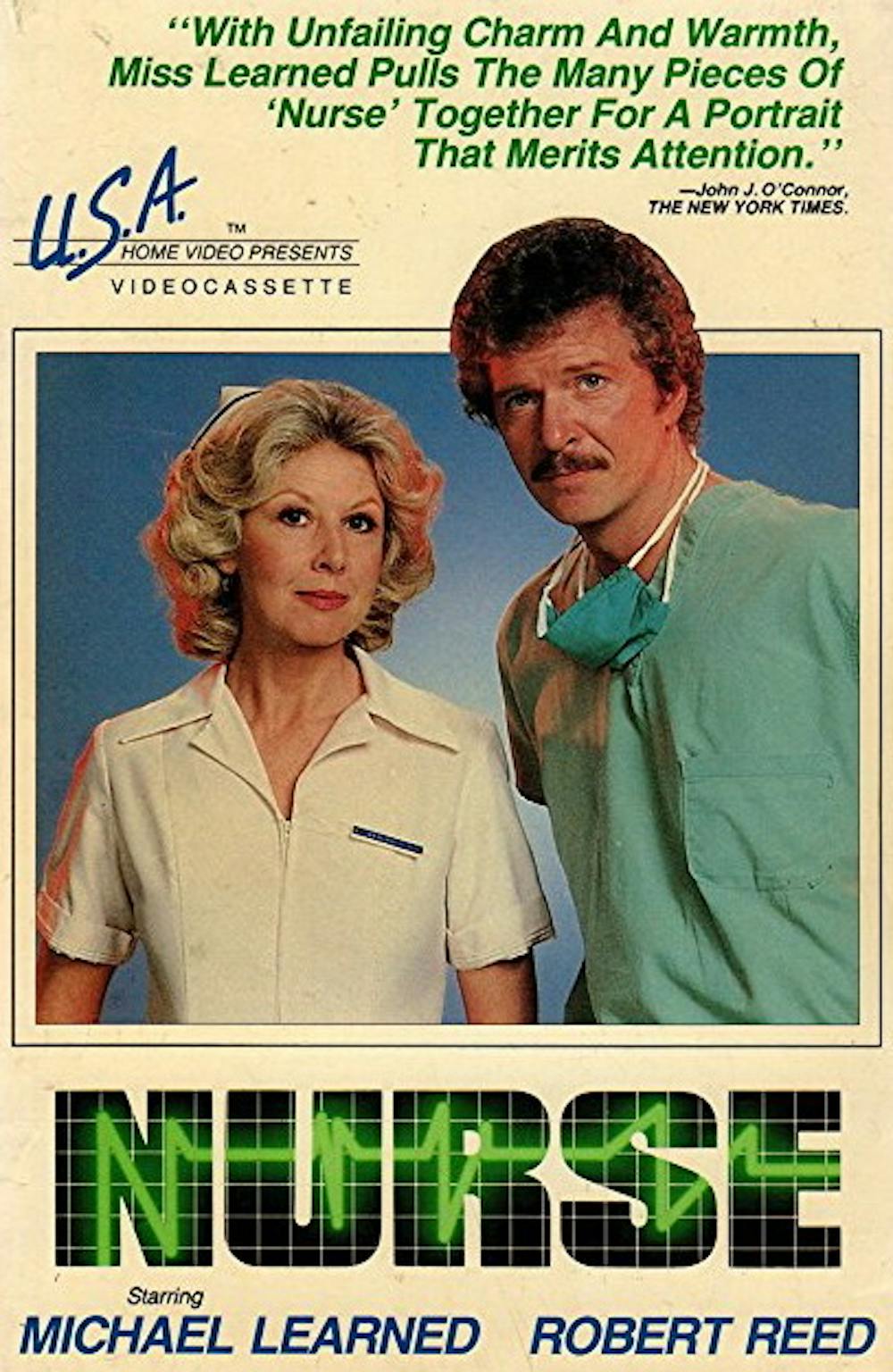 The original poster for Nurse.
idmb
The original poster for Nurse.
idmb
Some may remember the American television series Nurse that aired in the 1980s. Starring Michael Learned, fresh from her role as the mother, Olivia, in The Waltons, the show followed the challenges faced by, and achievements of, a woman returning to the workforce after being widowed. Learned’s character made critical decisions, delegated tasks to a multidisciplinary team, had a romantic life and enjoyed a challenging nursing career.
Sadly, Nurse only lasted two seasons, possibly cancelled due to the sexist view that a hit TV show could not feature a female lead, and the offence these story lines caused to the conventional power base in health care – the doctors.
Progress has been slow in offering other well-rounded depictions, with Nurse Jackie a notable exception. (Another is the fully-rounded depictions of nurses and midwives in the BBC series Call the Midwife, set in the late 1950s and early 1960s - but these are still exceptions.) An antihero with a drug addiction who is nevertheless an expert carer, Nurse Jackie works as a counterpoint to the more common stereotypes of nurses on screen who tend to be superficial and idealised, drawing on outdated Victorian ideas about women’s role as helpmates to men.
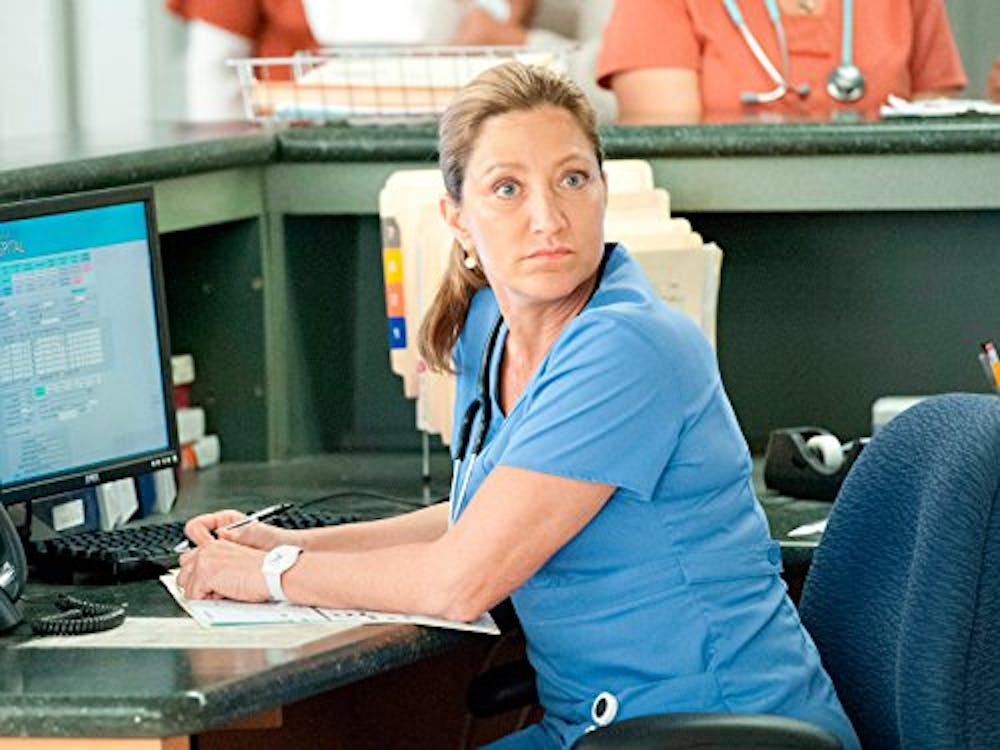 Edie Falco, who played a drug addicted nurse in Nurse Jackie, was a welcome contrast to the usual stereotyped depictions.
Showtime Networks, Jackson Group Entertainment, Madison Grain Elevator
Edie Falco, who played a drug addicted nurse in Nurse Jackie, was a welcome contrast to the usual stereotyped depictions.
Showtime Networks, Jackson Group Entertainment, Madison Grain Elevator
We can see this in many contemporary television series such as House, The Good Doctor, The Resident and Offspring. In these and almost all hospital-based dramas, comedies and soap operas from M.A.S.H. to General Hospital, nurses assist doctors, who are always in superior positions.
As a result, most nursing roles on screen are insignificant or benign, and are included simply to dress the set or provide romantic or sexual interest. As a result, the idea of the good nurse – calm, sympathetic and caring – has become a powerful and entrenched stereotype on screen. Such romanticised imaging may be flattering for nurses themselves, although it hardly stimulates any deep reflection on their professional role.
A deep-seated anxiety
Occasionally, though, nurses are portrayed as malevolent, dangerous or out of control. These depictions are so arresting they become seared into public memory, and thus important to consider. An obvious incarnation of an unprofessional nurse is the frumpy, unemployed Annie Wilkes in Misery. In both the Stephen King novel and the movie based upon it, she is an obsessed, erotomanic fan who happens upon her favourite writer, Paul Sheldon, when he is trapped in a snowstorm after an accident.
Drawing on all her strength, skill and persistence, Nurse Wilkes single-handedly rescues and resuscitates Sheldon and sets his broken limbs. During his convalescence in her isolated farmhouse, Wilkes insists that Sheldon resumes his writing, transgressing the boundaries in their nurse-patient relationship. She also metamorphoses from a competent, reliable care giver and endearing fan, to the embodiment of menacing evil, intent on satisfying her own desires.
Played deliciously by Kathy Bates in Rob Reiner’s 1990 film, Annie Wilkes embodies the monstrous feminine and her unleashed power has sickening repercussions. Who can forget that look in James Caan’s eyes as he realises what is about to happen to his feet for daring to move more than his nurse decreed?
Although undoubtedly a classic film, part of the reason Misery continues to resonate with viewers is because it taps into a deep-seated anxiety that many share about nursing and health care. While the horror in this story certainly depends on its storytelling, it also draws on the reality that when patients become fully dependent on professional caregivers, they place their lives in others’ hands. Hands that will not always be competent, trustworthy or benevolent.
Indeed, it has been suggested that the real life serial killer nurse Genene Jones, who murdered as many as 60 babies in Texas in the 1970s and 1980s, was the inspiration for King’s character.
Another screen nurse who lives large in popular imagination is, of course, Nurse Ratched from One Flew Over the Cuckoo’s Nest. Although her divergence from professional decorum is not as wildly obvious as Nurse Wilkes – Ratched does not deliberately torture or maim her patients – her actions do lead to suffering and death.
The horror in her character is the realisation that a nurse could, and would, so rigidly and unswervingly enforce rules that are cruel and callous. Like Wilkes, she embodies the power that nurses have to control the lives of patients. Unlike Wilkes, however, Ratched’s actions are ambiguous, and this makes her even more frightening. Again in contrast to Wilkes’ rampant lack of control, she appears calm and self-contained as she firmly leads a large team of untrained or junior staff.
Despite our familiarity with this story, Nurse Ratched’s motivations are difficult to get a handle on. This is not least because she meticulously goes through the motions of good care. She ensures music is played as patients line up for their medications and that group therapy is conducted with patience and persistence. What she thinks, and feels, about the patients is, however, inscrutable. Her approach is also judgemental and ultimately damaging. She fails, for instance, to validate the growing independence of one of the patients, Billy, and effectively triggers his suicide.
Pressures on nurses
What is notably missing from Ratched’s nursing is any sign of human empathy or compassion. This speaks to another contemporary anxiety: that the professionals trusted to care for our health ought to (but often do not) convey an appropriate level of “feeling” for their patients.
This is amplified in settings where patients may be most vulnerable – such as in mental health, aged or paediatric care – and why so much outrage is directed at failures in them.
Although it is easy to see Nurse Ratched as unfeeling, cruel and sadistic, she can also be considered as a victim of the system. As such, she is an example of how nurses (both individually and as a group) are an easy target for attacks against failures in the health care system more broadly.
Moreover, the personal pressures nurses have to endure are rarely discussed. These include the emotions they need to suppress in order to care for others and how they have to comply with sometimes unjust or unclear policies. Many of these pressures – including dealing with death and others’ grief – seem quite overwhelming when viewed from outside the profession.
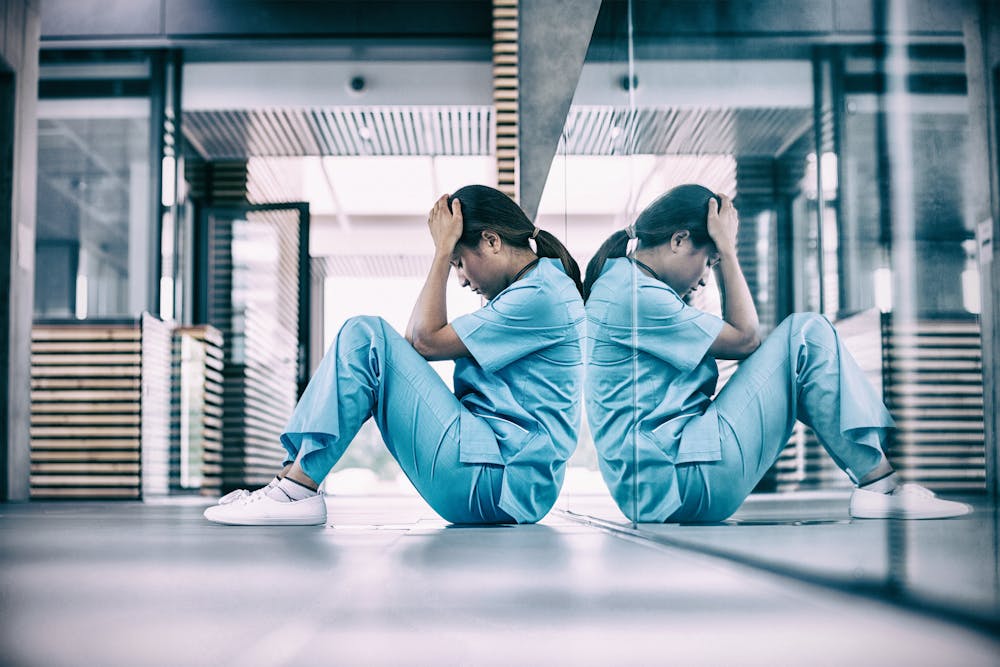 The personal pressures nurses experience are rarely discussed.
shutterstock
The personal pressures nurses experience are rarely discussed.
shutterstock
Nurses themselves struggle with Ratched’s portrayal and public notoriety. A number of advocacy groups and researchers question the way nursing is portrayed in the media, and frequently mention Ratched. The Truth about Nursing, an American-based media watchdog, voiced opposition when Netflix announced its plan to produce a TV series about Ratched’s earlier life. According to the film and TV website IMDB, the series tells of a young nurse at a mental institution who “becomes jaded, bitter and a downright monster to her patients”.
Critics see such a series as fuelling anti-nurse stereotypes. They warn it could have dangerous consequences, including dissuading students from joining the profession and exacerbating the worldwide shortage of nurses.
It is our view, however, that an exploration of Ratched’s backstory, and the development of her personality as psychopathic, narcissistic or, ironically, dependent, is likely to be revealing – in the vein of the engrossing Mindhunter. It is, moreover, an important story, because a longer and deeper view of this enigmatic character may suggest reasons for how she came to be like she was and why she acted as she did.
Nursing and the Holocaust
There are, of course, cases where real nurses have acted as monstrously as the figures in these fictions. The idea of what makes a bad nurse is a major theme in the haunting 2016 German film, Fog in August. Set in Nazi Germany, the story explores an aspect of the Holocaust that is little known – the so-called T4 “euthanasia” program.
The film is told through the eyes of a Yenish-German boy, Ernst Lossa. Along with thousands of other children labelled as disabled, and adults with mental disorders or other conditions considered undesirable, he is murdered by a lethal dose of barbiturates given to him by willing and seemingly caring nurses. Nurses and doctors acted en masse to cause harm in this way, despite their professional codes of ethics to protect the well-being of all patients in their care.
Two major characters in the film are nurses and they help to reinforce the theme of darkness triumphing over light, bringing down on medicine a fog that perhaps has not yet fully lifted.
On one side is the moral nun Sister Sophia, who openly disapproves of the program of killing but is ineffective in her resistance to it. Her belief in the sanctity of all human life is unshakeable despite the Nazi dictates, but she is not supported either within the sanatorium where she works, or by the local Catholic hierarchy to whom she appeals. As a result, she finds herself increasingly marginalised and threatened.
On the other side is Sister Edith Kiefer, a specialist nurse trained at Hadamar, one of the six German Euthanasia Centres established to kill, rather than cure, patients. Brought in by the medical director to make the killing process more streamlined and efficient, she is young, fit, Aryan and fervently believes in Nazi eugenics.
The power of this pairing is not that these nurses are polar opposites, but that they are both flawed and in some ways, more similar than different. They are both competent, dutiful and capable of skilfully easing patient distress. They both represent significant parts of society – Church and State – but are unable to protect the vulnerable people in their care.
Murderous nurses are rare but the damage they wreak is horrifying and often their sprees continue because the hospital concerned has not acted swiftly enough. Read in this way, One Flew Over the Cuckoo’s Nest is not just the story of one bad nurse, it is about a rigid system that dehumanises and ruins peoples’ lives. And Fog in August is not only about past evils – it is about what happens when an overarching ideology falls on medical institutions like a heavy blanket, suffocating the nursing ideal of putting patient welfare first.
While these monstrous nurses make for compelling viewing, they can also prompt us to realise that deliberately neglecting, hurting or killing patients are not simply the heinous acts of aberrant individuals. They are also signs of health care systems that operate without close public scrutiny, and where toxic professional cultures have developed.
Shining a light on this dark underbelly by thinking about such depictions in popular culture can be a first step towards identifying the complex factors that cause problems within the health care system, and helping to guide remedial action.
Authors: Donna Lee Brien, Professor, Creative Industries, CQUniversity Australia


















