

Junk food is promoted online to appeal to kids and target young men, our study shows
- Written by: Tanita Northcott, Research Fellow, Melbourne Law School, The University of Melbourne

The Australian government has been investigating whether we should ban unhealthy food advertising online, and how it could work. In the United Kingdom, a ban on unhealthy food and drink advertising online will start in October 2025.
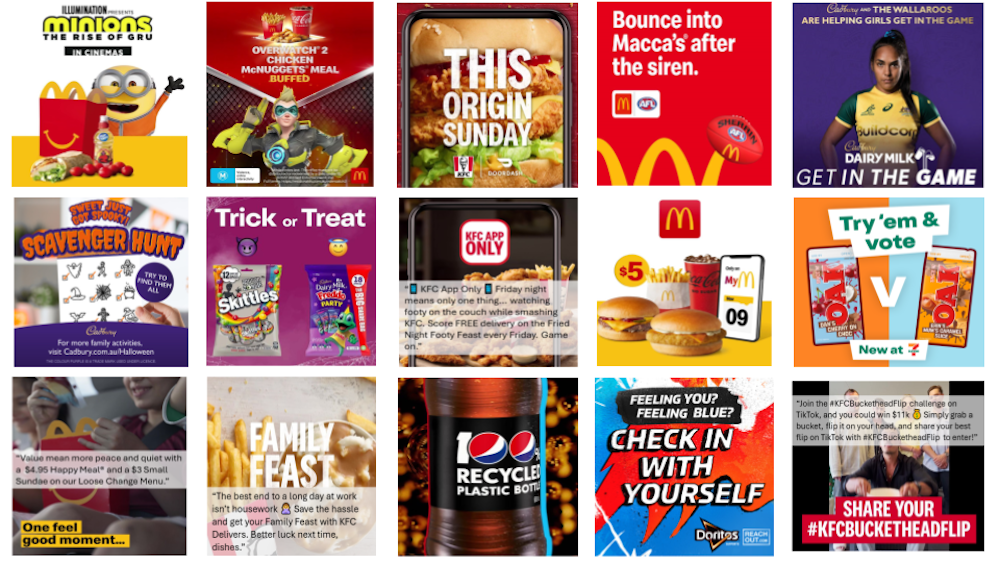
We recently used the Australian Ad Observatory to investigate targeted junk-food ads on Facebook in Australia. Our study finds that unhealthy food and drinks are promoted in ways designed to appeal to parents and carers of children, and children themselves. Additionally, young men in our study were being targeted by fast-food ads.
Kids, young people and parents should be aware of the strategies online advertisers use to normalise unhealthy eating patterns. We should all demand a more healthy digital environment.
Our work supports ongoing calls for a ban on junk food advertising online.
What did we see in the ads?
The Australian Ad Observatory has created the world’s largest known collection of the targeted ads people encounter on Facebook. Our 1,909 volunteers have donated 328,107 unique ads from their social media feeds. This gives researchers an unprecedented opportunity to examine what ads Australians see on social media and how they are being targeted.
We searched the database for ads promoting the top-selling unhealthy food and drink brands. These are “discretionary” or “sometimes” foods that tend to be high in fats and sugars. They include fast-food meals, confectionery, sugary drinks and snacks. (To identify unhealthy food and drink categories, we used government guidance on healthy food and drinks.)
We also looked at online food delivery companies because of their popularity on digital platforms. They play a likely role in promoting unhealthy foods.
We found nearly 2,000 unique ads by 141 separate advertisers observed about 6,000 times by individuals. Ads for fast-food brands made up half of the unhealthy food ad observations in our study.
Fast-food giants KFC and McDonald’s combined accounted for roughly 25% of all unhealthy food ad observations. Snack and confectionery brands, like Cadbury, featured in a third of the ad observations. Soft drink brands such as Coca-Cola were promoted in 11% of observations.
About 9% of ads promoted online food delivery companies, and typically promoted fast-food options. Other advertisers we might not think of as junk food brands, such as Coles supermarkets and 7-Eleven convenience stores, also regularly promoted junk foods.
The power of junk food
The vulnerability of children to junk food ads is well established. Children’s exposure to food marketing has been associated with what types of food they prefer and ask their parents to purchase. When they develop preferences for unhealthy foods, this contributes to unhealthy habits and related health concerns.
But it’s not only children who are susceptible to unhealthy food marketing. Junk food advertising also shapes the food norms and attitudes of young people aged 18 to 24.
Our experiences online and digital technologies more generally can impact our health. These are known as “digital determinants of health”.
Food advertisers use the vast amounts of data collected about individuals to target specific audiences. They can seamlessly integrate advertising into everyday life.
Our study shows junk food advertising is disproportionately served to young people, especially young men. Young men are seeing a much higher proportion of fast food ads (71%) compared to the sample overall (50%), suggesting fast food is marketed to them more aggressively. Many ads promoted special “app-only” deals, including free delivery, especially for fast food.
The ‘halo effect’
We also found examples of ads aimed at busy parents, painting fast food as something that saves parents time, quietens children and feeds families.
Even though Facebook accounts are available only to people 13 and over, junk-food ads still use child-oriented themes, such as characters and games. Many appear to be designed to appeal directly to children. This included ads promoting “healthy” foods, such as vegetables, in kids’ meals.
The most insidious marketing tactics we found connect junk foods, and the brands synonymous with junk foods, to wholesome or popular activities. This creates a “halo effect”.
For example, many ads use “sports-washing” to associate unhealthy foods with healthy sports activities or pleasurable spectator sports. Sports in junk-food marketing can appeal to a broad audience, including young people.
While not all of these sport-related ads promoted or displayed unhealthy food products directly, the sport provided the focal point of ads with strong brand-specific elements, therefore forging the connection.
Other ads used “mental health-washing”, including ads for chocolate bars, packaged snacks or fast food co-promoting community mental health organisations.
Unhealthy food advertising should be banned
Last week a Parliamentary Inquiry into Diabetes in Australia repeated calls for the government to restrict the marketing and advertising of unhealthy food to children on television, radio, in gaming and online.
The federal government should soon issue its report on how best to limit unhealthy food marketing to children. Our study supports the government’s proposal to ban all unhealthy food and drink advertising online.
The proposed ban should cover not just unhealthy food itself, but also any mention of the brands synonymous with those foods. This is because mentioning these brands brings such foods instantly to mind.
We also recommend the government should include all types of promotions. This includes ads from online food delivery companies, supermarkets and sports clubs that cross-promote unhealthy foods.
Many are concerned about the impact of social media and its algorithmic content feeds on children and young people. Our study highlights the food and drink ads targeting children, young people and harried parents can also create an unhealthy digital environment.
Authors: Tanita Northcott, Research Fellow, Melbourne Law School, The University of Melbourne


















