

what is a home care package and who is eligible?
- Written by: Tracy Comans, NHMRC Boosting Dementia Research Leadership Fellow, The University of Queensland
During the first round of hearings in the aged care royal commission, we heard many Australians would prefer to receive help at home than move into an aged care facility.
This will not solve all the problems in the aged care system, but it can be possible for eligible older Australians to stay living at home rather than enter an aged care facility via the provision of a “home care package”. The Coalition government has announced funding for 40,000 new home care packages over the last year.
The term “home care package” refers to a fixed amount of money allocated by the federal government to an older person to provide services which will enable them to continue to live independently. The amount of money provided depends on the person’s needs, as assessed by an independent assessment agency.
The person does not receive the cash in hand. Rather, they are allocated a code which they take to an approved service provider who they work with to decide how the money is going to be spent.
Read more: We've had 20 aged care reviews in 20 years – will the royal commission be any different?
There are a fixed number of home care packages available. This means a person may be assessed as needing a package but must wait in a national queue, managed by My Aged Care, until a package is allocated to them.
As of June 30 2018, 91,847 people had a home care package managed by one of almost 900 providers. Close to 70,000 people remain on the waiting list.
What support is available?
Most people start using aged care services when they need just one or two services. These might include cleaning, help with showering, or basic home maintenance such as changing light bulbs and installing a raised toilet seat. Services could also include help with shopping and meal preparation, and some allied health services such as physiotherapy.
This entry level of support is provided through the Commonwealth Home Support Programme (CHSP), which 783,043 people accessed last financial year.
 Older people may benefit from the assistance of a family member or friend when registering for their home care package.
From shutterstock.com
Older people may benefit from the assistance of a family member or friend when registering for their home care package.
From shutterstock.com
When a person’s needs change and they require more than one or two services, need additional help coordinating the care they receive, or have more complex needs, they may be eligible for a home care package.
There are four package levels that reflect the spectrum of care needs. A level 1 package is for those with the lowest care needs, and level 4 the highest.
How can someone access these services?
Access to all home support services or home care packages is through My Aged Care, the government portal. A person might be referred through a hospital or their GP. They can also contact My Aged Care directly, or have a family member or other trusted person do so on their behalf.
Registration can be done online or by phone. This can be challenging if people don’t have access to the internet at home or are not digitally literate. And for people with cognitive or physical conditions that limit their ability to communicate, the system can be difficult to navigate.
It’s important that a person who needs help nominates a trusted person who can manage the process; ideally a close family member or friend. They will assist with the assessment process, choosing a quality provider and selecting services that are best suited to their loved one’s needs.
Read more: Seven steps to help you choose the right home care provider
The complexity of navigating the current system means agents or brokers have entered the market. Some recruit older people by door knocking or dropping leaflets, offering to act on their behalf. These people may charge large commissions for their work.
It’s important to be on the lookout for what sound like good deals such as “free packages” with no contribution from the consumer. These are often inferior products that deliver very little in actual support for the person.
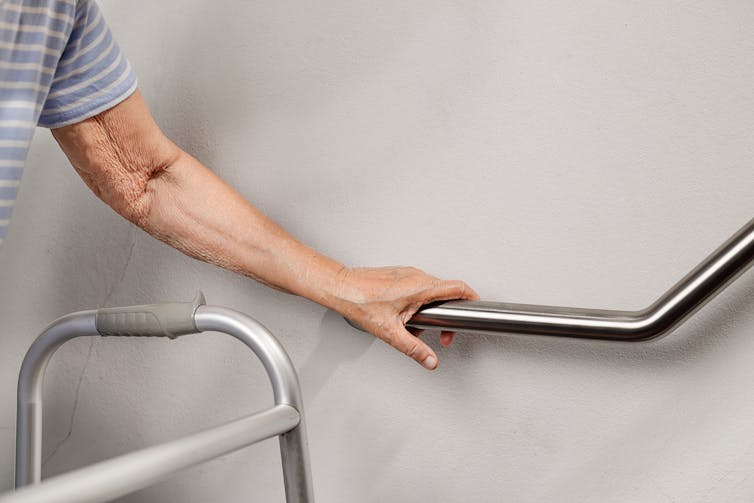 The provisions of a home care package might include installing equipment, such as hand rails, in the person’s home.
From shutterstock.com
The provisions of a home care package might include installing equipment, such as hand rails, in the person’s home.
From shutterstock.com
Who is eligible?
A CHSP assessment will be conducted by a regional assessment team. If you are assessed as needing higher care, an Aged Care Assessment Team (ACAT) will then assess your eligibility for home care packages and residential care. The assessors are usually nursing or allied health professionals who are trained to assess care needs according to the government guidelines.
Read more: FactCheck: is the Coalition spending '$1 billion extra, every year' on aged care?
They will do a comprehensive assessment of the person’s cognition and physical capacity to manage at home. This will allow the assessor to understand the person’s needs and recommend what type of services would be best suited to support them, such as physiotherapy or personal care.
They will also take into account personal preferences and informal care levels, such as care by family members, friends or even neighbours who help with shopping, cleaning and other tasks.
Someone with a lower functional level and greater needs may receive less funding support than someone functioning at a higher level due to differences in the care available to them.
After an aged care package has been approved, they will be placed in the queue for their approved package level. Once a place is available, the person can nominate a provider to co-ordinate their care.
Care needs will be negotiated with the provider and a plan will be developed. The provider may deliver some or all of the care needs or broker other providers if they don’t have those services, or if the person wants a different provider. They may have a local podiatrist they already use, for example, and want to keep seeing that person to receive care under their package.
What is each package worth?
Packages range from A$8,250 a year for a level 1 package to A$50,250 for a level 4 package, as seen in the table below.
Anyone receiving a package is expected to provide a co-contribution that is fixed at 17.5% of the single aged pension (currently A$10.43 a day or A$3,807 a year). This can be waived for hardship.
Beware admin and exit fees
Managing a package requires administration and case co-ordination. But administration fees are currently not transparent. Providers have been able to charge what they feel is appropriate, which has made it very difficult for consumers to compare different fees.
The government is instituting new rules from July 1 2019 to increase transparency and accountability.
A person can change provider at any time. But providers are able to charge exit fees (although not all do) so it’s important to understand the fees and charges – and what you’re agreeing to – before signing any contracts.
As of September 30 2018, the average maximum exit amount was A$232 and 42% percent of providers stated they would not deduct any exit fee.
You’re on the list, now what?
Waiting times have become a key issue with some people waiting lengthy periods for a package to become available. The royal commission heard current waiting times are be between 18 and 24 months.
While waiting for a home care package, a person can receive entry level support through the Commonwealth Home Support Programme, or may have the option to take up a lower level interim package if one is available.
Two criteria determine how long someone will have to wait: length of time in the queue and urgency of need. A person is assessed as high priority if they would be at high risk of absolute crisis without support. So those with the highest needs should receive a package sooner.
Read more: Aged care royal commission benefits Generation X: it's too late for the silent generation
Authors: Tracy Comans, NHMRC Boosting Dementia Research Leadership Fellow, The University of Queensland
Read more http://theconversation.com/explainer-what-is-a-home-care-package-and-who-is-eligible-112405


















