

Federal Court finds insufficient evidence Roundup weedkiller causes cancer. What does the science say?
- Written by: Ian Musgrave, Senior lecturer in Pharmacology, University of Adelaide
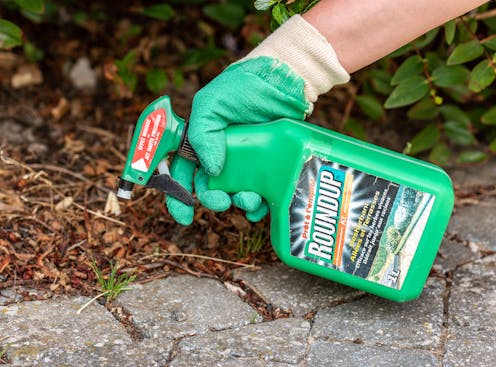
A major Federal Court class action has been dismissed this week after Justice Michael Lee ruled there was not enough evidence to prove the weedkiller Roundup causes cancer.
Plaintiff Kelvin McNickle, now aged 41, developed non-Hodgkin lymphoma after using glyphosate (the active ingredient in Roundup) in his family’s vegetation management business for more than 20 years.
More than 800 others joined the class action against German chemical and pharmaceutical company, Bayer, which produces Roundup. Bayer has long maintained glyphosate doesn’t cause cancer, despite a number of court cases around the world. It said this week’s ruling was a “win for Australian farmers”.
The court acknowledged the scientific community had mixed views on whether glyphosate causes cancer. Justice Lee looked at three types of scientific evidence – epidemiological, animal studies and evidence showing the mechanisms involved in the development of cancer – in his ruling.
Yet in 2015, the International Agency for Research on Cancer (IARC) classified the herbicide as “probably carcinogenic to humans”.
So what does the science say?
What is glyphosate?
Glyphosate is one of the most used herbicides worldwide, and has been used in agriculture, public parks and footpaths, and in home gardens in Australia for more than 40 years.
It kills weeds by targeting a specific pathway (the shikimic acid pathway) that exists in plants and a type of bacteria (eubacteria), but not animals (or humans).
In terms of short-term exposure, glyphosate is less toxic than table salt. For example, a 70Kg person would need to eat a quarter of a kilogram of table salt in order to die, but would need to eat around half a kilogram of glyphosate to die.
However, it is chronic, or long-term, exposure to glyphosate that’s causing the controversy.
What does ‘probably carcinogenic’ to humans mean?
Those who believe glyphosate causes cancer often refer to the International Agency for Research on Cancer’s (IARC) 2015 report that classified the herbicide as “probably carcinogenic to humans”. This was based on:
convincing evidence that these agents cause cancer in laboratory animals.
However, IARC arrived at its conclusion using a narrower base of evidence than other peer-reviewed papers and governmental reviews. Also, unlike other regulatory bodies, it flags any possibility of causing cancer, rather than risk from plausible exposures.
The Food and Agriculture Organization/World Health Organization joint meeting on pesticide residues report in 2016 concluded that glyphosate was unlikely to pose a carcinogenic risk to humans from exposure through the diet.
In contrast to the IARC’s confident conclusion that glyphosate had convincing evidence of causing cancer in laboratory animals, the joint meeting concluded:
glyphosate is not carcinogenic in rats but could not exclude the possibility that it is carcinogenic in mice at very high doses.
Australia’s regulator, the Australian Pesticides and Veterinary Medicines Authority, reviewed the safety of glyphosate after IARC’s determination and concluded:
there is no reliable evidence that products containing glyphosate pose a risk of causing cancer in humans.
What have epidemiological studies found?
The IARC considered ten cohort studies, where research participants are studied over a period of time, and nine case control studies, where people who have the disease are compare with groups that do not have the disease, to try and identify possible causes. There was no evidence of cancer association.
However, three small studies suggested an association with non-Hodgkin lymphoma, but this association was not statistically significant. This means the association could have occurred by chance alone.
A 2016 meta-analysis which reviewed all the available evidence at the time, suggested a small but non-statistically significant association of glyphosate with non-Hodkin lymphoma, but no causal relationship was established.
In 2018, the Agricultural Health Study was published. This was a long-running study of 54,251 participants licensed to use glyphosate, where their exposure could be followed. This strong study, which controlled for a number of factors that could cloud the conclusion, found no statistically significant associations with glyphosate use and cancer at any site.
What does the research in animals say?
There have been multiple animal studies of glyphosate and cancer. In these studies, rodents are typically exposed to high but sub-lethal concentrations for at least 80% of their total lifespan. These concentrations will be higher than humans would be likely to be exposed to.
In the European Food Safety Authority review in 2015, there were nine rat studies where no cancers were seen.
There were also five mouse studies in the review above. Of these, three were negative. One found sporadic tumours that were not dose-dependent (indicating glyphosate was not the causative agent). In the other study, researchers found tumours at highest doses in males only.
The animal studies show no consistent evidence of developing cancer, and no equivalent of human non-Hodgkin lymphoma was seen. The European Food Safety Authority therefore concluded glyphosate was unlikely to be a carcinogenic hazard to humans.
Read more: Research Check: do we need to worry about glyphosate in our beer and wine?
In the 2015 International Agency for Research on Cancer (IARC) report that classified the herbicide as “probably carcinogenic to humans”, there were six rat studies. Cancer was seen in only one study, but again this was not dose-dependent. This indicates glyphosate was not the causative agent.
There were two mouse studies; one was negative and the other found a “trend” for a cancer that forms in the glandular tissue in males, but not females.
No equivalent of human non-Hodgkin lymphoma was seen.
While the IARC considered there was sufficient evidence of cancer causation in animals, there was no consistency in tumour type (mouse versus rat) or location.
What mechanisms could be involved?
There are a number of ways that chemicals can cause cancer, typically through damage to DNA or chromosomes.
For glyphosate, there is little evidence these classical mechanisms are involved.
Bacterial mutation studies looking for damage to bacterial DNA have been negative, mutation studies in mammalian cell lines have been negative, chromosomal damage studies have been largely negative. These studies involve concentrations and routes of exposure that humans will never encounter.
Oxidative stress occurs when there is imbalance of toxic free radicals and antioxidants in your body that leads to cell damage. Oxidative stress is involved in cancer, and it has been suggested that oxidative stress could be a plausible mechanism for inducing cancer. While this damage may be implicated in causing cancer, it may also be part of the mechanism the body uses to fight cancer.
However, while oxidative stress has been shown in cellular studies and animal studies of exposure to glyphosate, the levels were much higher than what humans are exposed to.
While glyphosate exposure can alter markers of oxidative stress in humans, these changes are relatively minor. Given the lack of evidence for cancer induction in animal studies and human epidemiology, the significance of these small changes is unclear.
Over all, there is currently no plausible mechanism for glyphosate to cause cancer at the levels of glyphosate humans are likely to be exposed to.
Authors: Ian Musgrave, Senior lecturer in Pharmacology, University of Adelaide


















