

Google AI


Modern Australian

Most of Australia’s First Nations languages don’t have gendered pronouns. Here’s why

  • Written by: Felicity Meakins, Professor of Linguistics, The University of Queensland
Most of Australia’s First Nations languages don’t have gendered pronouns. Here’s why

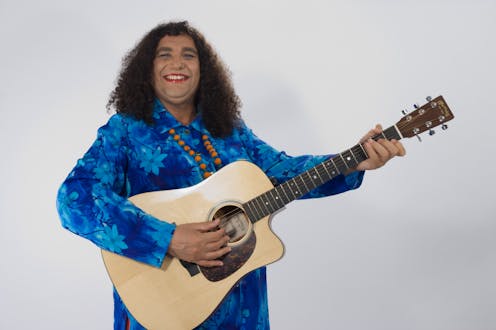
If you visit Broome in Western Australia, you might be lucky enough to see Mary G perform. Mary G is a popular Gija comedian. On her website, English is used to describe Mary G as she and Mary G’s alter ego, Mark Bin Bakar, as he. But if you listen to Broome locals speaking Kriol, Mary G is simply referred to by the gender-neutral Kriol pronoun im.

Gendered pronouns have become a contested part of language since we became more aware of the effects pronoun usage have on transgender and non-binary people. Different languages have different solutions. For example, it has become commonplace in English to extend the non-specific singular use of they to a specific use.

For most of Australia’s 460 First Nations languages, this issue does not exist. There is no gender distinction between third-person singular pronouns (she/he/it), except in a very few languages such as Murrinhpatha in the Northern Territory’s Daly River area.

Nyantu and similar sounding words are common pronouns used in many languages to cover she/he/it. Other First Languages use pronoun word endings, and many do not have a form for the third-person singular pronoun she/he/it. This means that not adding an ending to a word indicates she/he/it.

Other languages use that one to refer to she/he/it, again avoiding gender.

Mudburra, a language of the Elliott region in the NT, uses both pronoun endings and that one.

In the following example you can see the pronoun ending -li (“they”), but there is no form for it (i.e. “the fish”). We’ve added -Ø so you can see where the object pronoun would normally go. The word nyani (“that one”) is then used to refer to the speared fish.

Neutralisation of gender also occurs in some sign languages in Central Australia. In Anmatyerr signing, the sign for akngey (“father”) and awenh (“father’s sister”) are both signed the same way. In Mudburra signing, the sign for mungkaja (“wife”) and ngumbarna (“husband”) are also the same. Shannon Dixon showing the Mudburra sign for ‘wife’ (Used with permission from the Dixon family) Janey Dixon showing the Mudburra sign for ‘husband’ (Used with permission from Janey Dixon) The natural world Gender does find a place in other First Languages in unexpected ways, revealing Indigenous perspectives on the natural and spiritual world. Black Inc A good example comes from another language of the Elliott region, Jingulu, the language of Jingili people. Jingulu has a gender system which affects nouns rather than pronouns. Gender in Jingulu is not entirely unlike the Latin masculine, feminine and neuter system, in which every noun has one of three genders and has different endings to reflect this. One difference between Latin and Jingulu is that Jingulu has an extra gender: vegetable. This four-way system is common in languages in northern Australia. All nouns in Jingulu belong to one of four genders. Masculine words tend to end in -a or -ji, feminine words in -rni or -rdi, vegetable words in -mi or -bi, and neuter words in -u. For some nouns, it is easy to predict which gender they belong to. Words for male humans and other animals are masculine, words for female humans and other animals are feminine, many words for edible plants are vegetable, while many words for other plants and inanimate objects are neuter. The gender of other words is less obvious. For Jingili people, shape is important. For example, the vegetable gender contains many long, thin or pointy objects beyond bush foods. The body parts ngijinmi (“tail”), kilimi (“nose”) and mankujbi (“neck”) are classified as vegetable, whereas most other body parts are neuter. A plant with a mauve flower. Flower from bush potato (Ipomoea costata) Photo: Jennifer Green. Conversely, damangka (“spherical yam from a bush potato plant”) and kirangkuju (“round melon”) are neuter, where we might have expected them to be vegetable. Animals that are atypical are often assigned feminine gender, such as water creatures that don’t swim much, insects that sting with their tails, and emus (birds that don’t fly, and a species in which the male rears the young alone). A spiritual dimension For other First Nations languages, there is a spiritual dimension to gender classification. The northern Queensland language Dyirbal also has four genders. The system is similar to German, in which the gender of a noun is expressed in the article (i.e. the or a), rather than with a noun ending. Dyirbal also has different forms according to the case system, which is again similar to German. Like Jingulu, the gender of some Dyirbal words is predictable, based on birth sex. For other words, knowledge of the Dreamtime is required to know to which gender words belong. For example, most birds are feminine because they are believed to be the spirits of dead women, but willy-wagtails are masculine because they are mythical men. A black and white bird. A willy wagtail is believed to me a mythical man. Douglas Cliff/Shutterstock Similarly, the sun is a female deity and therefore takes the feminine article, whereas the moon is a male deity and is classified as masculine gender. This is an edited extract from Bina: First Nations Languages, Old and New by Gari Tudor-Smith, Paul Williams and Felicity Meakins (Black Inc.) Authors: Felicity Meakins, Professor of Linguistics, The University of Queensland

Read more https://theconversation.com/most-of-australias-first-nations-languages-dont-have-gendered-pronouns-heres-why-234289

What Are the Benefits of Renovating an Older Home in Sydney?

Sydney has plenty of character homes, from Federation cottages to mid-century brick homes. Renovating rather than rebuilding can preserve what makes t...

Pool and Deck Design: How to Plan the Perfect Outdoor Living Space for Your Sydney Home

For many Australians, the backyard is where life happens. Summer barbecues, weekend swims and long evenings outdoors are all part of the lifestyle, ...

Is Solar Pool Heating Worth It? What Sydney Homeowners Should Know

There's nothing quite like a backyard pool on a hot Sydney day. But once autumn rolls in, many pools sit unused for months because the water is simp...

Planning a Luxury House Move: A Week-by-Week Timeline for Prestige Sydney Homes

Selling or buying a prestige home is a major milestone. Whether it's a waterfront residence in Birchgrove, a grand Federation home in Haberfield or ...

Downsizing or Upgrading Your Caravan? Here's How to Sell It Without the Hassle

Selling a caravan can feel like a major task, especially when you are unsure about its value, paperwork, or how to find a buyer. Whether you are dow...

The Best Overseas Adventure Holidays for Australians Who Love the Outdoors

Australia offers no shortage of incredible outdoor experiences, but sometimes the best way to satisfy your sense of adventure is to head overseas. A...

Cape Town Wine Shuttle: Winelands Tasting & Tours

Embark on an unforgettable journey through the picturesque Cape Winelands, where world-class wines and breathtaking scenery await. Our Cape Town Win...

Metal Fabrication: Choosing Metal Fabrication Melbourne Services for Custom Projects

What Modern Metal Fabrication Involves From individual components to complete structures, metal fabrication brings together processes such as desig...

Why Giant Rats Tail Grass Keeps Coming Back After Spraying

Giant Rats Tail Grass (GRT) is one of the most frustrating pasture weeds for farmers and lifestyle property owners. You spray an infested area, see th...

When Custom Cardboard Boxes Make Sense for Your Business

Custom cardboard boxes can be useful when a standard carton does not fit a product, packing method or presentation requirement particularly well. A ...

Full-Height vs. Pop-Top Caravan: Which Is Better for Family Travel across WA?

A pop-top caravan is an excellent choice for travellers who want the comfort of a caravan without committing to a larger, bulkier setup. With a lowe...

Bottle Label Printing: Key Factors for a Professional Finish

Why the Printing Method Matters When businesses need packaging or printed containers developed for a particular application, the right supplier can m...

Virtual Livestock Fencing and GPS Tracking: Improving Visibility Across Cattle Properties

What Virtual Livestock Fencing Means for Modern Cattle Management Managing cattle across extensive properties requires more than knowing where anim...

Sydney Pawnbrokers Explained: How Hocking Your Car Actually Works

Sometimes you need cash, and you need it soon. If you own a car, you may already have a way to get it. That's what people mean when they say they've...

Moving Interstate from the Gold Coast to Brisbane (or Back)? What Removalists Wish You Knew First

Have you talked to anyone who’s done the move? They say the same thing: the drive up the M1 is the easy part. It's everything around it that catches...

Why the Spring School Holidays Are a Great Time to Visit Coffs Harbour

The spring school holidays are a good time to spend a few days on the Coffs Coast. The weather is starting to warm up, there is plenty to do outdoor...

What to Do When an Older Car Is No Longer Worth Keeping in Melbourne

Ever looked at another repair quote and wondered whether your old car is still worth the trouble? It is a common turning point for Melbourne motoris...

Your Baby's First Year: A Local Guide to Feeding, Sleep, and When to Get Extra Support

Ask ten parents in a Brisbane mothers' group how their baby is feeding or sleeping, and expect ten different answers.  Someone's baby sleeps throug...
















