

Legionnaires’ cases in Melbourne are growing. Here’s what you need to know about this serious lung infection
- Written by: Richard Bentham, Adjunct Associate Professor School of Biology, Flinders University
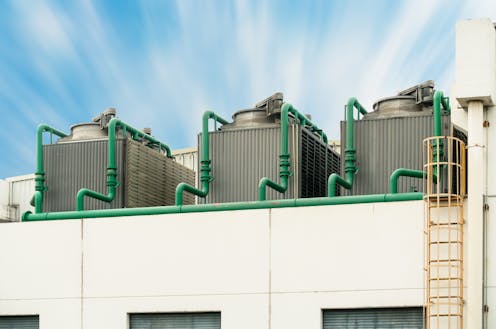
Melbourne is experiencing an “explosive” and unusual outbreak of Legionnaires’ disease.
Since Friday afternoon, Victoria’s Department of Health has confirmed 33 cases (with ten more suspected) of this severe and sometimes life-threatening lung disease. Most of those infected have ended up in hospital.
Investigations are under way to identify the source of the outbreak.
Here’s what we know so far.
What is Legionnaires’ disease and how does it spread?
Legionnaires’ disease is a bacterial infection caused by inhaling contaminated water droplets. The water droplets need to be small enough to be inhaled deeply into the lungs to cause disease.
The disease isn’t transmitted between people.
Legionnaires’ disease usually only infects people with weakened immune systems or underlying health problems. People are at greater risk of infection if they:
- are over 40 years old
- are smokers
- have a chronic lung disease or existing respiratory conditions
- have a weakened immune system, such as transplant recipients
- have other underlying health conditions, such as diabetes, heart or kidney disease.
Legionnaires’ disease usually causes a severe pneumonia, which is a chest infection with symptoms such as cough, headache, fever, chills, and muscle aches and pains.
Less common symptoms are nausea, vomiting, diarrhoea and confusion. In extreme cases, Legionnaires’ disease can cause kidney impairment.
How is Legionnaires’ disease treated?
Early diagnosis and treatment with the right antibiotics is important to prevent the disease becoming severe.
If no action is taken, or the wrong antibiotic is prescribed, Legionnaires’ disease can lead to serious illness and hospitalisation.
GPs in Victoria are now on alert not to prescribe inappropriate antibiotics for people presenting with respiratory symptoms.
That’s because it may take several days of taking antibiotics for people with Legionnaires’ to realise the drugs are not effective – and that window for treatment is crucial.
What do we know about the Melbourne outbreak?
The current outbreak in Melbourne is an example of this community-acquired disease.
Investigations are under way to identify its source. The large number of cases in a short period indicates a single source, likely some equipment releasing contaminated aerosols into the environment, usually outside the building. This type of outbreak is sometimes described as “explosive”.
A cooling tower attached to a building is most likely responsible. Most explosive outbreaks of Legionnaires’ disease are associated with cooling towers.
The strain is another indicator: the Legionella pneumophila S1 subtype that has been identified in Melbourne is very different from Legionnaires’ disease caused by potting mixes.
The Victorian government has advised all cooling tower operators to ensure they’re up to date with testing, servicing and auditing requirements. But it’s not unusual for the source to remain undetected.
The high density of cooling towers in a city like Melbourne make identifying a single source incredibly complex.
How are Legionella bacteria released into the air?
It’s unusual for an outbreak like this to occur mid-winter. Legionnaires’ disease outbreaks associated with cooling towers usually happen in late summer/autumn, when air conditioning systems are being turned on after a cool period.
In winter the biofilm (biological slime) dies back and Legionella do not multiply below 20°C. If towers operate all year round then Legionella can proliferate all year round.
Cooling towers are common devices used to recycle and evaporate water for buildings, especially air conditioning systems. As part of their operation they must release water into the environment. They release large amount of aerosol into the air, even when operated optimally.
This aerosol can travel considerable distances (a kilometre or more) from the source. If it is contaminated, there is the potential for inhalation and disease.
Without good management the cooling tower may act as an incubator for the Legionella bacteria. The warm and nutrient-rich conditions inside cooling water systems are ideal for the biological slimes (biofilms) Legionella need to grow.
If sediment and slimes are disturbed – for example, when the system is turned on after months of dormancy – a sudden “bloom” of Legionella may escape in the aerosol.
The fact the outbreak is occurring in winter indicates cooling towers being used to cool something other than air conditioning, such as computer or phone systems. It is likely there has been some disruption to the system operation to initiate the outbreak.
What should I do if I’m worried?
Healthy people may inhale droplets contaminated with Legionella and experience no infection.
But for those with compromised immune systems or lung damage, the disease can be serious.
Victoria’s Department of Health advises people with symptoms to seek urgent medical care if they live in, or have visited, metropolitan Melbourne and surrounding areas. Symptoms may be flu-like and include muscle pain, a dry cough, fever and loss of appetite.
Authors: Richard Bentham, Adjunct Associate Professor School of Biology, Flinders University


















