

We’re told to limit kids’ screen time. But how does it actually affect their health?
- Written by: Nick Fuller, Charles Perkins Centre Research Program Leader, University of Sydney
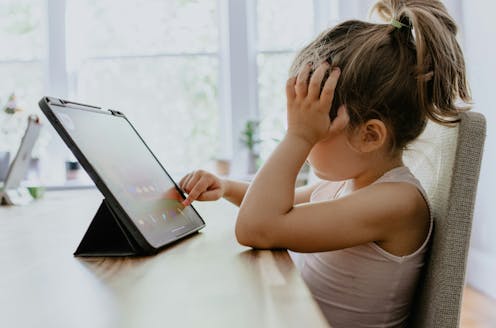
If you’re a parent, you’ll be well-acquainted with one of the more hotly debated parenting topics: screen time and kids.
On the one hand, screen time helps kids learn, develop creativity and supports social interaction and connection.
But too much screen time can negatively impact your child – not just their development but their physical health, too.
So how exactly does screen time impact your child’s physical health? And how can you help them develop a positive relationship with screens?
How much screen time is OK?
The Australian guidelines for screen time are part of its 24-hour movement guidelines. These prescribe the amount of time we should spend each day on physical activity, sleep and screen time to maintain physical and mental health and wellbeing.
The screen time guidelines, which are based on seated activity, recommend:
- no screen time for children under two
- no more than one hour of screen time for children aged two to five
- no more than two hours of recreational screen time outside of school work from the age of five to 17.
But just 17% to 23% of Australian pre-schoolers and 15% of 5 to 12-year-olds meet these recommendations.
How screen time affects kids’ diets and health
Children with higher screen time are more likely to engage in mindless eating and overeating. When they’re distracted by screens, kids can miss important signals from their brains letting them know they’re full.
They’re also more likely to crave and eat unhealthier foods. This is driven, in part, by junk food advertising accompanying children’s content on screens.
The lesser-known way too much screen time affects a child’s diet is by impacting their sleep. For children and adolescents, adequate sleep is:
- 11 to 14 hours, including naps, for toddlers
- 10 to 13 hours, including naps, for three-to five-year-olds
- nine to 11 hours for kids aged five to 13
- eight to ten hours for teenagers.
Research shows a child’s ability to get adequate sleep is impacted by screen time. A review of 67 studies of school-aged children and adolescents found screen time was associated with shorter and later sleep in 90% of the studies reviewed.
We need adequate sleep to regulate two essential hormones – ghrelin and leptin – that manage our hunger and appetite. Getting less than our recommended sleep disrupts our appetite hormones, resulting in an increased desire to eat.
It also leads to increased impulsive behaviour linked to food choices, which often results in us reaching for foods high in sugar, fats and salt for immediate gratification. So if your child is not getting the sleep they need, there’s a good chance they’ll be using their pester power to satisfy their craving for sugary, fatty and salty foods the next day.
Finally, more time indoors looking at screens can mean less time being physically active. Australia’s guidelines recommend children do at least 60 minutes each day of physical activity that makes the heart beat faster (or at least one hour of “energetic play” for pre-schoolers). The 60 minutes doesn’t have to be all in one go – it can be made up of several shorter sessions through the day.
What can parents do?
Fortunately, there are some practical steps you can take to ensure your child has a healthy relationship with screens and ensure they’re getting enough sleep and physical activity.
1. Establish screen time rules
Consider guidelines for your child’s age and cover expectations for where, when and how screens are used. Young kids playing an educational game on a tablet in the family room might be OK, while watching YouTube in the bedroom might not.
Make mealtimes and the bedroom at bedtime screen-free zones. Involve your children, particularly teenagers, in the process to ensure everyone follows the rules.
2. Spend time outdoors
Try establishing regular time in your family’s schedule for physical activity outdoors, whether a daily visit to the park or sports on the weekend. Making sure your child gets enough physical activity daily also supports their sleep and overall health.
Like rule-setting, involving your child in the activity choice will make them more willing to participate.
3. Be a role model
Kids closely observe and mimic their parents, so the best way to ensure your child has healthy screen time habits is to adopt them yourself. Apply rules to your own screen use at home, including being mindful of being distracted by never-ending notifications.
4. Make your child’s bedroom a sleep sanctuary
Ensuring your child’s bedroom is quiet, comfortable and dark enough is essential for a good night’s sleep. This includes being at a comfortable temperature (18°C to 22°C). Store toys and screens in other rooms so your child associates their bedroom with sleep time, not playtime.
Authors: Nick Fuller, Charles Perkins Centre Research Program Leader, University of Sydney


















