

Pneumatic compression therapy – can it really help Olympians (or you) recover after exercise?
- Written by: Rob Newton, Professor of Exercise Medicine, Edith Cowan University
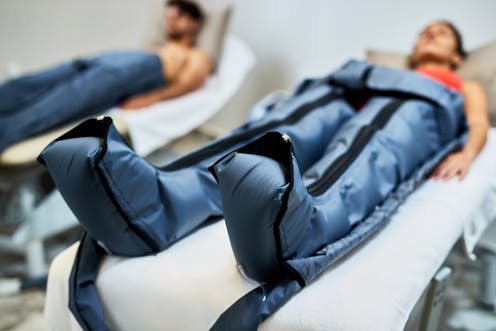
As the Paris 2024 Olympics come to a close, athletes who’ve pushed themselves to their limits and beyond will be focused on recovery. Even “weekend warriors” know the value of careful management after a long run or gym session.
Intermittent pneumatic compression, also called air compression therapy or by various brand names, uses mechanically inflatable socks, sleeves or pants. These run through a sequence of pressure and release patterns on the body. Sports brand Nike even released a boot version ahead of the Olympics.
Compression has long been used in medicine to manipulate circulation. Now “recovery boots” are being used by athletes and in wellness businesses.
What’s the evidence they might help Olympic athletes, or mere mortals, recover from exercise?
How it started, how it works
Compression therapy using bandages to treat a range of ailments and circulation issues dates back to ancient Egypt. Research and development into pneumatic compression devices (meaning those operated by air or gas under pressure) began in the 1950s with the goal of providing rhythmic compression to the limbs to enhance fluid flow and reduce swelling .
Pneumatic compression is a mechanical therapeutic technique to increase the flow of blood through the veins and lymph fluid through the lymphatic vessels returning these fluids to the heart.
This is achieved by applying external pressure sequentially with inflation and deflation to the arms and legs commencing at the ends of the limbs and progressing towards the trunk. The veins and lymphatic vessels contain one-way valves along their length so when they are compressed the fluids can only move towards the heart.
The lymphatic system is a key component of the immune system helping the body fight off infection but the major role is to maintain fluid balance within the body tissues.
This “pumping” action not only facilitates the movement of fluid through vessels but also creates a greater pressure differential in the tissues. This helps reduce excess fluid, enhances cell regeneration, and delivers more nutrients while removing waste from cells.
What is it good for?
There are several established benefits of pneumatic compression including improved blood flow, reduced swelling, pain reduction, enhanced muscle recovery following physical activity, exercise or work, and potentially improved cardiovascular recovery.
In the medical setting, pneumatic compression is used in the management of several health conditions including lymphoedema (swelling where there is lymph fluid accumulation), venous insufficiency (poor vein function), deep vein thrombosis (DVT) prevention and post-surgical recovery. In these instances, the pneumatic compression is applied daily, for between 45 to 60 minutes using pressures of between 30 to 80 mmHg.
In the setting of sports or exercise, the treatment is used after high-intensity sessions or competition. Treatment generally lasts from 20 to 30 minutes at pressures of about 80 mmHg.

Can’t a healthy body do that on its own?
Physical exercise alone creates a very powerful pumping action to facilitate return of blood and lymph fluid by the repetitive contraction and relaxation of the muscles compressing the tissues and vessels.
The mechanisms and effects of pneumatic compression are also very similar to what occurs during therapeutic massage. In both cases pressure is applied, pushing and compressing the muscles of the limbs in a rhythmical action towards the heart.
In terms of what is most effective – exercise, massage or pneumatic compression – each has pros and cons. But all three produce similar benefits in terms of draining fluid from the tissues and enhancing return of blood and lymph to the heart.
Exercise of course is essential for overall health and has multiple additional benefits so this is a non-negotiable. Pneumatic compression and therapeutic massage can provide additional benefit and help recovery from intense physical activity (say after competing internationally) and help an athlete adapt to training too.
What if I’m not an Olympian?
Pneumatic compression is becoming increasingly accessible and affordable.
It is generally safe however there are some conditions for which it is not recommended. These include severe congestive heart failure, arterial disease or active deep vein thrombosis.
This kind of compression therapy is not a “magic bullet” but rather an effective complement to physical exercise that can also be combined with therapeutic massage if you’re getting serious about sport or physical activity.
If in doubt, get advice from an appropriate health-care professional such as an accredited exercise physiologist, physiotherapist, or medical doctor to determine if pneumatic compression would provide added benefit in the management of your health and fitness.
Authors: Rob Newton, Professor of Exercise Medicine, Edith Cowan University
-recover-after-exercise&media=https://www.modernaustralian.com/https://images.theconversation.com/files/611671/original/file-20240806-17-kxiple.jpg?ixlib=rb-4.1.0&rect=57%2C24%2C5406%2C3612&q=45&auto=format&w=496&fit=clip&description=Pneumatic%20compression%20therapy%20–%20can%20it%20really%20help%20Olympians%20(or%20you)%20recover%20after%20exercise? "Pin It")

















