

Disaster season looms, but the senate inquiry has failed to empower communities
- Written by: Monica Taylor, PhD Candidate in Law, Queensland University of Technology
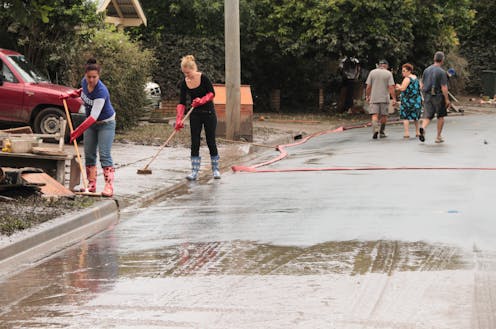
This week, a Senate committee examining Australia’s disaster resilience tabled its long-awaited report in parliament.
The 151-page report makes ten recommendations. These concern funding arrangements, mental health supports, emergency volunteering models, and the need to establish a national asset register.
Overall, the report captures a broad selection of issues in disaster management. It acknowledges the views and perspectives of many stakeholders.
However, its recommendations largely focus on volunteers involved in the immediate disaster response. This will not make Australians more resilient to disasters, because communities need long-term support to develop their capacity to bounce back. Deeper structural reform is required.
A wide-ranging inquiry
The report was titled “Boots on the ground: Raising resilience”. It was commissioned in November 2022 to inquire into Australia’s disaster preparedness, response and recovery workforce models, as well as alternatives.
The committee also had to consider the role of the Australian Defence Force, volunteer groups, not-for-profit organisations and state-based services, as well as the support required to improve Australia’s resilience and response to natural disasters.
Over almost two years, the inquiry received 174 submissions from charities, government agencies, academics, emergency services and the general public. It also conducted 17 public hearings across all states and territories.
Understanding the needs of communities
We analysed more than 150 of these submissions to the inquiry in our research last year into the role of community organisations in disasters.
Our focus was on the contributions place-based, frontline community organisations such as neighbourhood houses or centres can make to building disaster resilience.
Community organisations are both first and last responders, and play a vital but often overlooked role in disaster response, recovery and resilience-building.
We have now analysed the report to see how well it responds to issues raised in submissions. Unfortunately, we found it fails to address the vital role and needs of communities.
Firstly, the report acknowledges community sector organisations’ calls for additional resourcing and identifies funding shortcomings for their vital work in disasters. But it falls short of recommending any funding measures specifically for this sector. None of the recommendations in this report will fix the problem of persistent underfunding for frontline, place-based community services.
Secondly, it identifies the urgent need for mental health and trauma-informed approaches, and recommends the creation of a national disaster mental health hub. While investment in mental health is always welcome, more information is required to determine how this recommendation will work in practice.
Thirdly, the report lacks any recommendations to formally integrate or fund community organisations’ participation in disaster governance. This is despite evidence of the need to give community organisations a genuine seat at the table so they can share their expertise on local needs and capacities. This reflects our research, which shows community organisations still sit on the periphery of formal disaster management arrangements.
Our research: beyond ‘tinny heroes’ and ‘mud armies’
During our research, we identified common themes in the submissions. Let’s take a closer look at the top three things communities want.
1. Community organisations’ contributions are crucial, but invisible and undervalued
Community organisations play crucial long-term roles in building disaster resilience. But their efforts are often undervalued, under-recognised, and poorly defined within disaster management policy frameworks. This theme emerged time and time again.
Many submissions highlighted the frustration of communities and frontline staff at the lack of understanding in government agencies about their roles, or downplaying their local knowledge.
These submissions also highlighted the absence of formal policies to clarify the roles of community organisations in disaster preparedness, response and recovery. Most submissions called for increased funding to enable community organisations to sustain their support and to be consulted in the creation of any disaster response strategies.
Compelling testimony to the Senate committee from organisations such as Resilient Lismore, North Townsville Community Hub and Marninwarntikura Women’s Resource Centre in Fitzroy Crossing demonstrated how they were overlooked in formal disaster management processes.
2. Communities’ and first responders’ mental health is being affected
Compounding, cascading events are affecting communities’ and first responders’ mental health. Many submissions identified a need for greater mental health support. This would include trauma-informed training and care that is more coordinated, proactive and planned.
Community organisations provide person-centred, trauma-informed care to individuals in disaster response, and throughout the long tail of disaster recovery.
3. Disaster resilience is an under-realised opportunity and asset
Multiple submissions from community organisations called for a shift in thinking away from a reactive cycle of response and recovery.
The authorities need to stop treating disasters as one-off events and move towards a long-term focus on disaster preparedness.
Communities sought more resources to expand their work, including through volunteer coordination. Many operate with limited, short-term funding, and experience high staff turnover and burnout.
The work of community organisations is especially relevant given declining rates of volunteering fuelled by an ageing population, the impact of COVID, and the cost-of-living crisis. Exhausted volunteering networks cannot be expected to continue offering services without better support.
A missed opportunity
With memories of devastating fires and floods fresh in the minds of many Australians, the Senate inquiry came at an opportune time.
Australia is also expected to experience worsening disasters as climate change accelerates, so it has never been more important to strengthen our resilience.
While the senate committee’s report is welcome, its recommendations are far narrower than the themes and issues contained within it.
It’s disappointing that once again, voices of those who have engaged in the process are not adequately reflected in recommendations that would deliver policy change. The community sector is stretched beyond its limits and experiencing consultation fatigue.
Unfortunately there is little here for place-based community organisations on the frontline as they approach the next disaster.
Despite the narrow recommendations, there is still an opportunity for the government response to address broader issues canvassed in the report. It is never too late to invest in community organisations and this will deliver long-term benefits for Australians as climate change intensifies.
The authors wish to acknowledge law Professor Rowena Maguire and human rights expert Associate Professor Bridget Lewis for their contributions to this article.
Authors: Monica Taylor, PhD Candidate in Law, Queensland University of Technology


















