

Indigenous science can help solve some of the great problems of our time. Here’s how
- Written by: Tristan Kennedy, Professor & Pro Vice-Chancellor (Indigenous), Monash University
Australia has committed to elevating Aboriginal and Torres Strait Islander knowledge as one of five national priorities in science and research.
This comes as part of the National Science Statement released on Monday by the Minister for Industry and Science, Ed Husic. The statement signals the national priorities that will shape investment and policy across research and development over the next decade.
Australian research already punches above its weight. The statement notes we produce 3.4% of the world’s research with just 0.33% of the world’s population. So how can we accelerate our impact?
Indigenous knowledge systems are a national strength. The history of science on this continent is extraordinary, yet we often fail to recognise the sophisticated knowledges held by our First Nations peoples. Indigenous voices must be at the table.
The first peoples, the first scientists
Aboriginal and Torres Strait Islander peoples were the first astronomers, physicists, biologists and pharmacists on this continent. From as far back as 65,000 years Indigenous people have been integrating knowledge systems with and for people and Country.
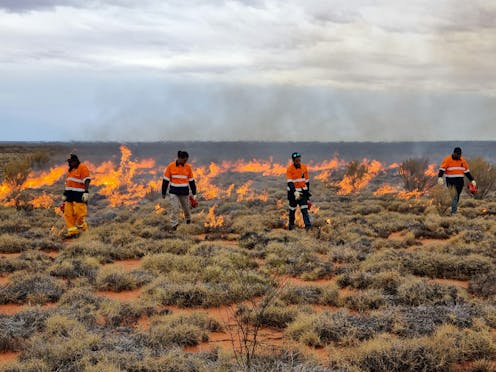
There are many examples of Indigenous knowledge contributing to contemporary problems. Traditional Aboriginal burning takes into account local weather conditions, plants, environments and animals. It is showing how plants react to fire, how to reduce the risk of major fire events, and support regeneration and biodiversity.
Indigenous-led approaches to urban water are pointing towards more sustainable water management practices that also regenerate ecological and cultural environments.
Beyond this, Indigenous approaches to research can challenge Western science models in important ways that can bring about new leaps of innovation.

The stakes are high
The new national statement comes at a time when we face existential threats in climate change, artificial intelligence, new pandemics, social unrest and beyond. Research remains crucial to finding solutions for our survival.
But we must approach the task of elevating these knowledge systems in the right way and be mindful of the ongoing legacies of colonisation.
Eminent Māori scholar Linda Tuhiwai Smith has noted: Indigenous people are considered the most researched in the world, and yet have seen the least amount of benefit. The legacy of these past practices continues to foster uncertainty and distrust of research (and researchers) by many in Indigenous communities.
This observation, based on engagement and conversations with communities, highlights an imbalance in research benefit between those who are studied and those who do the research. It is tied to centuries of colonisation.
Science has long adhered to the principle of “do no harm”. However, Western science has sometimes done harm. This was recently highlighted in Melbourne University’s book Dhoombak Goobgoowana, or truth-telling in the Woi Wurrung language, which described some of the terrible outcomes of colonial biases in science.
At the same time Western institutions and industries have extracted an extraordinary amount of knowledge from Indigenous peoples. According to the World Health Organization
around 40% of pharmaceutical products today draw from nature and traditional knowledge, including landmark drugs: aspirin, artemisinin [an ancient Chinese herbal malaria treatment], and childhood cancer treatments.
This has benefited humanity, and fattened the profits of many pharmaceutical companies. Yet Indigenous people have seen very little financial benefit – or even credit.
This is one of the many reasons we need to foster Indigenous-led research and engage communities in research.
A seat at the table – and more
Bringing more people to the table – both in research and at universities in general – will help us ask better questions. It will ensure people, especially Indigenous peoples, can lead or guide the research, see benefit and help build capacity in communities.
The Australian Institute of Aboriginal and Torres Strait Islander Studies code of ethics points the way forward. It centres Indigenous self-determination, Indigenous leadership, sustainability and accountability, and demonstrating impact and value. It all starts with listening, and ensuring that research addresses priorities determined and supported by Aboriginal and Torres Strait Islander people.
The National Science Statement calls for teamwork. It calls for research collaborations between universities, civil society, governments and international partners to solve some of our biggest societal, geopolitical, economic and environmental challenges.
This task also demands new approaches to what responsibility means in research. To create futures in which people can thrive, responsible research must go beyond compliance to formal rules of ethics and integrity.
It must ask much bigger questions about the place of research within local communities and much larger geopolitical environments. And it must reconsider how we partner well with the governments, industries and the communities with which we are embedded.
This takes us right back to the question of why we do research. Is it to publish more papers, or find a drug that makes a lot of money? Or are we here to make the world a better place?
It’s a question the National Statement on Science is asking. It is up to us to put it into practice.
Authors: Tristan Kennedy, Professor & Pro Vice-Chancellor (Indigenous), Monash University


















