

What is eastern equine encephalitis? Two mosquito researchers explain what’s behind the latest outbreaks
- Written by: Cameron Webb, Clinical Associate Professor and Principal Hospital Scientist, University of Sydney
Health authorities in the United States are issuing warnings and closing public parks due to a rare but potentially deadly mosquito-borne disease.
This week, a resident of the US state of New Hampshire died after being hospitalised with eastern equine encephalitis. Cases have also been detected in other states.
But what is eastern equine encephalitis? How is it spread? What, as the name suggests, do horses have to do with it? And is it a problem for Australia?
What is eastern equine encephalitis?
Eastern equine encephalitis is caused by a virus typically only found in some eastern parts of the Americas, from Central America to Canada.
Eastern equine encephalitis virus causes neurological disease, particularly encephalitis (inflammation and swelling of the brain) and is transmitted to humans via a mosquito bite. Symptoms can be severe and potentially fatal.
But most people bitten by a mosquito carrying the virus won’t have symptoms. For those who develop disease, symptoms include headache, neck stiffness, confusion, seizures and coma.
About one-third of patients with severe symptoms will die and many of those who survive have ongoing neurological problems.
It’s not just people at risk from the virus. Horses are susceptible too and, like humans, can also develop fatal encephalitis after a bite from an infected mosquito.
The virus was discovered after an outbreak of fatal disease in horses in the New England region of the US in 1831, hence the reference to equine illness in its name.
Wild, farmed and captive birds can also be infected with the virus and, in some species develop disease. In fact, birds are key to how the virus spreads.
How is eastern equine encephalitis virus spread?
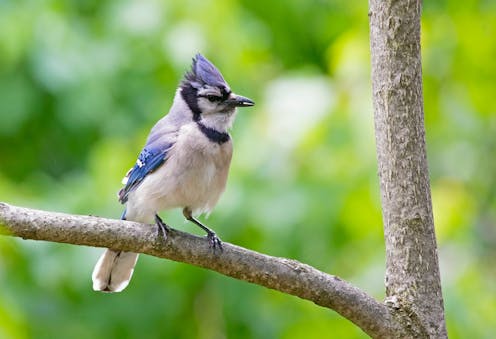
Birds – especially passerines, a group that includes robins, starlings, thrushes and blue jays – are the main hosts of the virus.
These birds produce high enough levels of the virus to infect biting mosquitoes and maintain what’s known as a “transmission cycle”.
Bird-feeding mosquitoes in forested wetlands, especially Culiseta melanura, allow the virus to circulate among birds. But this mosquito rarely bites people so it isn’t as important for outbreaks of human disease.
It’s the mosquitoes that feed on both birds and mammals that transmit the virus to humans and horses. These include Aedes, Coquillettidia and Culex mosquitoes. But once infected, humans and horses do not spread the virus. That’s because they don’t produce high enough levels of the virus to infect mosquitoes.
How can we limit the spread?
There are no specific treatments for infection with eastern equine encephalitis virus, or any licensed vaccines for use in people. There is a vaccine registered for veterinary use to prevent virus infection in horses.
Personal protective measures and mosquito control are the main strategies to limit people being exposed to the virus.
Outbreaks can have a significant impact on communities, not only from the disease itself, but from measures implemented to limit transmission.
Recent outbreaks have led to outdoor events being cancelled. There have also been concerns about the widespread use of aerial “fogging” to kill mosquitoes as commonly used chemicals are not specific to mosquitoes and may pose a risk to other insects.
Some towns have closed parklands during the evening and asked residents not to go outside at night.
Why is there an outbreak now?
The virus circulates year-round in tropical areas such as Florida. In the north-east of the US, the virus has more sporadic activity. Here, it’s typically introduced by migratory birds and is active in the warmer months when mosquito populations are thriving.
The virus has been known for many decades and a number of outbreaks have been reported in North America. One of the last substantial outbreaks was in 2019 across several north-eastern US states, when there were 38 human cases (including 12 deaths).
There is evidence the virus is spreading into new regions of North America. But, given the sporadic nature of outbreaks, it is difficult to predict when they will occur.
A number of factors are likely at play in determining future outbreaks and the spread of the virus to new regions, including the climate, environmental factors, the activity of mosquitoes and wildlife, and also, importantly, people.
With increasing contact between people and the mosquitoes that can pass on the virus from infected birds, the public health risks increase.
Perhaps human activity around the habitats of mosquitoes and birds, including encroachment of urban development into forested wetlands, elevates risk.
So it’s crucial for health authorities to monitor mosquito and virus activity to provide early warning of the risk of human disease.

Is there a risk to Australia?
There is no evidence that eastern equine encephalitis virus is in Australia and there is no immediate risk of its introduction here.
While Culiseta mosquitoes are found in Australia, their role in local virus outbreaks in people or animals is not well understood.
But there are dozens of different mosquitoes involved in the spread of alphaviruses in Australia. That’s the group that includes eastern equine encephalitis virus, as well as ones that exist in Australia, namely Ross River and Barmah Forest viruses.
It’s reasonable to assume some of these mosquitoes may be able to transmit the virus but this hasn’t been tested in laboratory experiments.
There is very little information on how local passerine birds may play a role in establishing cycles of viral transmission in Australia. There is also no information on whether native Australian vertebrates, such as marsupials, would respond to infection.
When we consider all the available evidence, the risk of the virus spreading to Australia and subsequently causing an outbreak is, most likely, very low.
Are travellers at risk?
The risk of being bitten by a mosquito carrying eastern equine encephalitis virus is extremely low. But anyone visiting eastern regions of North America, including the US and Canada, where the virus can occur should take precautions to avoid being bitten by mosquitoes.
Follow directions from local health authorities. And take steps to avoid the locations (especially forested wetlands) and times when mosquitoes are active (typically dawn and dusk). Wear loose fitting clothing with long sleeves and apply repellents containing diethyltoluamide (commonly known as DEET), picaridin or oil of lemon eucalyptus.
These precautions will also protect against infection with other mosquito-borne viruses you might encounter there, such as West Nile virus.
Authors: Cameron Webb, Clinical Associate Professor and Principal Hospital Scientist, University of Sydney


















