

Dolphin friendly? New research shows vague environmental labelling is common on NZ seafood products
- Written by: Kathryn Bradbury, Senior Research Fellow in the School of Population Health, University of Auckland, Waipapa Taumata Rau
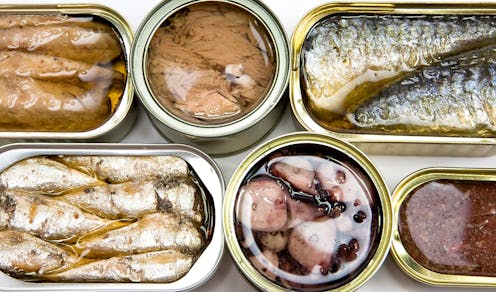
Many seafood products sold in New Zealand make environmental claims, but our new research shows most of them are too ambiguous and may serve as greenwashing.
We looked into the labelling and environmental claims on packaged fish and seafood products in major New Zealand supermarkets, investigating 369 products such as canned tuna or other fish, vacuum-packed salmon and frozen fish or seafood.
Just under half of the products (41.2%) we investigated contained at least one self-declared environmental claim, such as “sustainably fished”, “responsibly caught” or “dolphin friendly”.
Nearly 80% of these claims were vague and therefore contrary to international best practice and New Zealand Commerce Commission guidance. This states environmental claims need to be specific to avoid misleading consumers, and it lists the “dolphin friendly” claim as an example that should not be used.
However, we found 42 products available in New Zealand supermarkets carried a “dolphin friendly” or “dolphin safe” claim. Such hard-to-substantiate claims can potentially mislead consumers into thinking they are choosing to buy products that are less damaging to the environment than they might actually be.
Our results show we need stronger enforcement of existing regulations and clearer rules around labelling of fish and seafood products to encourage transparency around fishing practices.
Lack of information about fishing practices
Under New Zealand’s Fair Trading Act, seafood product manufacturers are not allowed to make misleading or unsubstantiated claims. But they are not required to state the harvest location or method (for example, pole and line caught, mid-water trawl, dredged).
We found only about half of the products stated the harvest location and less than 10% mentioned the harvest method. This means consumers usually don’t know where and how their fish and seafood was caught.
Making it compulsory for manufacturers to declare harvest location and fishing methods would mean consumers could choose products that cause less environmental damage. It may also encourage companies to adopt better fishing practices.
Other countries are cracking down on greenwashing
A European Commission study found more than half of the environmental claims on products they investigated from the European Union (EU) were potentially misleading.
As a result, the EU will now ban generic environmental claims that do not provide proof. The EU is also proposing companies should have to submit evidence for environmental claims and get pre-approval before being allowed to put labels on their products.
The Australian Competition and Consumer Commission (ACCC) carried out an audit of businesses and found more than half were making concerning environmental claims. The most common issue was vague claims such as “green”, “eco-friendly”, “responsible” or “sustainable”.
The ACCC is now updating and developing targeted guidance and engaging with industry to improve practices.
In the UK, the Competition and Markets Authority is conducting a review of compliance with consumer law. They have investigated environmental claims in the fashion sector and found vague statements commonplace.
In response, three fashion businesses with a major share of UK fashion sales have formally agreed to avoid using vague terms such as “eco”, “responsible” and “sustainable”.
The authority is currently investigating environmental claims on food, drink, cleaning products and toiletries. They are also revising and tailoring their guidance to businesses around environmental claims.
Preventing greenwashing in New Zealand
Greenwashing and vague claims make it difficult to monitor whether businesses are actually making meaningful changes and improving their practices.
We need an independent investigation of greenwashing claims (including claims around biodegradable or compostable packaging) across all New Zealand industries. To understand the full extent of the problem, this should include food and household products.
Currently, consumers can make a complaint about a vague claim to the Commerce Commission or Advertising Standard Authority. However, our finding that almost 80% of environmental claims on seafood products are vague suggests providing guidance isn’t enough and it shouldn’t be left to consumers to make complaints.
We need proactive enforcement of the existing Commerce Commission guidance and the Fair Trading Act to avoid the display of vague environmental claims on seafood, as well as on products from other sectors.
We would like to acknowledge the contribution by Xuân Le Folcalvez, who worked on this project during her internship as part of her masters degree from AgroParisTech.
Authors: Kathryn Bradbury, Senior Research Fellow in the School of Population Health, University of Auckland, Waipapa Taumata Rau


















