

How employers can design workplaces to promote wellness
- Written by: Libby Sander, Assistant Professor of Organisational Behaviour, Bond Business School, Bond University
Companies spend tens of billions of dollars each year on wellness programs - on gyms, health funds, yoga classes, and the like. But research shows only mixed success, with low take-up rates among employees and a poor return on investment for companies.
People attending work while sick costs the Australian economy about A$34.1 billion each year through lost productivity.
Rather than promoting these wellness programs, companies should instead design the workplace itself to support wellness. Sleep pods, air filtered by green walls, and selectively placed healthy food are already realities in some workplaces.
Through this kind of design, employees are “opted-in” to an environment that supports their health and well-being during the day. They don’t have to choose to take a walk at lunchtime or think about taking the stairs. The design of the workplace is engineered around creating these positive choices.
Read more: Research shows if you improve the air quality at work, you improve productivity
It isn’t just “presenteeism” (showing up to work in spite of medical problems such as back pain, headaches, or mental health issues) that is a problem. The cost of absenteeism in Australia is estimated at A$7 billion a year.
Meanwhile, the prevalence of chronic disease including obesity, diabetes and heart disease continues to rise among the workforce.
Modern work practices contribute to these diseases through the largely sedentary nature of modern office work. Increased sitting, for example, has been associated with higher risk of chronic disease.
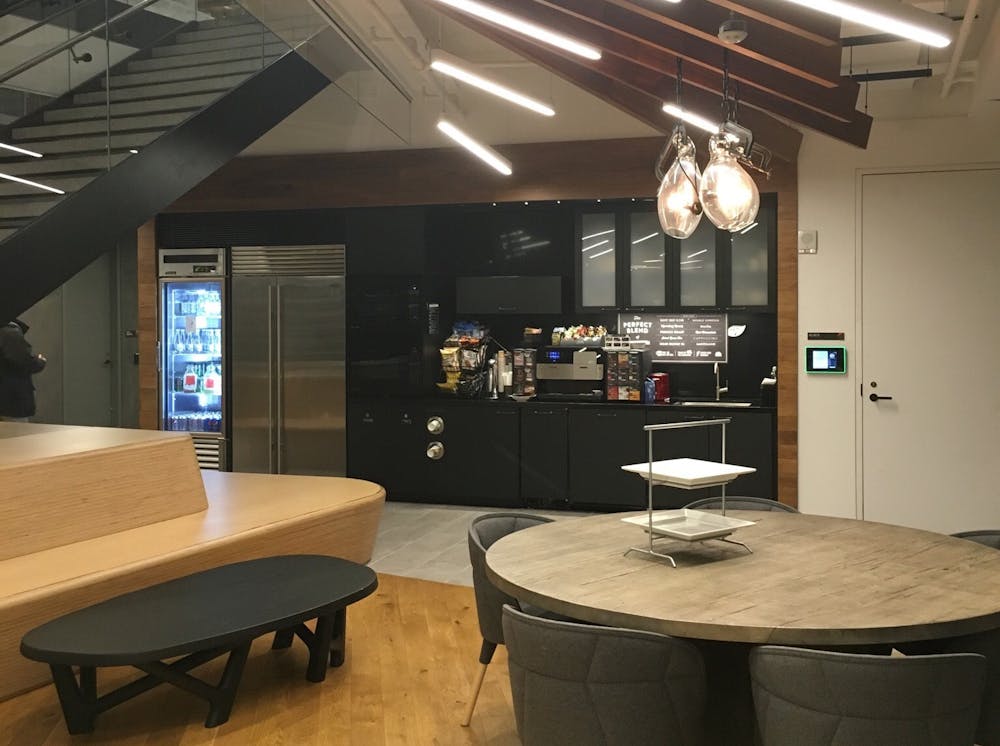 Putting staircases in the middle of offices can encourage more use.
Author provided
Putting staircases in the middle of offices can encourage more use.
Author provided
Wellness programs have become increasingly popular as companies and researchers have realised that productivity lies in the health of individual workers. The focus has also shifted to prevention of health problems rather than treating them after the fact.
Traditionally, this was accomplished by offering a range of services, from discounted health fund and gym memberships, and medical screening services, to activity-based programs such as in-house massages and yoga classes.
But simply giving employees lots of information about their health and telling them what to do doesn’t work. Research has shown that these programs don’t often change behaviour or help us to build new habits. If we are faced with too many choices, for example, our self control is quickly depleted.
So instead of simply presenting employees with options that are good for us, companies can borrow from behavioural economics and “nudge” us to change our behaviour.
Read more: 'Nudging' people towards changing behaviour: what works and why (not)?
Many workplaces are already using this design, covering a range of factors including lighting, air quality, materials, furniture, physical activity, and food.
Take the stairs, for example. In traditional offices lifts are generally positioned centrally, making them the easiest option. If you wanted to take the stairs that often means using the fire stairs, with the added risk that you might be locked out when you try to re-enter on another floor.
By simply moving the staircase into a central position you can make them the most convenient option for quickly moving between floors. This is common practice now at a wide variety of companies such as the Boston Consulting Group’s New York offices.
But let’s not stop there. By using experience design, employees can be incentivised in other ways to take the stairs.
Timber walls, natural lighting, art and music can be used to align with our natural preferences for attractive and calming environments, and nudge employees to take the stairs. At the offices of Delos in New York, sensors in the stairs record the number of trips employees take during the day.
Every time an employee uses the stairs, a drop of water is added to an electronic “waterfall” display. The more times you take the stairs, the bigger the waterfall gets.
This use of technology represents a bit of gamification within the workplace. It’s like a scorecard for stair use, and every trip comes with a visual reward that gradually adds up.
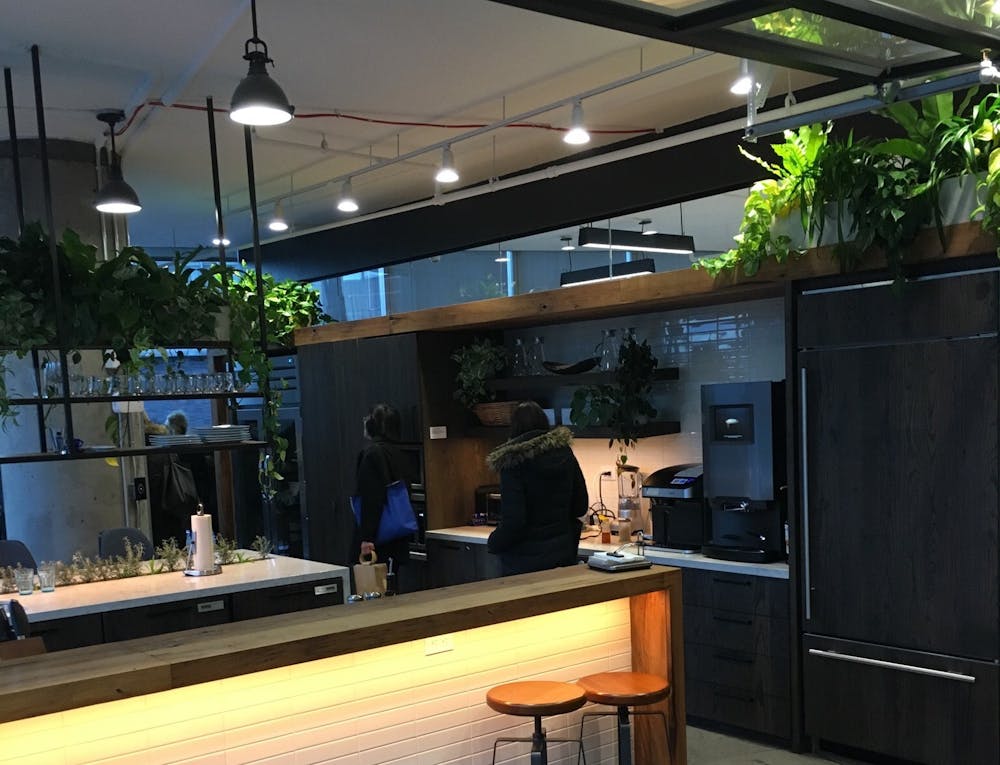 Communal areas and greenery in the Delos New York HQ.
Author provided
Communal areas and greenery in the Delos New York HQ.
Author provided
Read more: Not just nice to have: nature in the workplace makes employees happier and healthier
By creating well-designed, centrally located eating areas and providing healthy food choices, organisations can also encourage employees to make better food choices.
In one study researchers from Yale teamed up with Google to try and nudge employees towards healthy choices. Simple changes in the office cafe had huge results. Replacing loose M&Ms with small packages reduced service sizes by 58%, and putting up prominent signs increased the number of employees eating certain vegetable dishes by 74%.
Research also shows that air quality and lighting at work can have significant effects on brain function and productivity. Poor oxygen levels, toxic gases from furniture, and toxic chemicals are commonplace in modern workplaces, while poor lighting can cause headaches, eye strain, and tiredness.
Workplaces can be designed to counter some of these problems, by using circadian lighting systems for instance. Circadian lighting follows the patterns of natural light over the course of a day. Sleepy in the morning? The system will provide the right amount of light to wake you up. Circadian lighting results in your body releasing melatonin at the right times, helping employees unwind after work and improving sleep quality.
Using air filtration systems, as well as materials and furniture that don’t contain chemicals like formaldehyde, can significantly contribute to employees’ well-being and productivity. Providing natural ventilation, views of nature, and greenery in the workplace have also been shown to improve employee’s wellbeing and productivity.
Read more: Research shows if you improve the air quality at work, you improve productivity
Investing in office design has been seen as a “nice to have”, but the research shows that it can also be seen as an investment. The costs of employee illness and lost productivity are high and even simple changes can have huge impact.
And while employees may be concerned about companies designing environments to engineer behavioural choices, this inclusion of behavioural insights is widespread, and can be seen in areas as diverse as city planning and retail.
By providing environments that support and encourage employee well-being organisations can ensure that well-being is not something that people have to make a choice to opt-in on.
Authors: Libby Sander, Assistant Professor of Organisational Behaviour, Bond Business School, Bond University
Read more http://theconversation.com/how-employers-can-design-workplaces-to-promote-wellness-91983


















