

Your gas stove might be making your asthma worse. Here’s what you can do about it
- Written by: Nusrat Homaira, Senior Lecturer, School of Clinical Medicine, UNSW Sydney
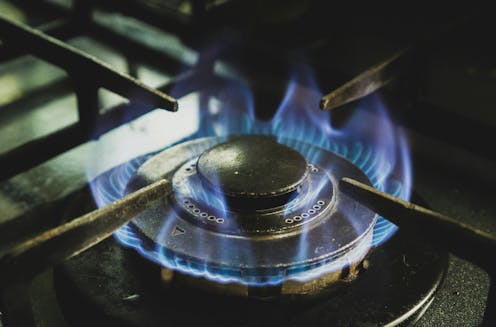
We may think of air pollution as an outdoor problem, made up of car exhaust and smog. But if the air inside our homes is polluted, this can also affect our health.
In Australia, around 12% of childhood asthma can be attributed to gas stoves and the toxic chemicals they release into the air. And while there’s a growing push to phase out gas indoors, some 38% of Australian households rely on natural gas for cooking.
Recommended interventions – such as replacing a gas stove with electric – may not be possible for those who are renting or struggling with the cost of living. This is important because, as our research shows, childhood asthma is more common in socioeconomically disadvantaged areas.
If you’re living with gas, here’s how it can affect you or your child’s asthma, and what you can do to improve air quality.
What is asthma?
Asthma is the most common chronic condition in Australian children. The respiratory condition affects almost 400,000 of those aged aged 14 and under – close to 9% of that age group.
Asthma narrows the airways and obstructs airflow, making it hard to breath. Many people manage the condition with inhalers and asthma action plans. But it can be serious and even fatal. Australian emergency departments saw 56,600 presentations for asthma in 2020-21.
While there is no single cause for asthma, both indoor and outdoor air pollution play a significant role.
Being exposed to small airborne particles increases your risk of getting asthma, and can aggravate symptoms if you already have it.
Gas stoves release nitrogen dioxide
The gas stoves commonly found in Australian homes release toxic chemicals into the air. They include carbon monoxide (CO), PM₂.₅ (small particles, often from smoke), benzene, formaldehyde and nitrogen dioxide (NO₂). All are harmful, but nitrogen dioxide in particular is associated with asthma developing and getting worse.
Gas heaters can also produce nitrogen dioxide.
As nitrogen dioxide is a tasteless, invisible gas, it’s difficult to know how much is in your air at home unless you have an air monitor. However one US study showed houses with gas stoves can have nitrogen dioxide levels three times higher than houses with electric stoves.
This is particularly concerning for households with children, given children tend to spend most of their time indoors.
Banning gas
There is a growing push across Australia to replace gas stoves with electric stoves, which are more energy efficient and can reduce indoor air pollution.
Victoria and the Australian Capital Territory have announced bans on gas connections in new homes from 2024. Sydney’s Waverley council recently made a similar move.
But until a ban on using household gas appliances is implemented across the country, the problem persists for children who are currently living in old homes or rented properties with gas stoves.
Do exhaust fans in the kitchen help?
Using a high-efficiency exhaust hood placed over an existing gas cooktop can be effective. They can capture more than 75% of air pollutants and direct them outside.
Cooking on the back burner – rather than the front burner – can also improve their efficiency.
However exhaust hoods with lower flow rates, or hoods that don’t vent the air outside, are less effective.
And an exhaust hood only improves air quality if you use it. One study in Melbourne found more than 40% of people didn’t use an exhaust hood regularly while cooking.
For many people, installing high-efficiency exhaust hoods will not be practical – especially for those renting or experiencing socio-economic disadvantage.
Natural ventilation
There is a free way to ventilate your home. Keeping windows open during and after cooking will increase air flow and evidence shows this can improve overall air quality.
However this is not always possible, especially during cooler months of the year which can be especially chilly in places such as Victoria and Tasmania.
Unfortunately, people are also more likely to use gas heaters during those cooler months.
What about heaters?
There are two kinds of gas heaters, flued and unflued.
Like cooking with gas, unflued gas heaters release air pollutants including nitrogen dioxide directly into the home. Flued heaters are better for air quality because they use a chimney, or “flue”, to send emissions outside.
If you can, replacing your unflued gas heater with a flued one – or even better, an electric heater – can significantly alleviate asthma symptoms.
If you can’t replace your unflued gas heater, do not use it overnight in the room where you or your children sleep.
Asthma can’t be cured, but its symptoms can be controlled by managing triggers – and this may be easier to do indoors than out. Improving air quality, even in a rented or old property, can help people with asthma breathe more easily.
Authors: Nusrat Homaira, Senior Lecturer, School of Clinical Medicine, UNSW Sydney


















