

Victorian households are poorly prepared for longer, more frequent heatwaves – here’s what needs to change
- Written by: Sarah Robertson, Research Fellow, Centre for Urban Research, RMIT University
Heatwaves in Australia are expected to become hotter, longer and more frequent under climate change. They can seriously affect our health and wellbeing, and even kill people.
But how well-prepared are Australian households for life in a hotter world? Our new research explored this question in Victoria.
We examined how households cope with, adapt to and endure summers and heatwaves. We found they overwhelmingly considered summer heat a temporary disruption – something to just get through. This is consistent with the approach taken by authorities, which generally treat heatwaves as isolated emergencies.
This needs to change. Governments, emergency services and households must move beyond short-term coping strategies. A more sophisticated, long-term approach to managing heatwaves is needed.
Household experiences of heat
We wanted to better understand the experience of Victorians at home across the year. To do this, we interviewed members of 74 households in the Latrobe Valley (30) and Melbourne (44) between 2019 and 2021. We also walked with people through their homes.
We asked about the household’s experience of summer at home and how they coped with the heat. We paid particular attention to people’s everyday routines and the passage of heat through the home.
Questions covered the comfort of the home in summer, the different spaces householders used throughout the year, and the changes they had made (or would like to make) to the home to make it more comfortable.
Participants were also asked about how manageable they found their energy and other bills. Finally, participants were asked to reflect on their longer-term housing aspirations.
What we found
Many households prepared their home and themselves for a heatwave and the disruption it would cause, by shutting blinds or curtains and turning on fans or air conditioners. Those who could, planned to leave the home and visit a friend or other cool space such as the local pool, shopping centre or cinema.
Then they waited for the heatwave to pass, and experienced relief once a cool change arrived, opening doors or windows to let the cool breeze through.
Many households considered heatwaves as short-term but manageable disruptions to their daily, weekly or seasonal routines.
But for some, summer heat was an extended disruption to their lives, for which they had limited capacity to adapt and respond.
These households had fewer ways to manage heat at home, or improve the home’s resilience to heat.
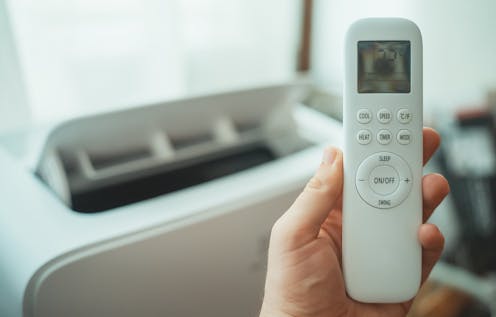
For example, renters turned to unreliable portable air-conditioners, which failed to manage extreme conditions. Melbourne renter Nanci said:
We bought the portable [air conditioner], which ended up breaking down after 33 degrees, so we put it on [until it] blows hot air out.
Other low-income households were hesitant to use or install air conditioners, given the consequences for their energy bills.
Vulnerable households with young children or people with chronic health conditions found it difficult to function and manage those in their care.
In the Latrobe Valley, Sam is a single parent in social housing, who struggles with health problems in the heat. Every year Sam buys a new portable air conditioner to get through summer, as they never seem to last more than one season. Sam said:
The doctor wants to write a letter to the housing [provider because I] get sick all the time and end up in hospital because of the heat … When it’s really hot, I get really sick … My [kid’s] worse … I get phone calls from daycare all the time … so I have to race down and get them to the hospital.

Rethinking summer heat at home
During a heatwave, authorities encourage people to stay cool and look out for vulnerable groups such as children and the elderly. While important, this is a short-term approach.
Relatively little attention is paid to longer-term concerns. As a society, we must acknowledge the increasing frequency and intensity of heatwaves, and start protecting people in their homes.
Many Australian homes are poorly prepared for hotter, longer summers, with most built before the introduction of minimum energy performance standards. This puts our health at risk. It also creates new environmental burdens.
Relying only on air-conditioning to cool homes, rather than improving their thermal performance, will increase electricity demand and make it harder to reduce emissions. For households worried about the cost of living, an air conditioner might be considered too expensive to run or install.
Renters are often worst affected during heatwaves and cold winters. We welcome proposed minimum energy efficiency standards for rental homes in Victoria. Only the ACT and Victoria are proposing to mandate ceiling insulation for rental properties so far. Other states should follow suit.
Australia recently improved energy-efficiency standards for new homes. Now we need a mandatory disclosure system for property energy efficiency, across both new and existing homes, including both owner-occupied and rental properties.
Authorities should also improve public spaces to cope with hotter summers and more extreme weather. This includes creating and maintaining trees and green space in cities to combat the effects of “urban heat islands”.
Trees, plants and light-coloured external surfaces such as cool roofs can also help reduce heat in and around the home.
Without action, more households will be stuck in unhealthy, unsustainable and downright dangerous situations when a heatwave hits. Governments must take a broader, more holistic approach to manage the risks.
Authors: Sarah Robertson, Research Fellow, Centre for Urban Research, RMIT University


















