

Offering end of life support as part of home care is important – but may face some challenges
- Written by: Jennifer Tieman, Matthew Flinders Professor and Director of the Research Centre for Palliative Care, Death and Dying, Flinders University
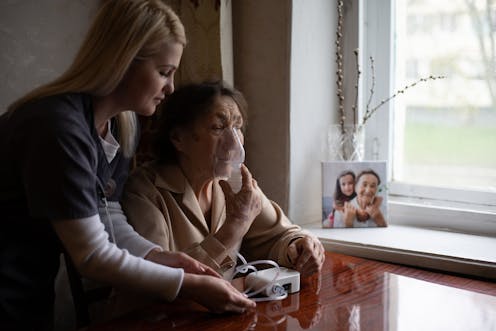
Earlier this month, the government announced major changes to aged care in Australia, including a A$4.3 billion investment in home care.
Alongside a shake up of home care packages, the Support at Home program will include an important addition – an end of life pathway for older Australians.
This pathway will allow access to a higher level of in-home aged care services to help Australians stay at home as they come to the end of their life. Specifically, it will provide an extra A$25,000 for palliative support when a person has three months or less left to live.
This is a positive change. But there may be some challenges to implementing it.
Why is this important?
Older people have made clear their preference to remain in their homes as they age. For most people, home is where they would like to be during their last months of life. The space is personal, familiar and comforting.
However, data from the Australian Bureau of Statistics shows most people who die between the ages of 65 and 84 die in hospital, while most people aged 85 and older die in residential aged care.
This apparent gap may reflect a lack of appropriate services. Both palliative care services and GPs have an important role in providing medical care to people living at home with a terminal illness. However, being able to die at home relies on the availability of ongoing support including hands-on care and assistance with daily living.
Family members and friends often provide this support, but this is not always possible. Even when it is, carers may lack confidence and skills to provide the necessary care, and may not have enough support for and respite from their carer role.
The palliative care funding offered within Support at Home should help an older person to remain at home and die at home, if that is their preference.
Unless someone dies suddenly, care needs are likely to increase at the end of a person’s life. Supports at home may involve help with showering and toileting, assessing and addressing symptoms, developing care plans, managing medications, wound dressing, domestic tasks, preparing meals, and communicating with the person’s family.
Occupational therapists and physiotherapists can assist with equipment requirements and suggest home modifications.
End of life supports may also involve clarifying goals of care, contacting services such as pharmacists for medications or equipment, liaising with organisations about financial matters, respite care or funeral planning, as well as acknowledging grief and offering spiritual care.
But we don’t know yet exactly what services the $25,000 will go towards.
What do we know about the scheme so far?
The Support at Home program, including the end of life pathway, is scheduled to start from July 1 2025.
We know the funding is linked to a prognosis of three months or less to live, which will be determined by a doctor.
Further information has indicated that an older person can be referred to a high-priority assessment to access the end of life pathway. We don’t know yet what this means, however they don’t need to be an existing Support at Home participant to be eligible.
The pathway will allow 16 weeks to use the funds, possibly to provide some leeway around the three-month timeline.
Although more details are coming to light, there are still some things which remain unclear.
Home care providers will be looking for details on what can be covered by this funding and how they will work alongside primary care providers and health-care services.
Older people and their families will want to know the processes to apply for this funding and how long applications will take to be reviewed.
Everyone will want to know what happens if the person doesn’t die within three months.
Some challenges
Ready availability of appropriate supports and services will be crucial for older people accessing this pathway. Home care providers will therefore need to assess how an end of life pathway fits into their operational activities and how they can build the necessary skills and capacity.
Demand for nurses with palliative care skills and allied health professionals is likely to increase. Providing end of life care can be especially taxing so strategies will be needed to prevent staff burnout and encourage self-care.
How pathways are implemented in rural and remote areas and in different cultural and community groups will need to be monitored to ensure all older people benefit.
Effective coordination and communication between home care, primary care and specialist palliative providers care will be key. Digital health systems that connect the sectors could be helpful. Family engagement will also be very important.
Escalation pathways and referral pathways should be established to enable appropriate responses to emergencies, unexpected deterioration, and family distress.
Finally, accurately determining when someone will die can be difficult. Knowing when the last three months of life starts may not be easy, particularly where frailty, cognitive issues and multiple health concerns may be present.
This might mean some people are not seen as being ready for this pathway. Others may not be willing to accept this prognosis. An older person may also be expected to live with a terminal illness for many months or years. Their palliative care needs would not be met under this pathway.
Despite these challenges, the announcement of an end of life pathway within the home care program is timely and welcome. As a population we are living longer and dying older. More details will help us be better prepared to implement this scheme.
Authors: Jennifer Tieman, Matthew Flinders Professor and Director of the Research Centre for Palliative Care, Death and Dying, Flinders University


















