

Attacks on health care during war are becoming more common, creating devastating ripple effects
- Written by: Esperanza Martinez, Professor of Practice and Head of Health and Human Security, College of Health and Medicine, Australian National University
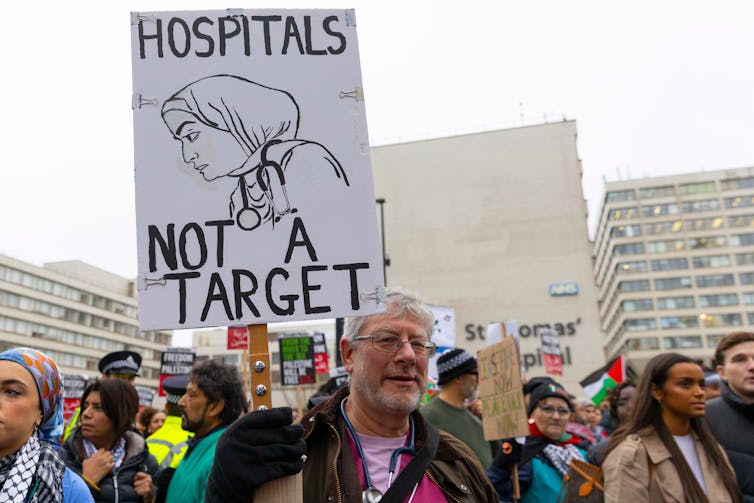
The head of the World Health Organization (WHO), Tedros Adhanom Ghebreyesus, has warned attacks on health-care workers, patients and facilities “must not become the norm”.
Yet reports from wars across the world frequently show hospitals being bombed and health workers being attacked.
The increased use of explosive weapons in densely populated areas makes the problem worse as they cause widespread harm to civilians and critical infrastructure, including health facilities. Whether these attacks are targeted or seen as “collateral damage”, there is growing concern they are becoming an accepted part of armed conflict – although they violate protections granted under international law.
But are these attacks on health care truly increasing, or are we just getting better at documenting them? More importantly, is the world beginning to see them as normal?
What does the data show?
Collecting accurate data in war zones is challenging. Many attacks on health care go unreported due to fear of reprisals or the dangers involved in gathering information. In some cases, releasing data can be sensitive, as conflicting parties may use it to sway public opinion or escalate tensions.
Despite these challenges, organisations have been tracking attacks on health care for years, including the WHO, the Safeguarding Health in Conflict Coalition (SHCC) and the International Committee of the Red Cross. Their reports show an increase in both the frequency and systematic targeting of health care in certain regions.
The latest SHCC report shows last year was the deadliest for health-care workers since reporting began a decade ago. In 2023, 480 health-care workers were killed during armed conflict – nearly double the previous year.
Between January and September 2024, the WHO has confirmed almost 700 attacks against healthcare facilities and staff in Ukraine and the Occupied Palestinian Territory alone. This has led to more than 500 injuries and nearly 200 deaths among patients and health workers.
In Sudan and Myanmar, hospitals and clinics continue to be targeted, leaving millions without access to basic care.
This violence can lead to near collapse of health-care systems. For example, by January 2024, 84% of health facilities in Gaza had been damaged or destroyed. This leaves people without essential care, worsens chronic conditions and allows diseases to spread unchecked.
The laws that protect health care
The Geneva Conventions of 1949 and their Additional Protocols form the backbone of International Humanitarian Law, protecting health workers, hospitals and patients during armed conflict. These laws were established after the second world war to ensure that, even in times of war, people can access medical care without fear of attack. Any deliberate targeting of medical services is a violation of international law and, in some cases, a war crime.
Today, every recognised state in the world has committed to complying with these laws. In 2016, the United Nations Security Council also adopted a resolution which condemns attacks on health care and calls for stronger action to ensure compliance.
Yet attacks on health care continue. Some of the most serious examples have occurred in recent armed conflicts, where hospitals and clinics have been directly targeted, often without consequences for the attackers. Earlier this year, Ukraine asked the International Criminal Court to investigate attacks against a children’s hospital in Kyiv.
The persistence of these attacks raises concerns about whether the issue is weak enforcement of the laws or whether the laws themselves need updating for modern warfare.
Some legal and medical experts argue the laws aren’t strong enough, especially with the rise of non-state armed groups such as militias. Others believe the laws are adequate but are not properly enforced.
There are growing calls from humanitarian and human rights organisations for stronger accountability, including the involvement of the International Criminal Court and national courts. Others propose a broader, more systematic approach that treats attacks on health care as a public health issue, not just a legal one.
Are attacks on health care becoming normalised?
One of the most concerning aspects of this trend is the potential normalisation of such attacks, meaning people might begin to see them as an inevitable part of war.
When hospitals are bombed or ambulances are destroyed without any punishment for the perpetrators, it sends the message health-care workers and patients are acceptable targets. This creates an environment where entire populations may feel there is no safe place to seek care when they need it the most.
Modern conflicts, involving non-state armed groups such as militias – as we’ve seen in Haiti and the Central African Republic – contribute significantly to this issue. These groups often do not adhere to international law.
However, even governments have been accused of attacking health-care facilities despite being parties to the Geneva conventions, including attacks on hospitals by Israel in Gaza, Saudi Arabia in Yemen and the United States in Afghanistan.
When these incidents are not met with strong consequences, it sets a dangerous precedent.
Immediate and long-term impacts
The immediate impact of these attacks is clear and devastating: people injured in conflict or suffering from illnesses can’t get the care they need. Health workers, who are often first responders, are directly targeted, reducing the availability of essential care.
The destruction of hospitals also disrupts routine services such as childbirth and vaccinations, leading to preventable deaths and increasing the risk of disease outbreaks. Outbreaks of mpox in the Democratic Republic of Congo and polio in Gaza have worsened because health workers can’t safely reach affected areas, and necessary supplies have been destroyed.
In the longer term, these attacks gravely affect individuals with chronic conditions such as diabetes, cancer or heart disease, which become life-threatening without treatment. Additionally, people are more likely to leave places without health-care services, which contributes to displacement.
Finally, such attacks erode trust in hospitals and clinics, causing fear around seeking medical help. Over time, this can discourage people from getting care, creating ripple effects that harm entire communities and set back global health progress.
Authors: Esperanza Martinez, Professor of Practice and Head of Health and Human Security, College of Health and Medicine, Australian National University


















